May 23, 2026
By Mesai M.
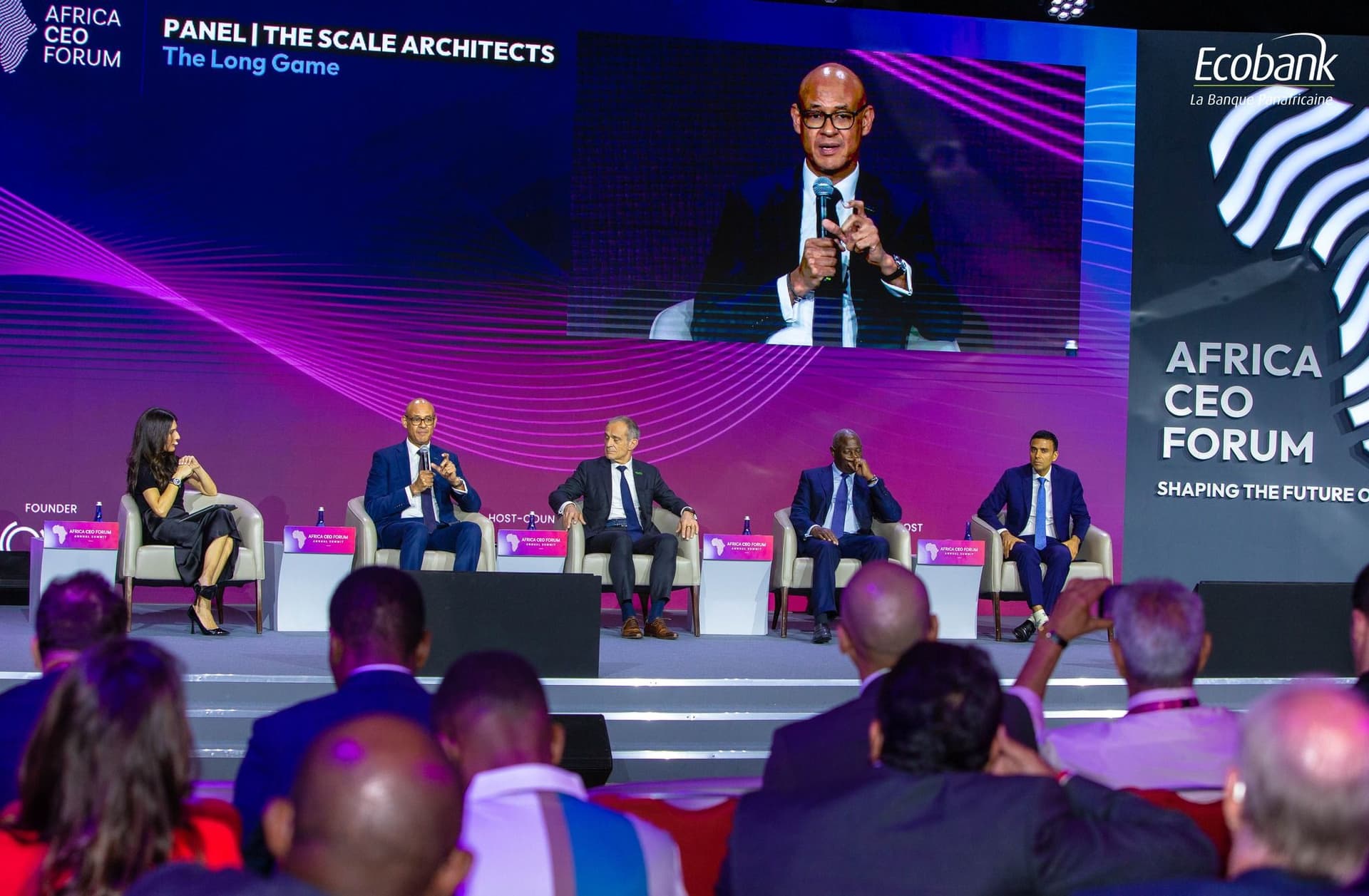
In a world where money moves quickly across borders, international cooperation is breaking down, and technology is changing fast, the Africa CEO Forum (ACF) 2026 ended in Kigali with a clear message for Africa’s business leaders: Scale or Fail.
More than 2,800 people from 77 countries attended the Forum, including world leaders, international investors, and business giants. Organized by Jeune Afrique Media Group and the International Finance Corporation (IFC), the event at the Kigali Convention Centre showed a big change in how Africa’s economy is approaching growth. This year, the focus was on working together rather than working alone. The leaders emphasized that sharing ownership and combining finance, industry, and digital innovation is the best way to make Africa more competitive in the global market.
The Need for Growth in a Changing World
For the past several years, people have talked a lot about the African Continental Free Trade Area (AfCFTA), mainly about removing taxes on trade. But at the Kigali summit, leaders pointed out an even bigger problem: markets and companies in Africa are too divided and disconnected.
Many big countries around the world use powerful, government-supported companies to show their strength and influence. Africa’s small, local markets make it easier for outside countries to have control. The leaders agreed: to protect Africa’s independence and compete globally, Africa needs large, international companies that can work smoothly across borders and have real strength.
Opening the summit, President Paul Kagame emphasized that Africa should take control of its future by using its resources wisely and becoming more independent. He criticized foreign countries for taking advantage of Africa with unfair deals and urged African leaders to stand up for their continent. Kagamo urged on developing local industries, improving trade policies, and building stronger businesses to ensure a better future for Africa.
A Three-Pronged Strategy for Continental Integration
To transition from fragmented success to collective strength, the forum outlined a strategic blueprint built upon three highly coordinated pillars: Finance, Industrial Development, and Digital Transformation.
The forum emphasized that achieving scale requires pooling internal capital rather than relying solely on external funding. Leaders committed to unlocking cross-border equity investments and mobilizing African institutional capital—such as pension funds and sovereign wealth funds. By spreading risk and co-investing across borders, the strategy aims to build resilient, multinational African champions capable of weathering global economic shocks.
Industrialization cannot happen in silos. The Kigali discussions pivoted toward designing complementary infrastructure that integrates regional value chains rather than duplicating efforts nationally. Panelists highlighted the urgency of championing transformative, cross-border projects—such as unified energy grids and regional transport corridors—to connect supply chains and structurally lower the cost of doing business across the continent.
In addition, Digitalization was framed as the ultimate accelerator for market alignment. The forum called for the harmonizing of regulatory frameworks to ensure the seamless, secure flow of data, capital, and cross-border payments. The goal is to establish interoperable digital rails that support vital sectors like agriculture, health, and education, ensuring that economic growth remains inclusive.
Key Outcomes of Kigali Summit
At the 2026 edition of the Africa CEO Forum in Kigali, the event marked a significant shift from mere discussion to real, tangible progress. Leaders and stakeholders moved beyond high-level dialogue to focus on concrete actions that could reshape Africa’s economic landscape.
One of the most notable outcomes was the launch of the "Shared Ownership" Pact. Private sector leaders and government officials came together to create collaborative frameworks for co-investing in regional infrastructure projects. This signaled a new era of cross-border public-private partnerships, where risk and reward are shared to develop vital infrastructure across the continent.
Another key milestone was the adoption of the Digital Sovereignty Manifesto. Sparked by a joint report from the Africa CEO Forum and Askya Investment Partners, the summit addressed the rapid rise of Low Earth Orbit satellite internet systems. Leaders recognized the urgent need to harmonize telecom policies, ensuring that emerging global tech giants compete fairly and transparently. The goal was to protect local digital infrastructure and reinforce Africa’s digital sovereignty amid a rapidly changing technological landscape.
The summit also saw a strong push to mobilize domestic capital. Facilitated by the International Finance Corporation (IFC), major continental banks and institutional investors began laying the groundwork for regional investment platforms. These platforms are designed to direct local liquidity into manufacturing and industries that create jobs, helping to build a more resilient and self-sufficient African economy.
Overall, Kigali’s summit was a turning point, setting the stage for Africa to redefine its growth model and build a more independent, sustainable future.
Positioned for the Global Stage
The 13th edition of the Africa CEO Forum will be remembered as the moment Africa’s private sector collectively rejected insular growth. By tying financial integration and digital sovereignty directly to industrial scale, the Kigali summit provided a clear roadmap for the continent's future.
Many at the summit agreed that it successfully established a foundational layer of trust and risk-sharing across borders. In an economy where scale is the ultimate measure of resilience, the message from Kigali was clear: Africa is no longer simply waiting to be part of global trade; it is actively re-engineering its markets to lead and grow at a scale that cannot be ignored.