IFAD, Equity Group Launch $200 Million Climate Fund
Sep 4, 2026
Save
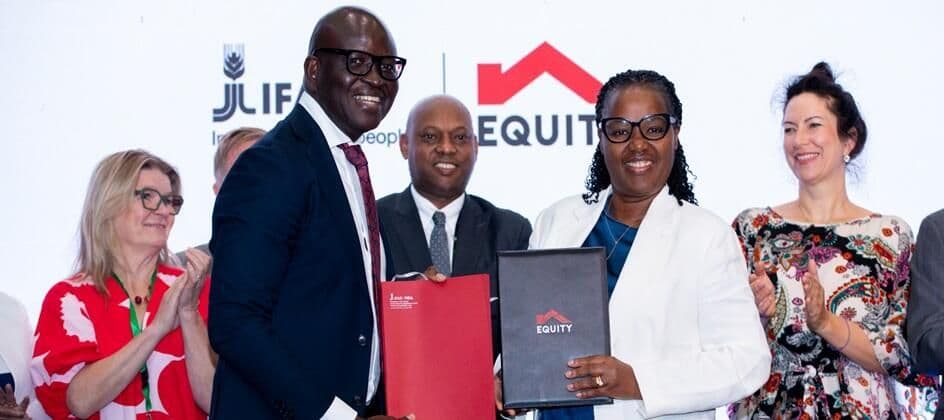
The International Fund for Agricultural Development (IFAD) and Equity Group have launched a $200 million climate resilience financing mechanism to support smallholder farmers and rural businesses across East Africa.
The Africa Rural Climate Adaptation Finance Mechanism, ARCAFIM, was launched in Kigali on September 4 during the Africa Food Systems Forum 2026.
Recommended News
WMO: Africa Must Close Early Warning Gaps to Protect Vulnerable Communities
UN Senior Official Says Ethiopia’s Green Legacy Initiative Could Inspire Africa
Deadly Fires Rock Algeria as Gendarmerie Launches Investigation
African Constituency Bureau Hails Ethiopia’s Green Legacy
Togo Balances Forest Protection with Investment Drive
The initiative will support about 260,000 smallholder farmers and 500 rural enterprises in Rwanda, Kenya, Uganda and Tanzania over the next 12 years.
The mechanism includes $180 million in lending capital and $20 million for technical assistance. Equity Group will provide $90 million from its own balance sheet, while international partners will help share financing risks and attract additional private investment.
Funding will support climate-resilient projects including irrigation, water harvesting, resilient livestock, post-harvest storage, renewable energy and climate-smart agro-processing.
At least 50 percent of beneficiaries are expected to be women and 30 percent young people, with the programme projected to strengthen food security for around 1.2 million people.
The Green Climate Fund has committed $55 million, with partners aiming to expand the model and eventually replicate it across Africa.
The initiative comes as African agriculture faces mounting pressure from droughts, floods, changing rainfall patterns, land degradation and rising production costs. Smallholder farmers, who produce a significant share of Africa’s food, often have the least access to affordable finance needed to adapt to these challenges.
ARCAFIM is therefore significant beyond the four participating countries. By combining climate finance, commercial lending and technical support, the mechanism offers a potential model for closing Africa’s persistent climate-adaptation financing gap and making investment more accessible to rural producers and businesses.
Its focus on women and young people is also important for Africa’s long-term food security and economic transformation, particularly as the continent seeks to create jobs, strengthen rural economies and build more resilient food systems.
If successfully implemented and scaled, the model could demonstrate how public, development and private-sector financing can work together to turn climate adaptation into an investment opportunity, rather than simply an emergency response.
At a time when Africa is seeking to transform its agricultural sector, strengthen food sovereignty and reduce vulnerability to climate shocks, initiatives such as ARCAFIM could become an important part of the continent’s broader push toward resilient, productive and inclusive agri-food systems.