2025 Africa Economy Recap
Dec 31, 2025
Save
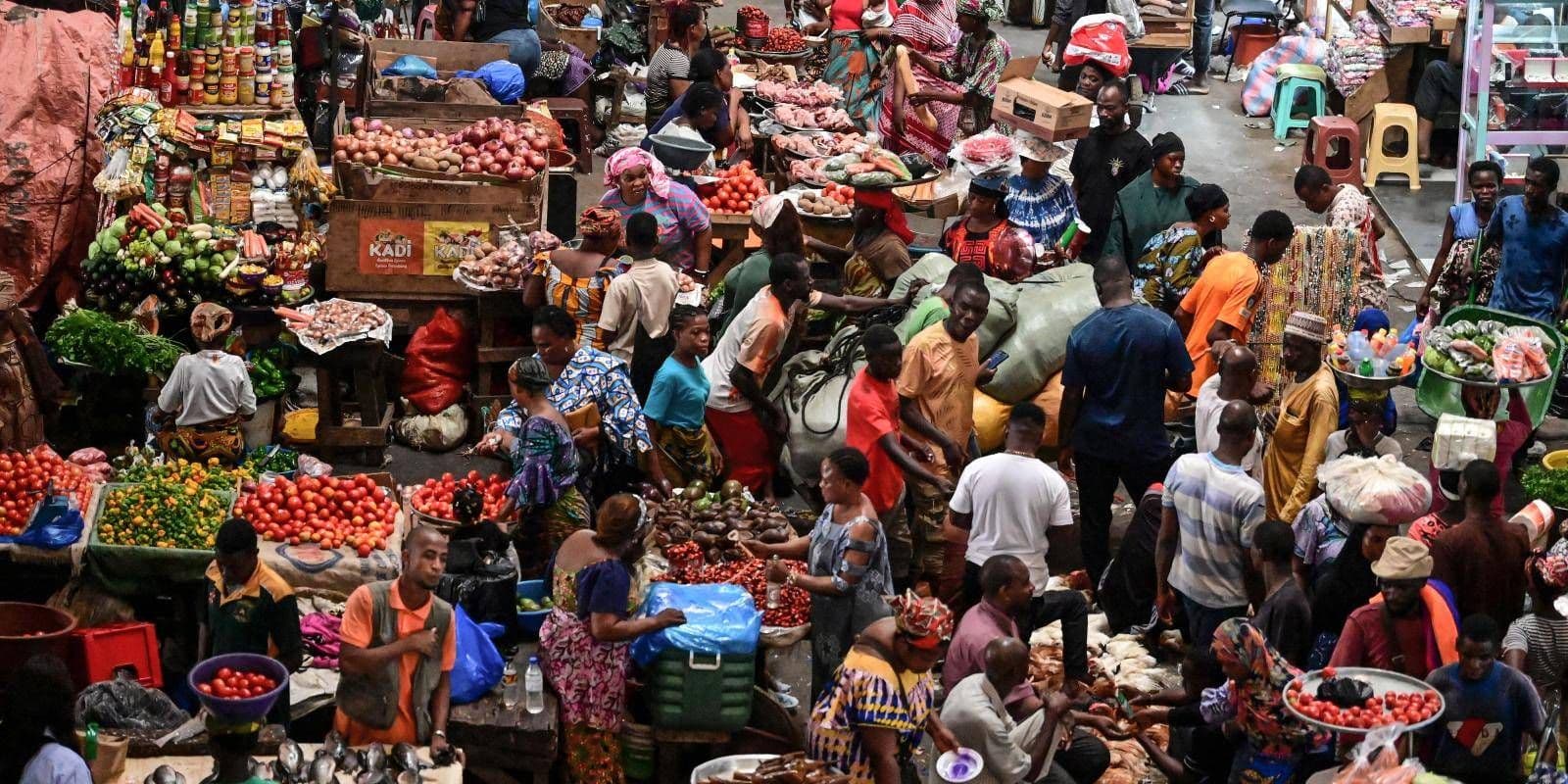
Leveraging $1.43 Trillion in African Domestic Capital to Decouple Growth from Global Shocks
Recommended News
World Bank Mobilizes Record $112 Billion in Private Capital in FY26
Africa’s Green Hydrogen Ambitions Meeting Investment
Dangote IPOs Pledge to Distribute Wealth
IFC Welcomes Ethiopia’s Economic Reforms, Citing Stronger Foundations for Private Investment
Nigeria Reaffirms Commitment to WTO
By Mesai M
Africa is heading into 2026 with careful optimism. Despite facing serious global challenges—such as ongoing conflicts around the world and limited access to affordable financing—the continent has shown strong resilience. According to the latest economic outlook, Africa’s economy is expected to grow by about 3.9 percent in 2025 and rise slightly to 4.0 percent in 2026. This growth is faster than the global average and shows that many African economies are performing well. In fact, 21 African countries are expected to achieve strong economic growth of more than 5 percent in 2025.
However, experts say this positive outlook should be taken with caution. Economic growth is still not strong enough to lift large numbers of people out of poverty or to create enough jobs for Africa’s fast-growing young population. The main challenge ahead is not just staying economically stable, but turning this stability into real, long-term changes that improve lives and strengthen economies.
Countries Leading the Way
Although growth across Africa is uneven, some countries are doing particularly well and showing what is possible with the right policies and investments. Four countries - Senegal, Ethiopia, Rwanda, and Niger - are expected to reach a strong growth rate of at least 7 percent in 2025, meeting the threshold that is considered as important for creating jobs, reducing poverty, and supporting long-term development.
Senegal is projected to achieve 10.3 percent growth in 2025, largely due to infrastructure development and the anticipated scaling-up of its energy projects, while Ethiopia is expected to post growth of 8.0 percent in 2025, maintaining its position among the continent's fastest-growing economies, supported by expanding manufacturing and public infrastructure investment,
Rwanda continues its robust performance, projecting 7.8 percent growth in 2025, anchored by strong governance reforms, tourism recovery, and a diversified services sector, and Niger is also expected to attain the minimum 7.0 percent growth threshold in 2025.
In West Africa, Côte d’Ivoire continues to distinguish itself as a regional economic hub, benefiting from industrial expansion, sustained public investment, and strong agricultural exports. Meanwhile, Kenya remains resilient in East Africa, rooted in financial services, agriculture, and digital innovation, despite navigating fiscal consolidation challenges.
Stabilization Amidst Structural Headwinds
One of the most positive shifts in the 2025 outlook is the broad easing of inflation across many African economies, following years of price shocks. This trend is attributed to tighter monetary policies and improving supply conditions, which have allowed several governments to gradually rebalance fiscal positions and reduce deficits. Overall average inflation for Africa is projected to decline to 13.8 percent in 2025.
Still, this progress comes with serious long-term challenges. Many countries are heavily in debt, which limits how much governments can spend on important needs like health, education, and infrastructure. At the same time, climate-related problems—such as droughts and floods—are becoming more frequent and severe. These disasters damage roads, farms, and livelihoods, and they widen the gap between stronger and weaker regions.
UN Secretary-General António Guterres has warned that no country can ignore these risks. In today’s connected global economy, problems in one part of the world quickly affect others, pushing up prices and creating instability. Every country, he said, must play a role in finding solutions.
Making Africa’s Own Resources Work Better
The 2025 African Economic Outlook (AEO) centers around a compelling theme: "Making Africa's Capital Work Better for Africa's Development." Africa needs to make better use of its own resources to drive development. The report describes a continent rich in people, natural resources, money, and businesses—assets that remain largely untapped.
According to the report, with well-planned reforms carried out step by step, Africa could raise about $1.43 trillion every year from within its own economies. This is more than the estimated $1.3 trillion Africa needs each year to meet the Sustainable Development Goals (SDGs) by 2030. In short, Africa has the resources to bridge its development gaps if it harnesses its capital effectively.
The report paints a clear picture of where Africa’s untapped strength lies and how it can be turned into real economic gains. It begins with government finances, noting that many African countries could significantly increase their income simply by improving the way taxes are collected and managed. By using modern, digital systems and closing gaps in administration, governments could raise hundreds of billions of dollars each year—money that could be reinvested in development.
The focus then shifts to Africa’s vast natural wealth. The continent is home to nearly a third of the world’s mineral resources and most of the planet’s unused farmland. Yet much of this wealth remains underdeveloped or poorly managed. By properly valuing and responsibly managing these resources—including recognizing their role in addressing climate change—Africa could unlock strong and lasting economic growth.
At the heart of this potential are Africa’s people. With a population that is overwhelmingly young, the report stresses that investing in education, skills training, and healthcare is not a cost, but an opportunity. A healthier, better-educated workforce could add billions of dollars to the economy and drive innovation across sectors.
Finally, the report highlights the importance of small and informal businesses, which employ millions of Africans but often operate outside the formal economy. By supporting these businesses to register, grow, and access finance, governments could unlock new sources of income and generate more than $125 billion annually in additional revenue.
Taken together, these insights underline a powerful message: Africa’s path to sustainable growth does not depend solely on external aid or foreign investment. Much of the solution lies within the continent itself—in better systems, smarter policies, and fuller use of the resources and people Africa already has.
Finally, financial capital remains a vast reservoir waiting to be tapped. By leveraging domestic savings, pension funds, and innovative financial instruments like diaspora bonds—securitizing remittances sent home from the African diaspora—Africa could access hundreds of billions of dollars currently held outside productive use.
The Road Ahead
Africa’s long-term future hinges on its ability to leverage its internal assets and accelerate necessary structural reforms. These reforms include investing in climate-resilient infrastructure, expanding regional trade under the African Continental Free Trade Area (AfCFTA), and strengthening domestic resource mobilization.
Former African Development Bank Group Akinwumi A. Adesina, encapsulated the continent’s wealth paradox, stating that Africa is "a continent rich in resources yet constrained by underutilized capital".
To unlock this capital, particularly in key global transition sectors, sound governance is crucial., United Nations Under-Secretary-General for Economic and Social Affairs Li Junhua, gives emphasis on what he described as the need to manage critical minerals responsibly, in view of their potential to accelerate sustainable development.
The challenge now is to scale up opportunity and inclusion, turning demographic potential into an economic engine through investments in digital infrastructure, skills, and education. This commitment requires internal leadership, as Dr. Adesina insists, declaring that "The reflex of looking outward for rescue must be replaced by a mindset of strategic self-reliance, where Africa’s capital works first and foremost for Africa’s people".