Feb 3, 2026
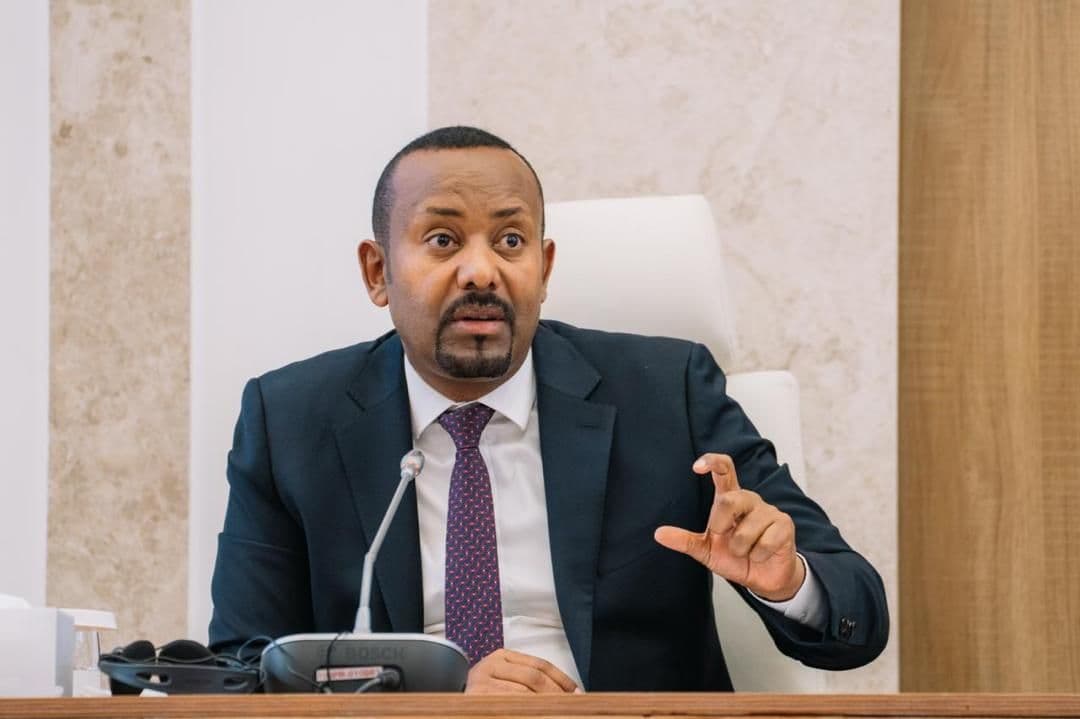
Ethiopian Prime Minister Abiy Ahmed presented a comprehensive mid-term performance report, highlighting the transformative economic reforms underway and their broader implications for Africa.
Responding to lawmakers on Tuesday during a regular session of the House of Peoples’ Representatives, Abiy stressed that Ethiopia’s progress is not only a national achievement but also a continental opportunity, particularly for youth empowerment, regional integration, and global competitiveness.
Addressing the geopolitical realities of the Horn of Africa, the reform-minded Prime Minister noted that although the region is culturally and historically interconnected, it continues to face challenges including rivalries, external interference, and disputes over shared resources. Nevertheless, he expressed optimism that sustained diplomatic and development efforts will strengthen regional stability.
The prime minister portrayed Ethiopia as a pillar of resilience, and strategic vision that can serve as a model for the continent.
Economically, Ethiopia has recorded notable milestones under its Homegrown Economic Reform Agenda (HGER) – now evolved into phase 2.0 – that targets macroeconomic stability, structural, and sectoral reforms to boost productivity, curb inflation, and foster inclusive growth. Key initiatives include liberalizing telecom and energy, and establishing a stock market.
According to the prime minister, inflation has fallen to 9.7 percent, while macroeconomic stability has improved, creating a more favorable investment climate.
Growth projections have been revised to an upward of 10.2 percent by the end of the fiscal year – a figure that closely aligns with that given by the IMF - placing Ethiopia among Africa’s fastest-growing non-oil economies.
Abiy portrays these outcomes as proof that the country’s homegrown reforms are restoring confidence and stabilizing the economy.
Agricultural modernization has advanced rapidly through expanded mechanization, irrigation, and increased crop production, he noted, adding, this transformation is strengthening food security while laying the groundwork for regional agricultural trade.
Industrial growth, driven by the “Made in Ethiopia” movement, has raised manufacturing capacity utilization from 47 percent to 66.3 percent in a span of just three years.
This expansion, according to the prime minister, has reduced import dependence and is expected to significantly boost export earnings. The service sector is also shown to have performed strongly.
Ethiopian Airlines continues to break records, while telecommunications growth has expanded mobile access nationwide. The rollout of 5G and the rise of mobile money services underscore Ethiopia’s commitment to digital transformation and preparing African youth for a technology-driven economy.
Prime Minister Abiy emphasized self-reliance as a cornerstone of national policy, citing the Grand Ethiopian Renaissance Dam as a symbol of sovereign development, completed without external loans or aid. Additional mega-projects, including the Koysha Dam, the Bishoftu mega-airport city project, a domestic fertilizer plant, and natural gas processing facilities, further demonstrate Ethiopia’s capacity to execute large-scale infrastructure independently.
On a continental level, Abiy highlighted Africa’s demographic advantage. By 2035, the continent is expected to add 450 million work-ready individuals, bringing the total youth labor force to more than one billion. He stressed the urgency of investing in education, technology, and skills development to ensure this generation drives prosperity rather than migration.
In a nutshell, Ethiopia has strengthened trade and investment performance, earning $5.1 billion from merchandise exports, $4.5 billion from services, $4.6 billion in remittances, and attracting $2.3 billion in foreign direct investment within six months.
By avoiding new high-interest commercial loans, the government is reducing debt risks while promoting sustainable growth, offering a model of fiscal discipline for other African nations, Abiy noted
Overall, Prime Minister Abiy Ahmed’s mid-term report presents a dual vision: stabilizing Ethiopia’s economy while positioning the country and its youth as engines of Africa’s broader development. The home-grown reforms that he spearheads demonstrate how strategic policy, innovation, and human capital investment can unlock the continent’s vast potential and drive lasting economic resurgence.