Feb 18, 2026
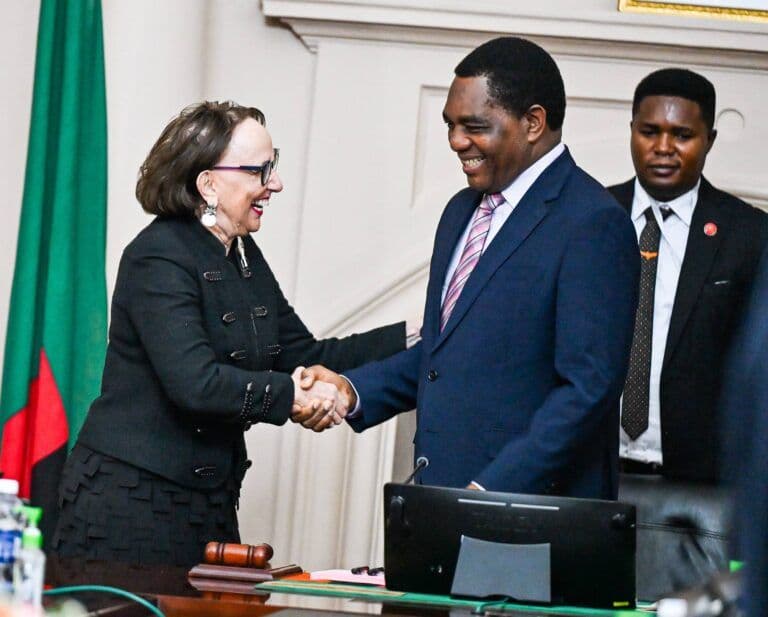
Zambia’s President Hakainde Hichilema says African countries have reached a turning point in their approach to natural resources, declaring that the continent is now united in its commitment to responsible extraction, processing and value addition rather than exporting raw materials.
Speaking during a meeting with visiting UN Conference on Trade and Development (UNCTAD) secretary general Rebeca Grynspan in Lusaka on Tuesday, Hichilema said African leaders had adopted a common stance at the recent African Union summit, signaling a decisive break from the historical pattern in which Africa supplied unprocessed minerals to global markets.
“We are speaking one language now; that we cannot continue exporting raw materials for centuries,” he said.
“We want discussions that will lead us into responsible resource extraction, processing (and) value addition. That will add growth to our economies for jobs and business opportunities and treasury revenues.”
Hichilema’s remarks reflect a broader continental shift towards mineral beneficiation, driven by the recognition that Africa holds some of the world’s most strategic minerals cobalt, copper, lithium, manganese and rare earths – yet captures only a fraction of their economic value.
Countries such as Zambia, the Democratic Republic of Congo, Namibia and Zimbabwe have recently introduced policies aimed at local processing, regional value chains and restrictions on the export of unprocessed minerals.
The Zambian leader said the time has come to deepen cooperation with UNCTAD beyond traditional areas, calling for greater alignment between the organisation’s local and international work.
Grynspan described Zambia as a “strategic regional hub” that has transformed its geography from “landlocked to land‑linked,” serving as a key transit and energy corridor for the Common Market for Eastern and Southern Africa, the Southern African Development Community and the African Continental Free Trade Area.