Jan 7, 2026
By: Mesai M.
While most of the world is packing away their decorations and heading back to work in early January, a vibrant and ancient celebration is just beginning in the Horn of Africa. In Ethiopia, Christmas isn't about shopping mall Santas or plastic trees. When we look in some of the different celebrations of Christmas across the world, the global tapestry of the holiday is actually a month-long mosaic of fire, faith, and local flavor. In Japan, the day is less about liturgy and more about a curious modern ritual: buckets of KFC fried chicken shared on a "Christmas date." In Iceland, children keep their shoes on windowsills for thirteen days, hoping the "Yule Lads"—mischievous mountain trolls—will leave sweets instead of rotting potatoes. However, in this part of the Horn of Africa, Ethiopia’s celebration is a deeply spiritual, sensory, and communal experience known as Ganna. Because Ethiopia follows its own ancient calendar, the holiday falls on January 7th, offering a window into a tradition that has remained largely unchanged for over a millennium.
The Sea of Clouds in the Eve
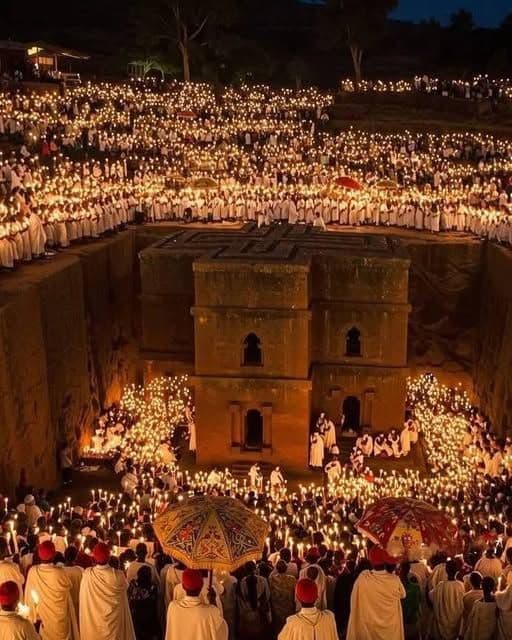
The true magic of Ethiopian Christmas unfolds on the night of January 6th, a night when the whole country comes alive while the rest of the world is fast asleep. As evening falls, families and communities gather in a vibrant display of devotion and tradition. Everyone dresses in the beautiful Habesha Kemis — a graceful, white cotton garment made from hand-spun fabric. Walking through neighborhoods on Gena Eve feels like wandering through a sea of clouds, as the white dresses shimmer under the night sky.
The celebration kicks off around 6:00 PM with a long, heartfelt service that often stretches into the early hours of the next morning. There are no pews or chairs; instead, people stand for hours, leaning on prayer sticks, chanting, and praying under the soft glow of thousands of beeswax candles that flicker like stars. The atmosphere is thick with devotion and anticipation, creating a sacred space that connects generations through shared faith.
In the ancient city of Lalibela, where the epicenter of the celebration occurs, thousands of pilgrims make their way into churches carved directly out of solid rock. The sound of chanting echoes off the stone walls, creating an atmosphere so steeped in history that it feels like stepping back 1,500 years in time.
As dawn approaches and the rest of the world begins to return to routine, Ethiopians continue their celebration. The festivities reach a climax with the procession of the Tabot, a sacred replica of the Ark of the Covenant. Priests dressed in shimmering gold-embroidered robes lead the way, accompanied by the rhythmic beats of drums and the hypnotic clang of sistrums. For Orthodox Christian Ethiopians, this night is more than just a holiday; it’s a profound expression of faith, tradition, and unity that deeply resonates through every heartbeat of the nation.
The ”Doro Wot” Ritual with twelve pieces to symbolize the twelve apostles
As the first light of dawn breaks on January 7th, a wave of excitement sweeps through the family. After nearly seven weeks of fasting, the long-awaited moment has arrived—the end of the fast and the beginning of a grand celebration. The highlight of this day is the beloved Doro Wat, a spicy chicken stew that’s considered one of the most iconic dishes in Ethiopian culture.
Preparing Doro Wat is no quick task; it’s a labor of love and skill passed down through generations. It starts with hours of slow-cooking chopped onions—sometimes without a drop of oil—until they transform into a dark, sweet paste. Then, a fiery, complex spice blend called berbere is stirred in, giving the stew its vibrant red hue. The chicken, traditionally cut into exactly twelve pieces to symbolize the twelve apostles, is added and simmered carefully. Whole hard-boiled eggs are placed in the stew at the end, soaking up the rich, spicy sauce.
Families gather around a large shared plate of Injera, a sour, spongy flatbread that serves as both a utensil and a meal. With their hands, they scoop up generous portions of Doro Wat, sharing in the warmth and joy of the occasion. A cherished tradition called Gursha involves feeding a bite of food to loved ones, a gesture symbolizing love, respect, and community.
For many, the first taste after weeks of vegan fasting feels like a divine gift. Selamawit Amsale, a mother of two from Addis Ababa, shares, “The smell of onions caramelizing for the Doro Wat is the true start of the holiday. When we finally break bread together, those 43 days of fasting become a blessing—something we feel grateful for, as if given by God.”
In Ethiopia, breaking the fast is more than just a meal; it’s a heartfelt celebration of faith, patience, and togetherness that marks the beginning of Christmas festivities with deep joy and gratitude.
The Sport of Shepherds- Ganna
After the grand feast and the long night of prayer, the celebration naturally shifts outdoors, where energy and excitement fill the air. Men and boys gather in open fields to play Ye Ganna Chewata, a traditional Ethiopian game that resembles a rugged version of field hockey. The sticks they use are hand-carved from eucalyptus branches, curved and shaped with care, while the ball is crafted from tightly wrapped leather or wood.
According to a heartfelt legend, when the shepherds in Bethlehem heard that Jesus was born, they were so overwhelmed with joy that they started batting their wooden staffs around in a spontaneous game of celebration. Today, this spirited game serves as a lively, often competitive way for the community to bond after a long night of prayer and reflection. It’s a physical expression of the holiday’s joy, filled with dust, cheers, and laughter—a reminder of the shepherds’ ancient joy and the unity of the Ethiopian people during this festive season.
The Coffee Ceremony: The Heart of Ganna
No Ethiopian celebration is truly complete without the Coffee Ceremony, a beautiful ritual that marks the grand finale of Ganna. Imagine beans being roasted over glowing coals right in the heart of the living room, filling the house with a warm, nutty aroma that beckons everyone closer. Incense burns softly, creating a calming, sacred atmosphere. The coffee is served in three rounds—Abol, Tona, and Bereka—each symbolizing different steps of the ritual.
This slow, deliberate process invites conversation and connection. It’s a time when elders share stories with the younger generation, neighbors drop by unexpectedly, and a sense of peace settles over the household. The Coffee Ceremony reminds us that life’s most meaningful moments are often found in patience, in taking the time to truly connect with others.
It Matters
In a world that often rushes past, rushing from one holiday sale to the next, Ethiopia’s Ganna offers a different lesson. It teaches us to embrace patience through fasting, devotion through staying awake all night in prayer, and generosity through sharing food and fellowship. While the dates on the calendar may differ, the core message is universal: the best things in life—faith, family, and community—are worth waiting for.
A Universal Spirit of Togetherness
Across the world, many cultures find their own ways to pause and celebrate the season—whether it’s Mexico’s "Night of the Radishes," where artisans carve nativity scenes from vegetables, or Iceland’s "Christmas Book Flood," where families spend Christmas Eve reading together. What ties these traditions together isn’t the date or the gifts, but the shared human desire to feed one another’s spirits, to find light in the coldest days, and to cherish moments of stillness and connection.
In Ethiopia, that light shines in flickering candles inside ancient rock-hewn churches and in the steam rising from a freshly brewed cup of coffee. As the world turns the page into a new year, Ethiopia reminds us that there’s always time for one more celebration—one that values patience, community, and the beauty of waiting.
Melkam Gena! (Merry Christmas!)