Feb 26, 2026
By Mahder Nesibu
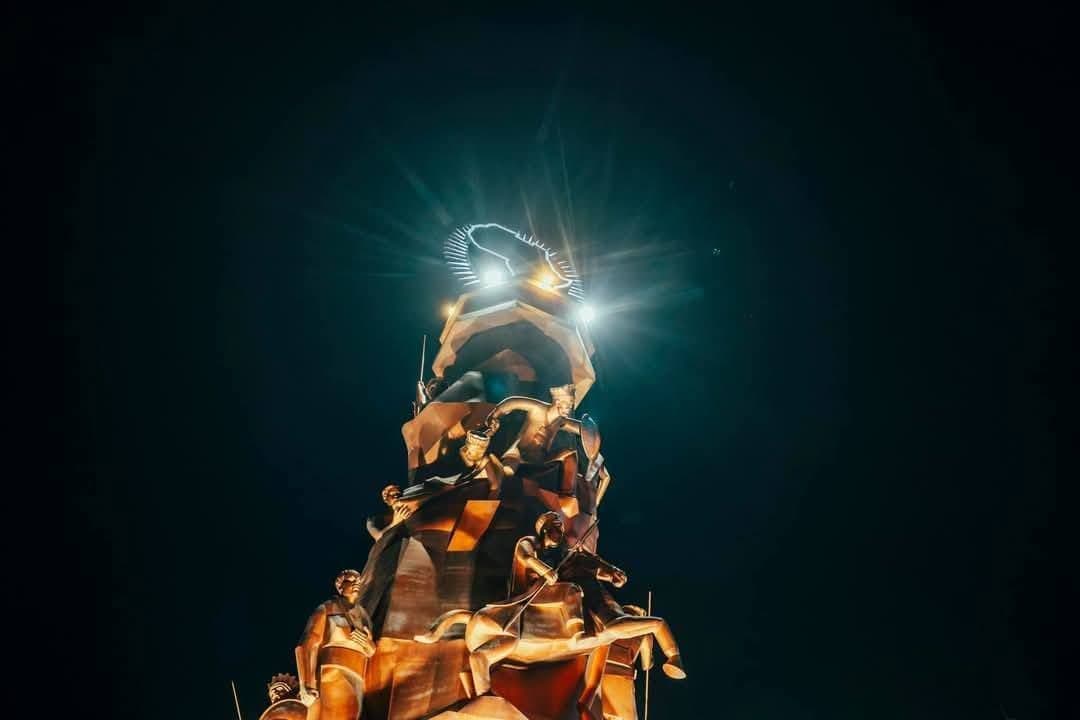
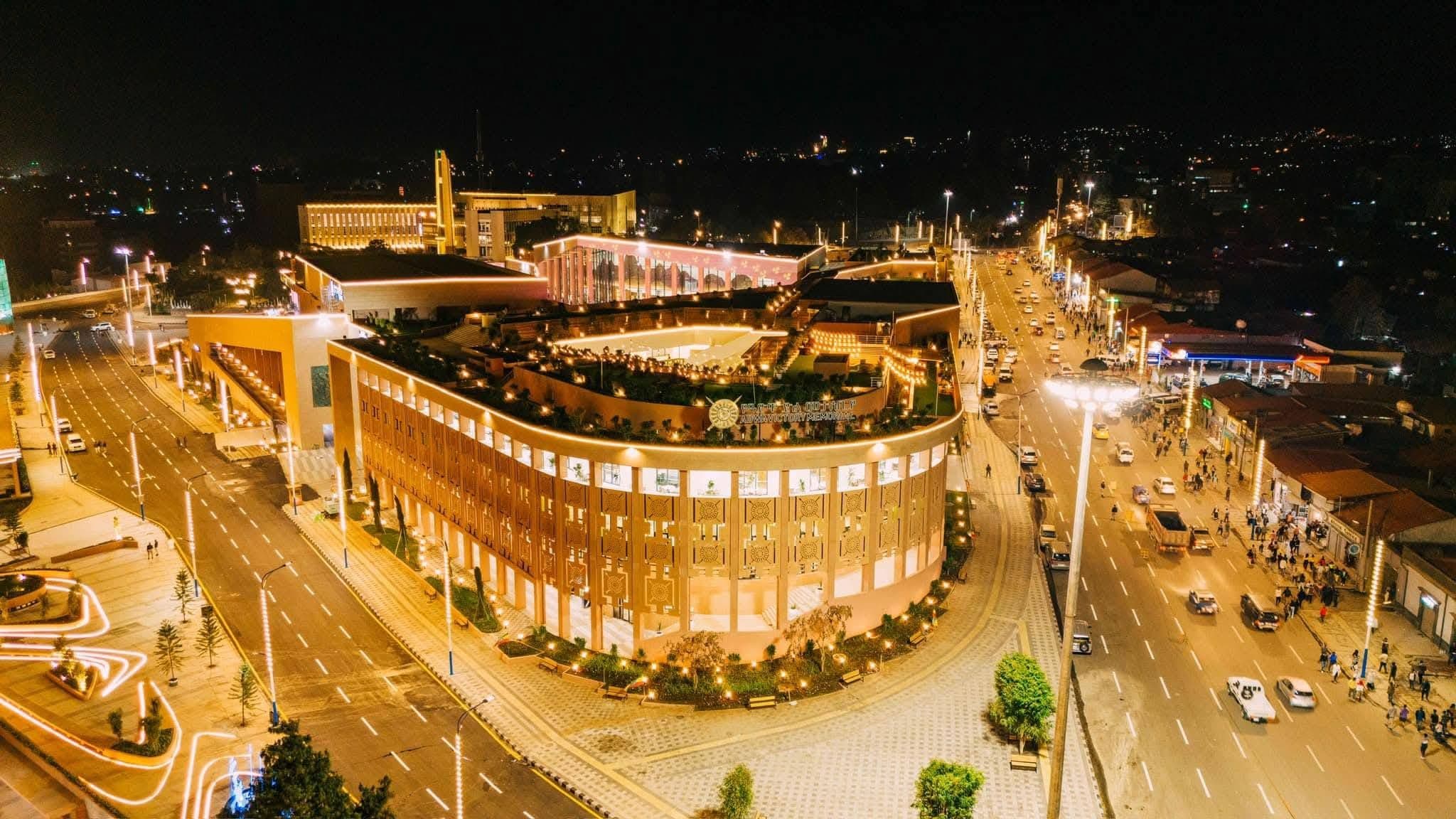
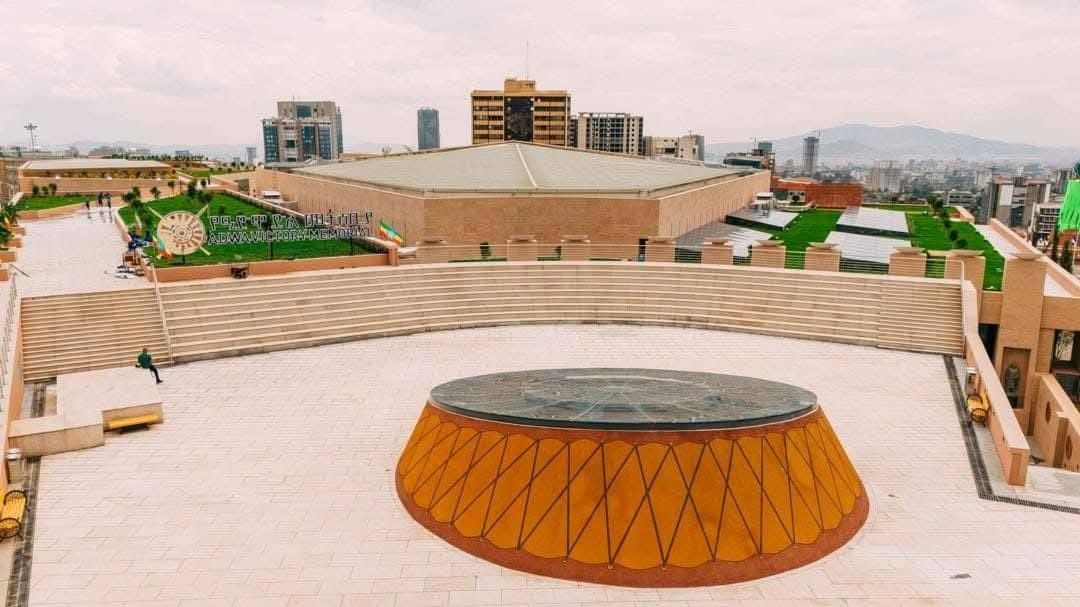
March 1 is a date that carries extraordinary weight, not only in Ethiopian memory but across the African continent and the wider world. On that day, at the mountainous terrain of Adwa in northern Ethiopia, Emperor Menelik II rallied all Ethiopia's forces to decisively defeat the Italian colonial army, delivering what has been described as the most consequential military victories in the history of African resistance to European imperialism. Nearly 130 years on, as that anniversary approaches once again – it is celebrated on March 2 – a monument in the heart of Addis Ababa stands to ensure that the meaning of that day is neither forgotten nor reduced to a mere historical footnote. The Adwa Victory Memorial – vast, deliberate, and alive with the weight of collective memory – asks its visitors to not simply remember, but to understand.
The Memorial sits in the Arada district, one of the oldest urban quarters of Addis Ababa. The compound is entered through one of eight gates, each named to honour a distinct dimension of the Ethiopian effort. Among them are the North Heroes Gate and the Pan-African Gate, names that announce, before a visitor has even stepped inside, that what happened at Adwa was simultaneously a national and a continental event. The Pan-African Gate is more literal than symbolic. It speaks to the way the battle's reverberations spread far beyond Ethiopia's borders, inspiring generations of independence movements across Africa and the diaspora, a beacon for figures like Kwame Nkrumah and Marcus Garvey, whose faces appear later, deep within the museum's walls.
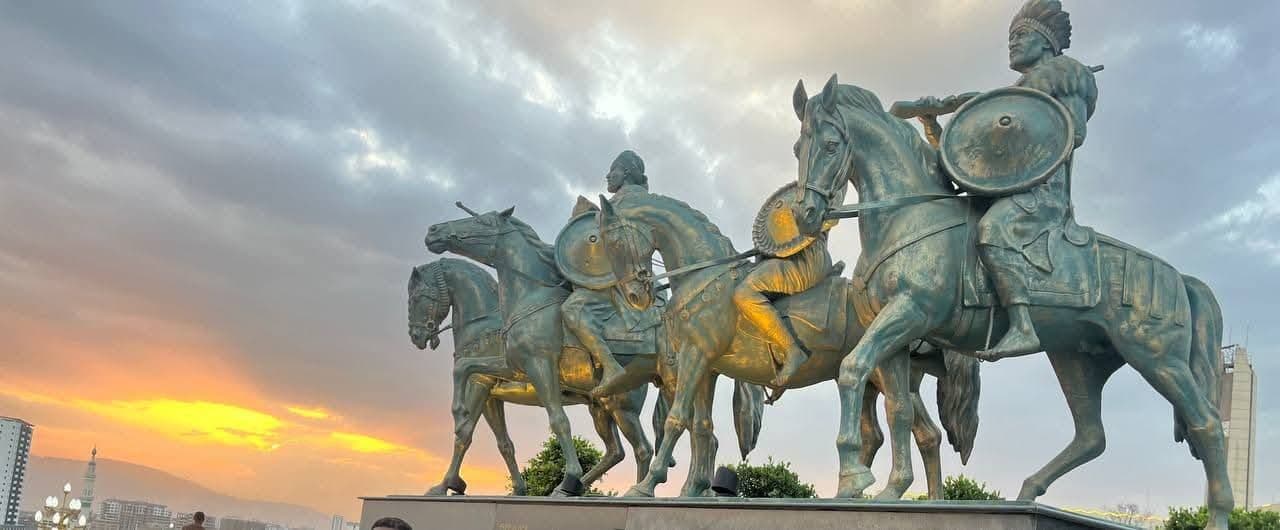
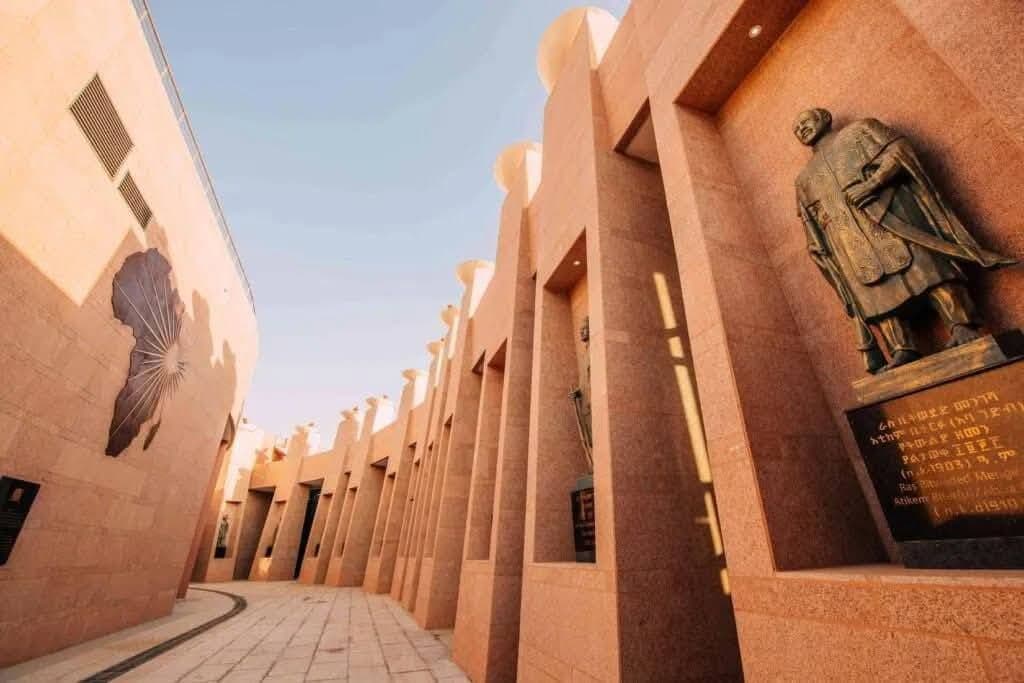
The Memorial itself is a building of considerable ambition, and its architecture makes an argument before its contents do. The pillars of the main structure hold significant weight. Affixed to each is the statues of 12 great commanders such as Ras Mekonnen and Dejazmach Balcha Safo, who marched under a collective cause and whose names are bound to the victory. These were men who had governed their own regions, commanded their own loyalties, and who nevertheless converged on Adwa in a unified campaign that confounded Italian expectations of an Ethiopia too fractured to mount serious resistance. They could have taken the event as an opportune moment to expose and undermine the authority of the emperor, but they did not. They heeded his call to arms instead to save their motherland – Ethiopia. Their placement as the literal pillars of the building is a piece of architectural meaning-making; these commanders did not merely participate in the victory; they held the enterprise upright.
Dominating the open compound are the statues of Emperor Menelik II and Empress Tayitu Betul, figures whose scale reflects their centrality to what unfolded. Tayitu, in particular, demands attention, both within the memorial and within the historical record. She was not a passive consort to her husband's campaign, but was central to the war effort. She organised supplies along punishing highland routes, and her strategic counsel shaped decisions at the highest levels of the Ethiopian war effort. According to Anchi Hoh – she authored a March 9, 2022, blog post titled "Taytu Betul: The Cunning Empress of Ethiopia" for the Library of Congress blog 4 Corners of the World – the Empress "rose to the occasion and helped lay the foundation for a modern Ethiopia that is today."
Inside, the scale of the collection announces itself immediately. The museum's holdings move across time and form. Wartime artefacts alongside cultural and historical objects, traditional weapons beside an unlikely exhibit: Tsehai, the first aeroplane assembled in Ethiopia, its presence a reminder that this is not merely a war museum but a monument to Ethiopian civilisation in its breadth. The staircase descending to the lower floor is itself a curatorial gesture, its walls depicting the Ethiopian and Italian armies facing one another across the terrain, so that the act of descending becomes a kind of approach to battle.
At the centre of the lower floor sits a model of the Negarit: the great ceremonial drum, whose beating once carried the Emperor's call to arms across the country, summoning Ethiopians from every region to defend their land. That call, and the response it generated, produced one of history's more remarkable mobilisations: an estimated hundred thousand soldiers, drawn from across a diverse and geographically demanding nation, converging on a single point of resistance. Around the Negarit, rifles, swords, shields, and the everyday equipment of soldiers like vessels for food and water, traditional combat weapons, press in from all sides, the accumulated material reality of a campaign fought without the industrial advantages that Italy had assumed would be decisive.
Dominating the open compound are the statues of Emperor Menelik II and Empress Tayitu Betul, figures whose scale reflects their centrality to what unfolded. Tayitu, in particular, demands attention, both within the memorial and within the historical record. She was not a passive consort to her husband's campaign, but was central to the war effort. She organised supplies along punishing highland routes, and her strategic counsel shaped decisions at the highest levels of the Ethiopian war effort. According to Anchi Hoh – she authored a March 9, 2022, blog post titled "Taytu Betul: The Cunning Empress of Ethiopia" for the Library of Congress blog 4 Corners of the World – the Empress "rose to the occasion and helped lay the foundation for a modern Ethiopia that is today."
Inside, the scale of the collection announces itself immediately. The museum's holdings move across time and form. Wartime artefacts alongside cultural and historical objects, traditional weapons beside an unlikely exhibit: Tsehai, the first aeroplane assembled in Ethiopia, its presence a reminder that this is not merely a war museum but a monument to Ethiopian civilisation in its breadth. The staircase descending to the lower floor is itself a curatorial gesture, its walls depicting the Ethiopian and Italian armies facing one another across the terrain, so that the act of descending becomes a kind of approach to battle.
At the centre of the lower floor sits a model of the Negarit: the great ceremonial drum, whose beating once carried the Emperor's call to arms across the country, summoning Ethiopians from every region to defend their land. That call, and the response it generated, produced one of history's more remarkable mobilisations: an estimated hundred thousand soldiers, drawn from across a diverse and geographically demanding nation, converging on a single point of resistance. Around the Negarit, rifles, swords, shields, and the everyday equipment of soldiers like vessels for food and water, traditional combat weapons, press in from all sides, the accumulated material reality of a campaign fought without the industrial advantages that Italy had assumed would be decisive.
Among the most significant objects on the lower floor is the transcript of Article 17 of the Treaty of Wuchale, a text that carries within it the origins of the war itself. The treaty, signed in 1889, contained an Amharic version and an Italian version that diverged critically: the Italian text rendered Ethiopia a protectorate, the Amharic did not, a deliberate discrepancy the Italians exploited as diplomatic cover for their colonial ambitions. Menelik's rejection of that interpretation and Italy's decision to press its claim by force brought the two sides to Adwa, where the answer to the treaty's deception was delivered on the field rather than at a negotiating table..
A detailed sandcast occupies a commanding section of the floor within the imposing walls of the Memorial, rendering in miniature the complex highland landscape around Adwa. Depicted are the ridges, valleys, and terrain feature that Ethiopian commanders used to strategic advantage, positioning their forces with a geographical intelligence that Italian generals, operating in an unfamiliar country, could not match. Opposite the sandcast, a cannon captured from the Italian army stands on display, and its presence is inseparable from the name of Dejazmach Balcha Safo, the Ethiopian commander credited as a master of artillery, whose handling of Ethiopia's firepower contributed materially to the Italian rout. Nearby, in a glass case, the personal effects of Menelik II — his pistol, his telescope — offer a quieter kind of proximity to the battle, the intimacy of objects held in hands that shaped the outcome.
The museum moves its visitors through a corridor titled "The March to Adwa," a passage lined with paintings and artefacts that recreate the great convergence of forces from across Ethiopia. Among the most important sections it contains is the dedicated exhibition on the role of women during the campaign and battle. Ethiopia's women, who were, in the memorial's own framing, "indispensable" to the victory, treated the wounded under battlefield conditions, organised and transported provisions along routes that would have taxed professional logistics corps, and engaged in battle. Their contribution was not peripheral; the Ethiopian campaign could not have sustained itself without them, and the paintings that line these walls, depicting women in the full range of their wartime roles, represent a corrective to the historical record as much as a celebration of it.
A room whose pillars are inscribed in Ge'ez script, with words translating as "Victory", "Sacrifice", "Patriotism", "Black Peoples' Victory", gives way to one of the memorial's most expansive gestures: the wall titled "From Adwa to the African Union," a visual timeline that traces the arc from the 1896 battle to the formation of the African Union in 2002. The logic of the wall is clear and ambitious. Adwa was not an endpoint but a beginning, a demonstration that colonial domination was neither inevitable nor permanent, a proof of concept that African independence movements would draw upon for decades. Nkrumah and Garvey are honoured here not as footnotes but as inheritors and amplifiers of a spirit that Adwa released into the world.
Walking out of the Adwa Victory Memorial and back into the noise and motion of Addis Ababa, something of that spirit travels with you. The city beyond the gates is itself a descendant of the victory, built, shaped, and imagined by a people whose sense of what they were capable of was forged in the highlands of Adwa on a March morning in 1896. For Ethiopians, the memorial is a mirror held up to a national identity rooted not in suffering but in resistance and dignity. For Africans, it is a testament to what collective will can achieve against overwhelming force. And the cause is right; and that can lend itself to Africans today striving to reclaim their economic soul.