Mar 30, 2026
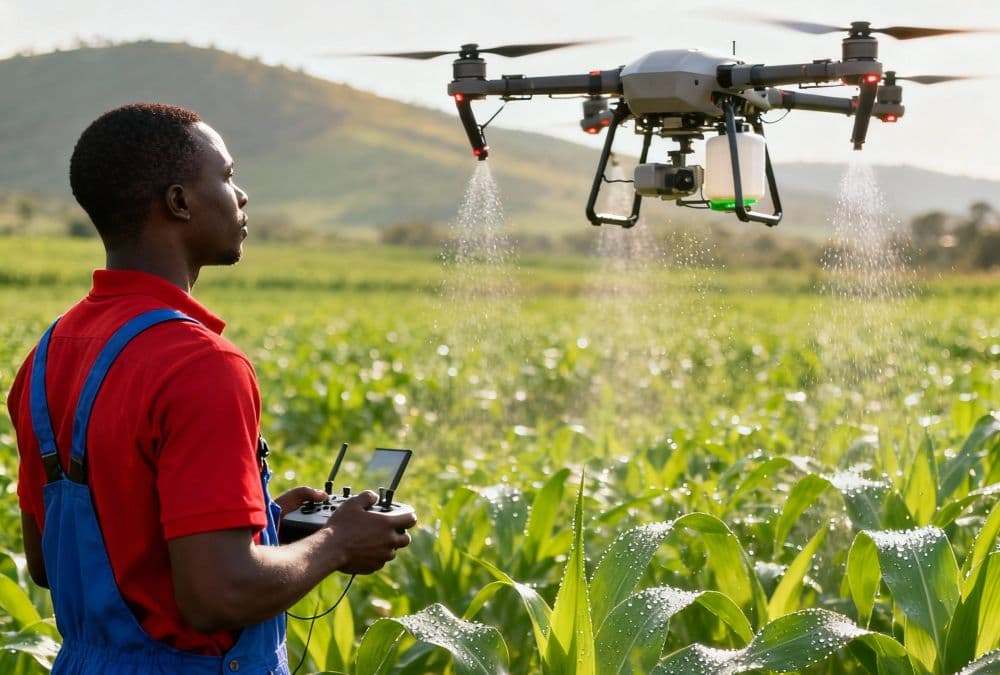
Zimbabwe’s Bindura University of Science Education (BUSE) has begun locally assembling drones as it accelerates its industrialisation agenda, moving beyond training operators to manufacturing the technology needed to support precision agriculture and other sectors.
BUSE vice chancellor Eddie Mwenje said the development marks a significant expansion of the university’s drone initiative, which began with operator training more than a year ago and is now evolving into full-scale technological production.
BUSE’s drone programme is anchored in its innovation hub, which focuses on climate change, smart agriculture, software development and food systems, according to APA news.
The university has been training students and professionals to operate unmanned aerial systems through its Department of Communication Science, equipping them with skills applicable in agriculture, mining, environmental monitoring and disaster response.
“As a university, we are playing our part in ensuring that we contribute towards a prosperous and empowered society,” Mwenje told the state-run Herald daily.
The shift to assembling drones locally is expected to reduce costs, build technical capacity and strengthen Zimbabwe’s ability to deploy home-grown technologies.
Mwenje said the initiative aligns with the Zimbabwe government’s Vision 2030, which prioritises science, technology and industrialisation.
He said drone technology has become a critical tool in addressing climate-related challenges and improving agricultural productivity through applications such as crop spraying, field mapping and cloud seeding in drought-prone areas.
The drone assembly project complements BUSE’s existing Palp Technologies plant, which produces smartphones, tablets and laptops for the domestic market.
The plant has supplied digital devices to more than 800 schools, easing reliance on imports and supporting the government’s digitalisation efforts.
Mwenje said the university’s innovation hubs and industrial parks, established over the past five years, have laid the foundation for locally developed solutions that can drive economic transformation.
He said assembling drones will enhance research capabilities and position Zimbabwe to produce its own advanced technologies.