Apr 17, 2026
By Michael Dewornu, Ghana
During my recent visit to Ethiopia as an African Union Media Fellow, the Ethiopian Tourism Authority organized a city tour that offered a glimpse into the country’s rich culture, history, and innovation. Among the many places we visited, one location stood out, not because of grand monuments or historic buildings, but because of the quiet revolution happening inside a bakery.
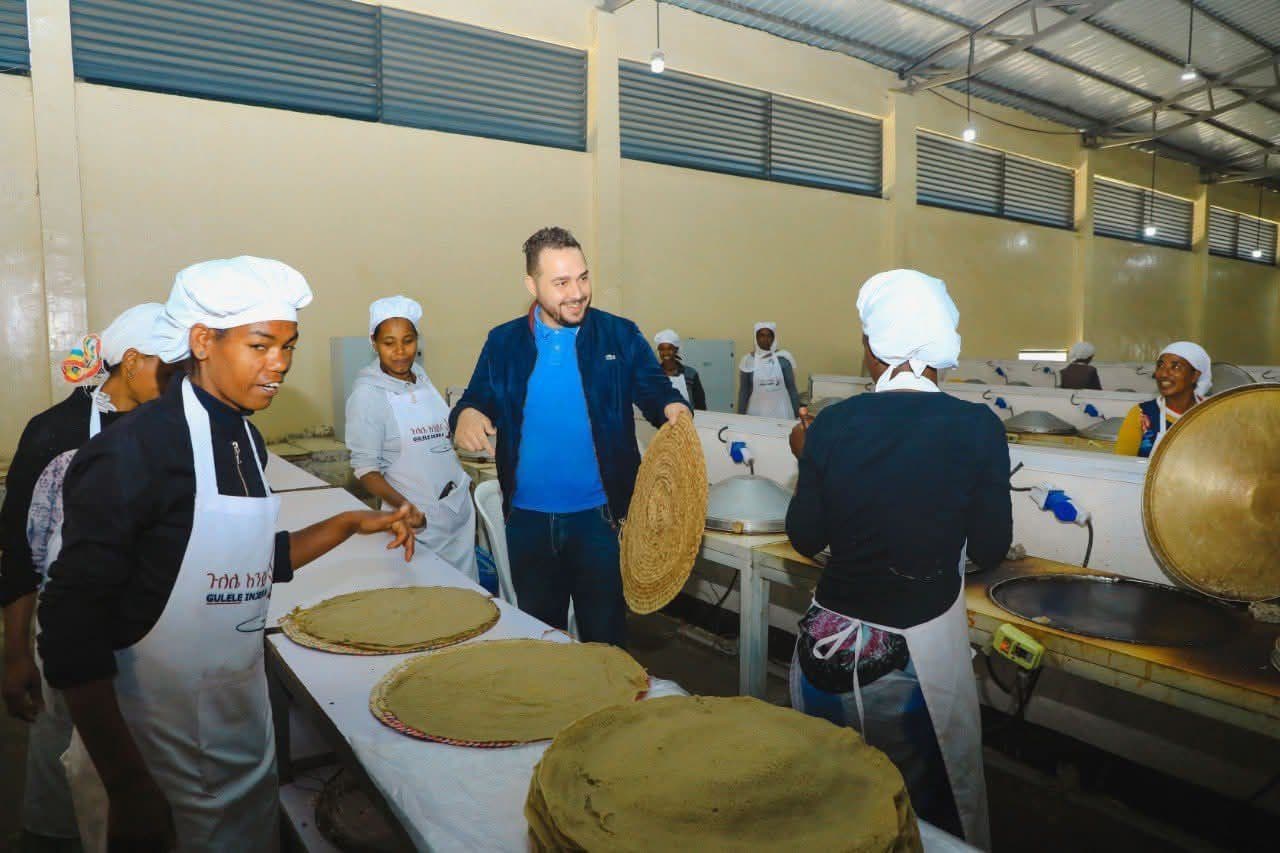
Inside the facility, hundreds of women were busy preparing injera, Ethiopia’s iconic sourdough flatbread that forms the foundation of nearly every meal. The room was alive with rhythm: batter being poured, soft steam rising from large round pans, and stacks of freshly baked injera carefully arranged for distribution.
But what fascinated me most was not just the food it was how it was being made.
A Tradition at the Heart of Ethiopian Life
Injera is more than a meal in Ethiopia, it is a cultural institution. Made primarily from fermented teff flour and water, the pancake-like bread accompanies almost every Ethiopian dish.
Traditionally, baking injera is labor-intensive and almost always performed by women. For generations, the process required cooking on clay pans placed over firewood or charcoal stoves. This meant hours of work in smoky kitchens and long trips to gather wood for fuel, tasks that exposed women to health risks and environmental challenges.
In many households, injera baking alone accounts for more than half of total household energy use, reflecting how central the process is to everyday life.
A Clean Energy Transformation
The bakery we visited revealed how Ethiopia is quietly modernizing this centuries-old tradition.
Instead of firewood, the women were using electric injera stoves known as “mitads.” These circular heated plates bake the injera evenly and efficiently without smoke. New energy-efficient electric mitads can even reduce energy consumption by up to 50 percent compared with older electric models, while eliminating the need for biomass fuels such as wood and charcoal.
This transition carries multiple benefits.
First, it reduces indoor air pollution, a major health concern for women who traditionally spend hours cooking over smoky fires. Second, it helps tackle deforestation, since the demand for firewood drops significantly. And third, it represents a powerful step toward clean energy adoption in everyday African life.
In many ways, what I witnessed was a practical example of the continent’s broader push for climate-smart development.
Women at the Center of the Value Chain
Yet the most powerful story inside that bakery was not about technology, it was about women’s empowerment.
In Ethiopia, injera baking has long been considered women’s work, forming a crucial but often invisible part of the food economy.
By organizing women into structured bakeries and cooperatives, initiatives like this are transforming a traditional domestic task into a formal economic opportunity. Women who once baked injera only at home can now earn a steady income supplying restaurants, markets, and institutions.
For many, it represents their first stable source of income, allowing them to support their families, educate their children, and gain financial independence.
Beyond individual livelihoods, these bakeries are strengthening the entire value chain, connecting farmers, processors, and food vendors in a more organized and efficient ecosystem.
Culture Meets Innovation
What makes this initiative remarkable is how it blends tradition with innovation.
The recipe remains the same, fermented teff batter spread carefully across a circular pan. The taste and texture that Ethiopians cherish are preserved.
But the process behind it has evolved. Clean energy technologies, improved baking equipment, and cooperative business models are reshaping a centuries-old food tradition into a modern, sustainable industry.
Lessons for Africa
As I watched the women skillfully baking injera one after another with remarkable speed it struck me that this simple bakery holds lessons far beyond Ethiopia.
Across Africa, many traditional food systems rely on biomass energy and unpaid or underpaid women’s labour. In Ghana, lots of women continue to rely on firewood in smoking fish. By introducing clean cooking technology, structured enterprises, and value-chain thinking, countries can unlock enormous economic and environmental benefits.
What Ethiopia is demonstrating is clear, innovation does not always have to be high-tech or complex. Sometimes, it begins with something as simple as rethinking how we cook our daily bread.
And in this case, that bread is injera, baked not just with flour and water, but with electricity, opportunity, and hope.
---
Michael Dewornu is a journalist in Ghana