Tell-Tale Signs of Earliest Cremation? Scientists Unearth Charred Bones in Ethiopia
May 26, 2026
Save
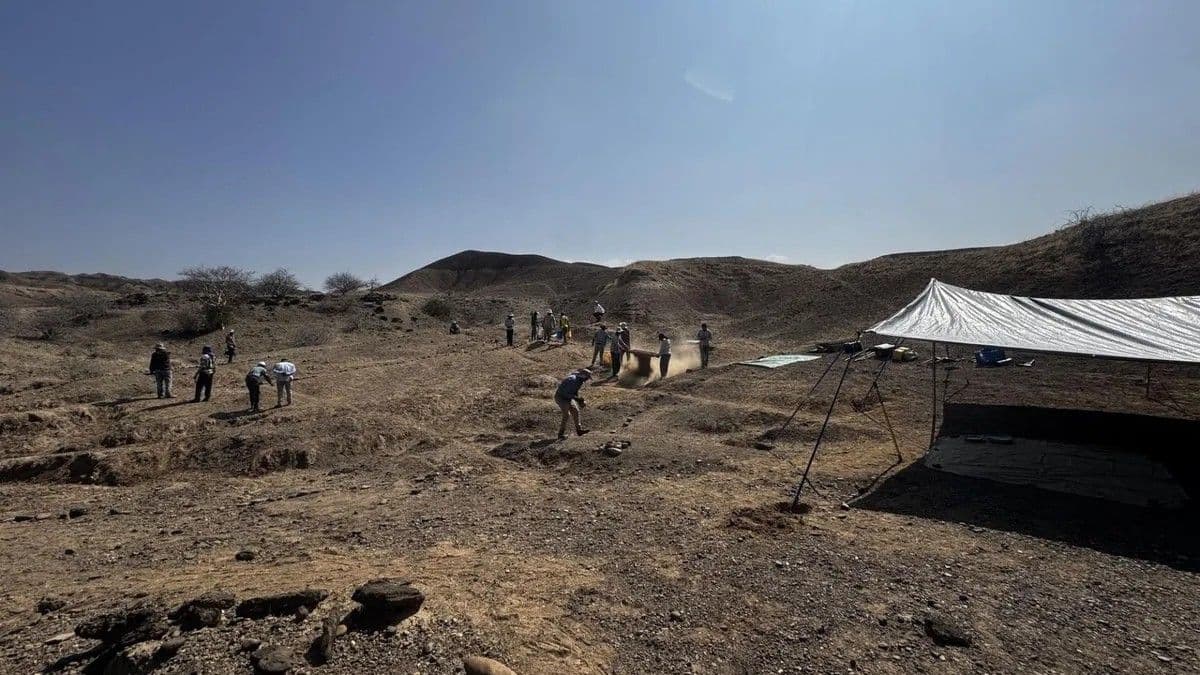
Scientists have just discovered what they said might be the earliest known evidence of human cremation, dating back 100,000 years, in Ethiopian lowlands.
The team of paleoanthropologists has been studying the Middle Awash site at Ethiopia’s Afar Rift since the early 1980s. This site, which is in the northeastern part of the country, is a hotspot for well-preserved fossils, including those belonging to Homo sapiens and our close relatives.
Recommended News
2026 Nobel Prize in Medicine Honours Optogenetics
Togo, Kyrgyzstan Strengthen Cooperation on Space Technologies
Ethiopia’s Tech Talent Poised to Help Drive Africa’s Digital Transformation
Congo Plans National Data Center Launch by End-2026 After Delays
20 Countries Call for Global Oversight of Artificial Intelligence
The discovery from five months ago and now published in the Proceedings of the National Academy of Sciences (PNAS) webpage, indicated that the Middle Awash study area is valuable because it contains over a kilometer of sediment that acts as a record for life in the area from the Miocene (23 to 5.3 million years ago) to the Holocene (11,700 years ago to the present).
According to this latest study, the site contains Homo sapiens bones that were burned at high temperatures.
The researchers believe this may be the earliest-known evidence of cremation — if so, it would be the oldest by 60,000 years. The bones also show evidence of bite marks, which, the scientists said, were likely caused by predators. It seems the remains were then quickly buried.
“Both the molar and the additional surface pieces show evidence of burning at high temperature in the form of extensive cracking, charring, discoloration, and fragmentation”, the team explain in their paper.
But the scientists also cautioned that their finding was too early to be taken as a conclusive one, saying other phenomena might also be responsible for the charred bones, such as bushfires.
They also said that there is evidence of intensive burning at the site, presumably from other sources than cremation, so they are not drawing any firm conclusions until confirmatory evidence is found.
Apart from the inconclusive finding, the researchers have made bigger findings that enriched the understanding of life during that era. In particular, they argue that local hydrological factors – the flood cycles of the ancient Awash River – influenced human life in the region to a greater extent than climate fluctuations.
Over the decades, thousands of stone tools have been collected at the site. These and other artefacts – including obsidian objects – have remained in the nearly undisturbed layers, offering researchers an unusually precise understanding of the spatial relationship between objects and fossils.
"This research helps us build a comprehensive understanding of how early Homo sapiens interacted with their environment. Our findings suggest that local water-related factors and changes were more decisive than global climate variations," Ferhat Kaya at the University of Oulu, Finland, explained in a statement.
Analysis of over 3,000 animal fossils reveals a diverse ecosystem made of monkeys, rodents and large mammals. Studying these remains help scientists reconstruct how early humans adapted to changing environments in the East African Rift, according to an article by Dr. Russell Moul.