Dec 30, 2025
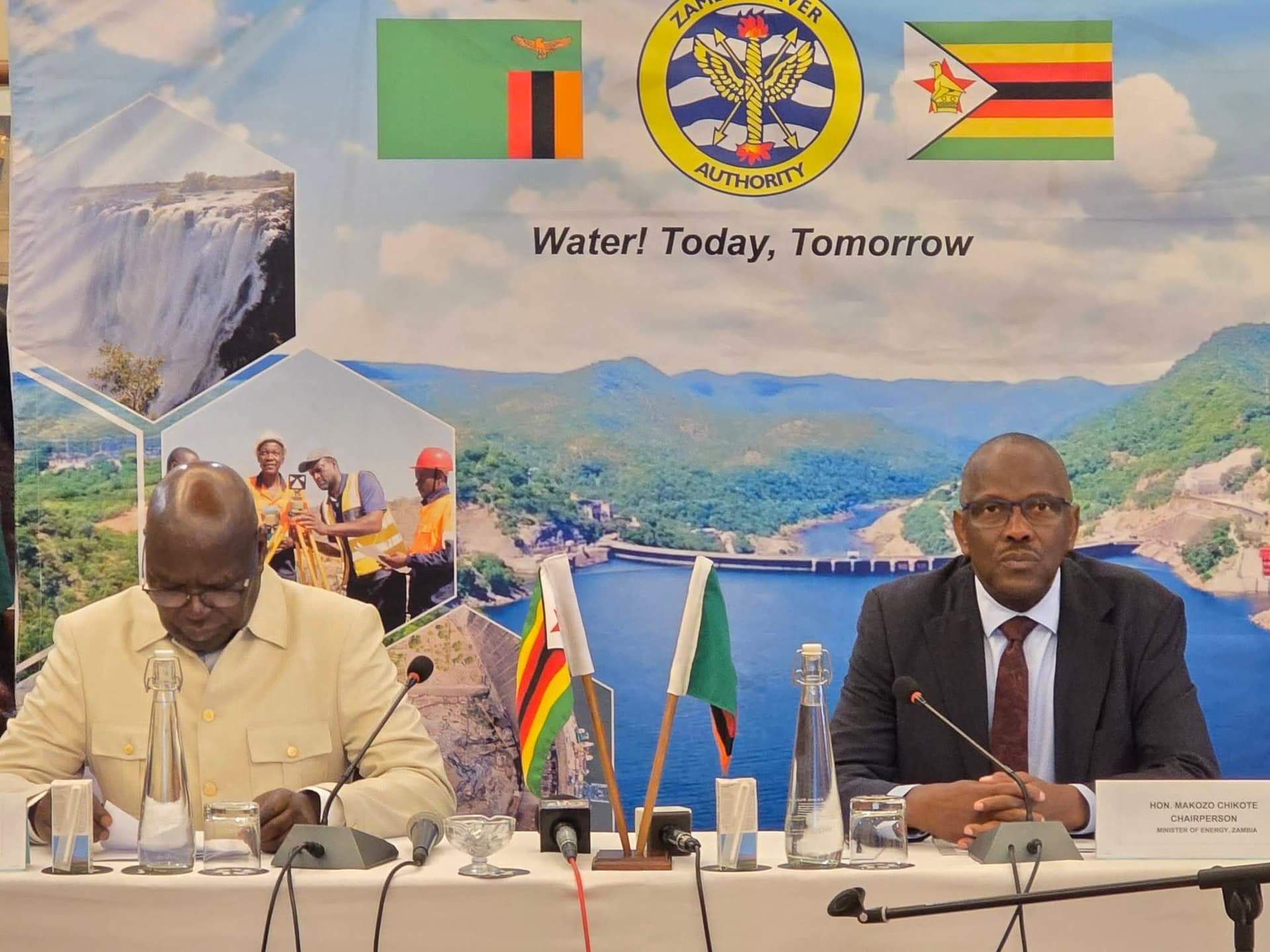
As African countries increasingly wake up to the urgent need to increase and diversify energy sources to beef up industrialization, two southern Africa countries, Zimbabwe and Zambia joined forces to narrow gaps in supply of electricity.
Calling for urgent acceleration of major power projects to address ongoing electricity shortages, the two countries want faster progress on the 2,400-megawatt Batoka Gorge Hydroelectric Scheme and the Kariba Floating Solar Photovoltaic (PV) Plant.
The appeal was made during the 43rd Zambezi River Authority (ZRA) Council of Ministers meeting held in Victoria Falls. Leaders from both countries said bureaucratic delays are slowing projects that are critical for energy security and economic growth.
Zambia’s Energy Minister and ZRA Chairperson, Makozo Chikote, said the Batoka project is long overdue and must be fast-tracked. He stressed that the hydro scheme and the Kariba solar project will create jobs and add diversity to the region’s energy mix.
Zimbabwe’s Energy Minister, July Moyo, expressed optimism following improved rainfall forecasts. He said recent hydrological data shows higher water flows in the Zambezi River compared to last year, raising hopes for better power generation.
In response to the improved outlook, the ZRA announced that water allocation for power generation at Kariba Dam will increase in 2026. Zimbabwe and Zambia will each receive 15 billion cubic meters of water, aimed at boosting electricity supply in both countries.
Zimbabwe faces a significant energy deficit, with peak demand exceeding supply by over 1,000 MW (around 2,500 MW demand vs. 1,500 MW available), causing frequent blackouts, impacting industry (mining, agriculture), and hindering economic growth, driven by aging infrastructure, low water levels at Kariba Dam, and increased demand from mining/domestic users.
Zambia faces a significant energy demand-supply gap, primarily due to heavy reliance on hydropower, making it vulnerable to droughts that reduce generation from 2,400-2,800 MW demand down to much lower levels of 900-1,040 MW, causing deficits of more than 1,000 MW, impacting mining and households.