Jan 11, 2026
By Mesai M.
Since the dawn of the 20th century, the term "Pan-Africanism" is widely viewed as a broad term encompassing political movements that promote both the self-determination of African peoples and solidarity among people of African descent worldwide. Also inspired by the Italo-Ethiopian War (1935–1936) and the Manchester Pan-African Congress of 1945, these pan-African networks united into a powerful anti-colonial movement. While the Pan-Africanism manifestos were written in ink by leaders like W.E.B. Du Bois and Kwame Nkrumah, the true soul of the art movement was woven into textiles, sculpted from earth, and painted onto canvases led by prominent intellectuals and artists like Aimé Césaire, Léopold Sédar Senghor, and Léon Damas. This artistic awakening, which began as a response to the "pressures of colonial oppression," has evolved into a radical, digital, and borderless contemporary renaissance.
The Early Strokes of Resistance and Négritude
The roots of Pan-African art are "deeply entangled" with the struggle against slavery and colonialism. In the early 20th century, as political congresses demanded independence in London and Paris, the Négritude movement emerge reclaiming African "blackness" from colonial disparagement, framing it as a source of immense pride and unique aesthetic power.
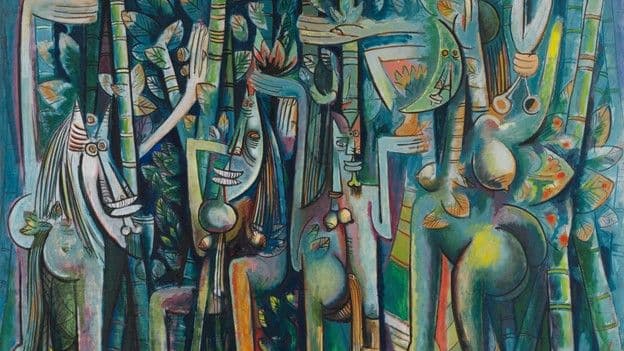
During this era, art served a dual purpose as a dynamic historical record of struggle and a formidable tool for decolonization. For example, Cuban artist Wifredo Lam, a pioneer of the movement, combined Cubism and Surrealism with African traditions in his masterpiece "The Jungle" (1943) to challenge traditional perceptions of African art.
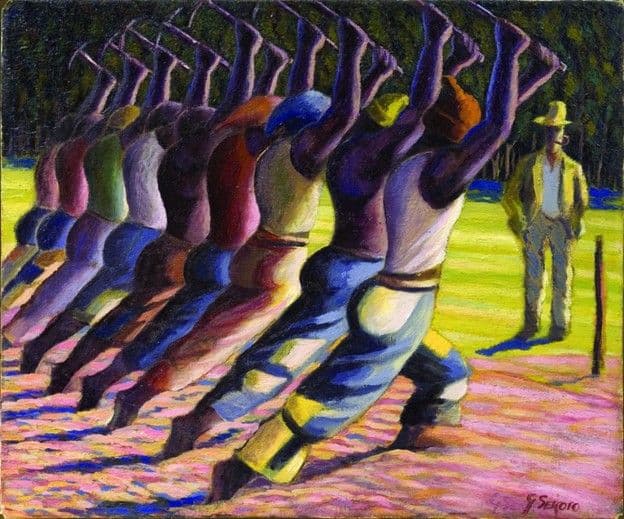
In the post-war years as independence swept the continent, art continued to serve as a tool for nation-building. Worth mentioning, the Dakar School in Senegal and the Mbari Artists and Writers Club in Nigeria emerged as crucibles of this new identity. Artists like the South African Gerard Sekoto captured the dignity of daily life under oppression, while others sought to fuse traditional motifs with modernist techniques, proving that African art was not a "primitive" relic of the past, but a living, breathing part of the global future (MoMAA, 2023).
The Spectacle of Unity at FESTAC ’77
As independence swept across the continent in the 1960s and 70s, art became central to nation-building. This "period of awakening" saw the rise of the art schools and clubs, which acted as crucibles for a new, modern African identity. If there was a single moment when the Pan-African artistic vision reached its zenith during the FESTAC ’77—the Second World Black and African Festival of Arts and Culture held in Lagos, Nigeria. It was a monumental effort to showcase African culture outside the "confines of ethnographic museums" and to bridge the gap between continental Africans and the global diaspora. The event brought together 16,000 participants from 56 nations, including superstars like Stevie Wonder and Miriam Makeba.
FESTAC was more than a party; it was a "cultural cathedral." It aimed to challenge Western Hegemony by showcasing African music, dance, and visual arts on a grand scale, it demanded that the world started to view African culture outside the confines of ethnographic museums. The event also helped to bridge the Diaspora by providing a rare forum for continental Africans and their siblings in the Americas and the Caribbean to recognize their shared heritage. On top of that it asserted Sovereignty. In the wake of the oil boom, Nigeria used the festival to project the image of a modern, wealthy, and unified African powerhouse. Africans looked into their faces and to each other’s. The smiles and laughers per se served as a toll of communication.
The Contemporary Shift: Diaspora and the digital Savannah
Fast forward to 2026, and the Pan-African aesthetic has evolved but no longer just about the "return to roots"; it is about the "routes" taken by the 21st-century global citizen. Contemporary artists are exploring what it means to belong to a "Black Planet"—a conceptual space that transcends physical borders (Art Institute of Chicago, 2024).
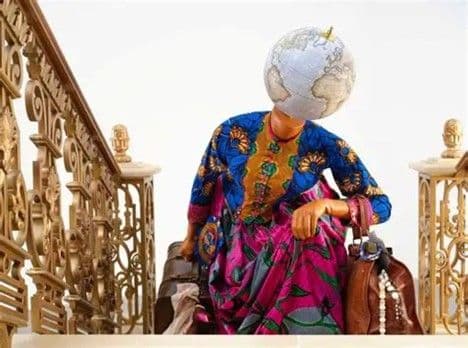
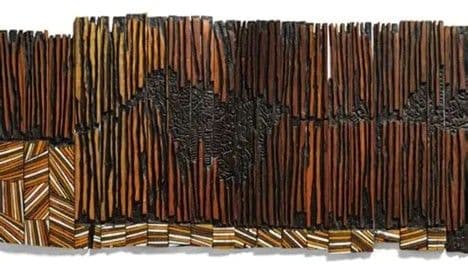
For instance, El Anatsui (Ghana) uses discarded liquor bottle caps to create shimmering, metallic tapestries that speak to history, consumption, and trade. Yinka Shonibare (UK/Nigeria) uses "African" Dutch wax fabrics to interrogate the complexities of colonialism and globalization (IPaintMyMind, 2025). Meanwhile, younger artists like Njideka Akunyili Crosby navigate the "cultural hybridity" of being both Nigerian and American, using photo-transfers and painting to layer memories of home onto her life in the diaspora.
Today’s Pan-Africanism is also digital and pragmatic. The "Digital Savannah" has allowed movements like #EndSARS and #FeesMustFall to create a new kind of solidarity that bypasses old bureaucratic structures (African Leadership Magazine, 2025).
Reclaiming the Narrative
The contemporary situation of Pan-African art is one of unprecedented visibility. Major exhibitions at the Museum of Modern Art (MoMA) and the Pan African Heritage Museum are currently showcasing how portraiture and photography fuel political imagination (MoMA, 2025).
However, the "unfinished project" of Pan-Africanism continues. While African art is fetching record prices at international auctions, the focus is shifting toward domestic transformation: creating more museums on the continent, securing the repatriation of stolen artifacts, and ensuring that the "cultural capital" of Africa benefits its own youth.
As we look ahead, Pan-Africanism in art remains a "shifting and boundless constellation." It is no longer just a history of what was taken, but a vivid, neon-colored map of what is being built.