Feb 13, 2026
By Mesai M.
Two years ago, in the ornate halls of Rome’s Palazzo Madama, Italian Prime Minister Giorgia Meloni pitched a "new chapter" in the history of Africa-Europe relations. Standing before two dozen African heads of state, she unveiled the Mattei Plan—a €5.5 billion initiative named after Enrico Mattei, the post-war energy visionary who advocated for equal-partnership development. The Plan is aiming to transform Italy’s foreign aid by promoting sustainable development and mutually beneficial partnerships with nine African countries.
Focused on sectors like education, agriculture, health, energy, and water, it seeks to address key needs while generating profits for Italy. Funded through instruments like the National and Climate Funds, the plan aspires to build stable, long-term collaborations, responding to Africa’s energy demands and positioning Italy as a key partner for growth and stability on the continent.
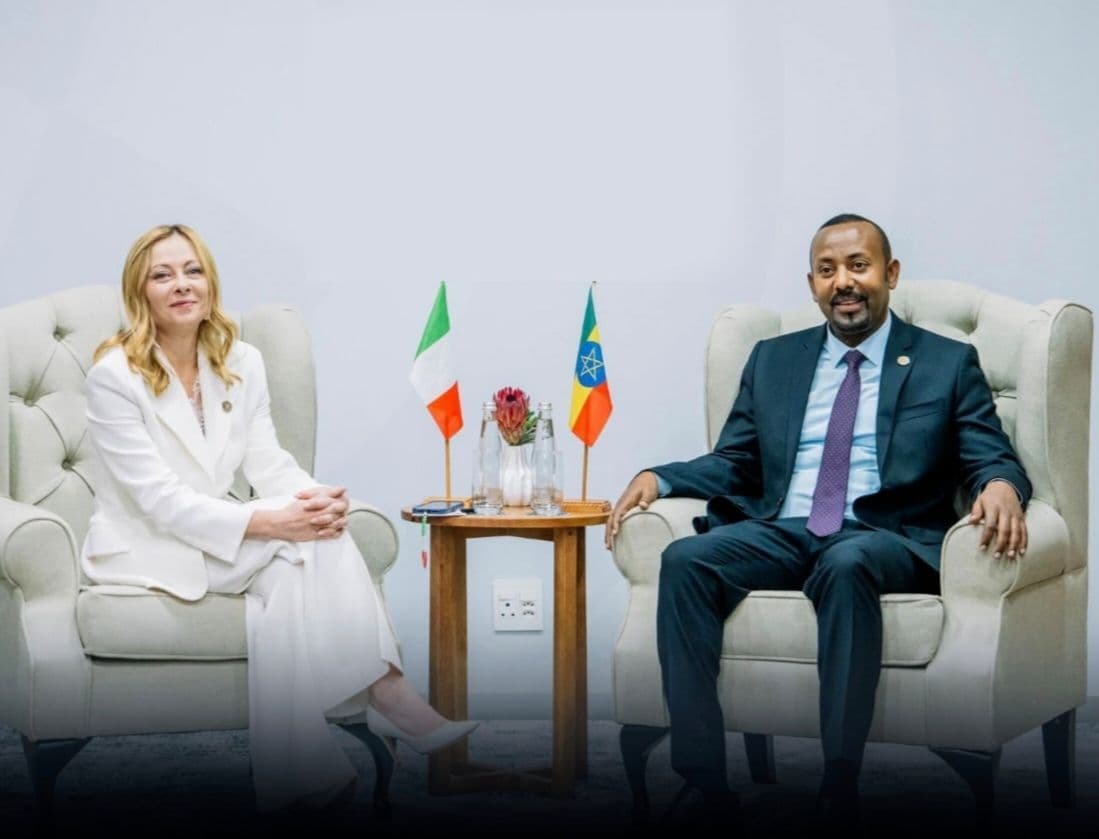
As the diplomatic caravan moves to Addis Ababa for the second Italia–Africa Summit on February 13, 2026, the rhetoric of "equal partnership" is meeting the hard reality of implementation. This second summit, notably the first held on African soil, arrives at a pivotal moment for Italy’s ambition to become Europe's energy and diplomatic bridge to the continent of Africa.
Assessing the First Pillar: The Mattei Plan in Action
Since its launch in 2024, the Mattei Plan has steadily evolved from a broad vision into a more concrete and structured framework. Originally focused on nine pilot countries, it has now expanded its reach to include 14 partner nations, such as Algeria, Ethiopia, and Kenya. This growth reflects a significant commitment to fostering development across a wider region.
Recent progress reports highlight a “dual-pace” approach to implementation. Currently, 29 projects are actively underway, each making tangible impacts. In Kenya, a large-scale biofuel initiative is working to dramatically increase oilseed production—from 44,000 to an impressive 500,000 tons annually—aiming to boost local energy resources and economic growth. This Biofuel Initiative will also support the livelihoods of approximately 200,000 small-scale Kenyan oilseed farmers, providing them with new opportunities and income streams. Meanwhile, in Tunisia, efforts are underway to redevelop schools, improving access to quality education. In the Republic of Congo, new water distribution networks are being drilled to ensure communities have better access to clean water.
Financially, Italy has strengthened the plan’s momentum by aligning it with the EU’s Global Gateway strategy. This synergy has unlocked an additional €250 million loan through the Africa Finance Corporation, specifically to support the Lobito Railway Corridor, a vital infrastructure project that promises to enhance regional connectivity and economic integration. Overall, the Mattei Plan is steadily advancing, balancing ambitious projects with strategic financial support, and steadily transforming its vision into concrete progress across Africa.
Collaboration is Key
Collaboration is said to be at the heart of the Mattei Plan. Its implementation involves a diverse range of stakeholders from both Italy and Africa, including multiple Italian government ministries, the Italian Export Credit Agency, as well as private companies and civil society organizations. What sets this initiative apart—and has earned it praise—is its inclusive approach. Unlike previous top-down efforts, the Plan actively involves African leaders in shaping and executing the programs. Together, they collaboratively design key goals and targets, fostering a sense of shared ownership and mutual commitment.
This collaborative spirit was evident when 21 African Heads of State and Government attended the summit where the Plan was announced. The presence of European Union President Ursula von der Leyen further underscored the strong European interest in this innovative partnership model. By working together in such an integrated manner, the Mattei Plan aims not only to achieve short-term objectives but also to identify opportunities where existing programs can be enhanced and expanded. This comprehensive, cooperative approach is both original and transformative, with the potential to reshape Italy’s approach to international partnerships.
Mutual Benefit
For Europe, the benefits are substantial—particularly through Italy’s “Energy” pillar. Italy aspires to become a key energy supplier to Africa, leveraging the expertise of ENI, the state-owned oil and gas company that has already established a significant presence across the continent. Companies like Azienda Comunale Elettricità e Acque (ACEA), which manages water services, and Ente Nazionale dell’Energia Elettrica, which is the National Electricity Company of Italy (ENEL), the energy giant, are also exploring opportunities in Africa related to environmental and energy sectors.
During discussions involving stakeholders of the Mattei Plan, former African Development Bank President, Akinwumi Adesina (Ph.D.) emphasized the mutual benefits of Italy’s investment. Africa is home to six of the world’s ten fastest-growing economies and boasts a rapidly expanding middle class. Moreover, with 75% of its population under 35 years old, the continent’s youthful demographic presents significant opportunities for sustainable growth and development—benefits that Italy aims to tap into through this ambitious, collaborative effort.
At the Rome summit, Adesina highlighted how strategic investments are driving tangible progress in Africa, especially in infrastructure, energy, digital connectivity, and regional projects like the Lobito Corridor and the Tanzania–DRC–Burundi railway. He called for better international coordination and quicker project implementation to support sustainable development across the continent.
The 2026 Summit
The choice to hold the 2026 summit in Addis Ababa, the heart of the African Union, is widely regarded by diplomatic analysts as both a symbolic and a substantive milestone. This decision marks a significant shift in Italy’s approach—from speaking about Africa to engaging directly with Africa on its own continent. It signifies a move towards greater partnership, respect, and mutual dialogue.
Looking ahead to 2026, several key objectives have been outlined to ensure the summit’s success. First is the "Accountability Audit," which will assess how well the initial commitments have been met—specifically, the performance of the €5.5 billion pledge and the progress of the 14 pilot programs. This review aims to ensure transparency and reinforce trust among all stakeholders.
Another major focus is Digital Transformation. Recognizing the rapidly growing importance of digital economies, Italy is emphasizing partnerships in digital public infrastructure (DPI). With Africa’s digital economy projected to reach an astonishing $712 billion by 2050, the plan includes exploring innovations such as digital ID systems and satellite-based agriculture solutions—tools that can boost economic growth and development across the continent.
Finally, the summit will continue the vital dialogue on migration and stability. Central to this discussion is the concept of "the right not to emigrate," which links development initiatives directly to job creation, particularly for Africa’s youth. By addressing the root causes of migration and fostering stability through economic opportunities, Italy aims to promote sustainable development and mutual prosperity in the region.
A Strategic Pivot
The significance of the 2026 meeting extends beyond bilateral deals. By aligning the summit with the African Union Assembly of Heads of State, Italy is positioning itself as the primary interlocutor for African interests within the G7 and the EU. It is plausible to note that the meeting marks another step in building a structured partnership and its goal is to define concrete operational priorities for the next phase—moving beyond aid toward a model of investment-driven growth.
As leaders gather in Ethiopia this month, the world will be watching to see if the "Mattei Bridge" is made of sturdy stone or merely political paper. For the thousands of young Africans looking for local opportunity, and for a Europe hungry for energy security, the stakes could not be higher.