Mar 10, 2026
By Mahder Nesibu
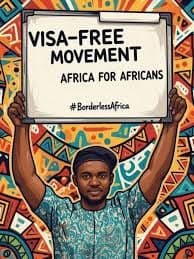
Imagine if there comes a time where 1.4 billion people move freely and swiftly across the borders of 55 AU member countries. Imagine if they trade among each other with little or no barriers and share ideas, talent and commerce. See the depth of political cooperation that would prevail among states?
Aspiration Two of the AU’s long-term blueprint, Agenda 2063 presents a picture of an integrated Africa with leaders placing the removal of barriers at the center of their common vision for continental transformation. Overhauling the visa regimes that obstinately separate neighboring societies is believed to be one of the ways to address Africa’s disintegration.
For decades African leaders argued that the continent’s fragmentation limits the emergence of strong markets and cohesive political relationships. A continent of more than fifty countries carries immense economic and human potential, yet the movement of its citizens across borders remains far more restricted than in other regions of the world. Free movement therefore appears both as a political project and as a strategy for development. In the words of former African Union Commissioner for Economic Development, Trade, Tourism, Industry, and Minerals (ETTIM) Albert Muchanga, “We cannot talk about a united Africa if Africans themselves cannot move freely within their own continent.” Through this perspective mobility becomes a catalyst that strengthens trade networks, encourages academic exchange and allows societies to grow closer through everyday interaction. These human connections gradually form the social and economic foundation of continental integration.
The African Union translated this ambition into institutional initiatives aimed at dismantling travel barriers and facilitating the mobility of African citizens. At the centre of these efforts stands the Protocol on the Free Movement of Persons, Right of Residence and Right of Establishment adopted in 2018. The protocol introduces a continental framework through which African citizens can travel across the continent with simplified visa procedures and gradually obtain the right to reside and establish businesses in other African countries. The agreement outlines a gradual pathway toward integration that begins with visa free entry and later expands into broader rights of residence and economic participation. Within the broader framework of Agenda 2063 this protocol represents one of the most ambitious legal instruments adopted by the African Union.
Complementing this effort stands the African Passport initiative launched during the 2016 African Union summit in Kigali. The passport emerged as a flagship project of Agenda 2063 and symbolized the aspiration of a continent where Africans travel freely across national borders. Regional organizations have already demonstrated the possibilities of such arrangements. The Economic Community of West African States introduced free movement policies decades earlier, allowing citizens to travel and reside across member states. The East African Community also developed a protocol that allows workers, students and entrepreneurs to move more easily across national borders. These regional frameworks illustrate how mobility agreements can function across diverse political and economic systems and therefore provide valuable lessons for the broader continental initiative.
Attracting the Diaspora
Alongside policies designed for African citizens, discussions around mobility have increasingly included the African diaspora. The diaspora holds a central place within the historical narrative of Pan Africanism and represents a vast global community that maintains cultural and economic ties with the continent. Several African governments have developed initiatives that invite diaspora participation in economic development and cultural exchange. Ghana’s Year of Return campaign in 2019 symbolized this approach by encouraging descendants of the African diaspora to reconnect with the continent through travel, investment and cultural engagement. Similar conversations within African Union institutions explore frameworks that could facilitate easier mobility for diaspora communities through special visa arrangements and long-term residency programs.
Such initiatives recognize that the African diaspora forms an extension of the broader African community. Enhanced mobility between Africa and its diaspora strengthens cultural exchange while encouraging investment flows that contribute to economic development across the continent.
Free Movement and Trade
The practical implications of free movement extend deeply into Africa’s economic future. The African Continental Free Trade Area has created the possibility of the largest integrated market in the developing world. Trade agreements alone however achieve their full potential only when entrepreneurs, workers and investors move across borders to build the networks that sustain commerce. Mobility allows traders to reach new markets and enables companies to develop supply chains that span multiple countries. Tourism grows as travel procedures become simpler and more predictable. Skilled professionals circulate between economies that require their expertise, allowing knowledge and technical skills to spread across the continent.
Rwanda’s Minister of Trade, Prudence Sebahizi summarized this dynamic with clarity when he observed that “If we truly believe in the AfCFTA, then free movement must be the backbone of our integration. Goods do not move themselves. People move them.” Through this lens, mobility emerges as a central pillar of economic transformation. Expanded travel encourages investment, stimulates infrastructure development and strengthens connections between African markets. Airlines increase routes between cities while roads, railways and digital infrastructure gradually expand in response to the growing demand for cross border movement. Over time, these networks weave together the continent’s diverse economies into a more coherent system of exchange.
Free Movement and Peace
Free movement also carries implications for peace and security across Africa. Regions connected through commerce and human interaction develop stronger incentives for cooperation and stability. Cross border communities often share economic interests that encourage diplomatic dialogue and conflict prevention. Regional mobility frameworks also facilitate cooperation among security institutions and border authorities. Governments coordinate information sharing and migration management while strengthening regional governance structures.
Beyond security considerations lies the deeper cultural dimension of mobility. Movement of people allows cultures to interact, influence one another and rediscover shared historical experiences. Students pursue education across the continent while artists collaborate across linguistic and regional boundaries. Travelers encounter societies that share similar traditions, histories and aspirations despite the existence of colonial borders that once divided them. These interactions cultivate a growing sense of continental belonging among African citizens. Cultural exchange strengthens the spirit of Pan Africanism and reinforces the social foundations of African unity.
Drawing Schengen’s Experience
African policymakers often examine the European experience when discussing the long-term possibilities of continental mobility. Europe’s Schengen Area removed internal border controls among participating states and created one of the largest free movement zones in the world. The Schengen system transformed travel within Europe by allowing citizens to cross borders with minimal administrative procedures. Businesses operate seamlessly across national jurisdictions while workers relocate for employment opportunities across the European Union. Tourism flourishes through simplified travel procedures and academic exchange programs allow students to pursue education across multiple countries.
Political scholars frequently describe Schengen as one of the most tangible achievements of European integration because it transformed the idea of a united Europe into a daily reality experienced by millions of citizens. Economist Jean Pisani Ferry has written that the ability of Europeans to live and work across borders represents one of the defining features of the European project, creating shared experiences that strengthen continental identity. Through such mechanisms mobility contributes to economic expansion while fostering cultural and political cohesion. The European experience therefore illustrates how sustained political commitment and institutional coordination can gradually transform fragmented regions into integrated communities.
Africa’s journey toward similar levels of mobility has produced meaningful progress while also reflecting the complexity of continental integration. Several African countries adopted visa free or visa on arrival policies for fellow Africans, with Rwanda, Benin, Seychelles and The Gambia often cited as leaders in this effort. Regional organizations such as ECOWAS continue to demonstrate the practicality of open travel systems within West Africa. The broader continental framework however evolves gradually as governments balance economic ambitions with administrative and political considerations.
Ratification of the Free Movement Protocol continues to expand slowly across African Union member states. Border management systems require modernization in many regions and infrastructure connecting border communities continues to develop through new transportation projects. Political leadership remains central to the success of these initiatives as governments evaluate economic opportunities alongside domestic policy priorities. Analysts frequently describe the process of African integration as a long-term transformation that unfolds through incremental reforms and regional experimentation. Each bilateral visa exemption agreement and regional mobility arrangement therefore contributes to the broader continental vision.
The future of African integration ultimately rests within institutions as well as within the daily choices of its citizens. Policies developed by the African Union create the framework for mobility while the lived experience of travel, study and business across borders transforms integration into reality. When an Ethiopian studies at a university in Ghana or when entrepreneurs from Nairobi establish ventures in Lagos the continent’s economic and intellectual networks expand. Tourism within Africa introduces travellers to diverse cultures while reinforcing the shared identity that lies at the heart of the Pan African vision.
Governments hold an important responsibility to facilitate this movement through visa reforms and coordinated policies that encourage cross border engagement. Simplified travel procedures encourage investment and academic exchange while improved transportation networks strengthen physical connectivity across the continent. The African Union can accelerate progress through stronger advocacy for the ratification of the Free Movement Protocol and through continued development of initiatives such as the African Passport. Regional organizations can deepen their own mobility arrangements while aligning them with continental frameworks. In the end the realization of Africa’s integration emerges through the collective actions of leaders, businesses, students and travellers whose everyday movements create the human connections that define a united continent.