Mar 12, 2026
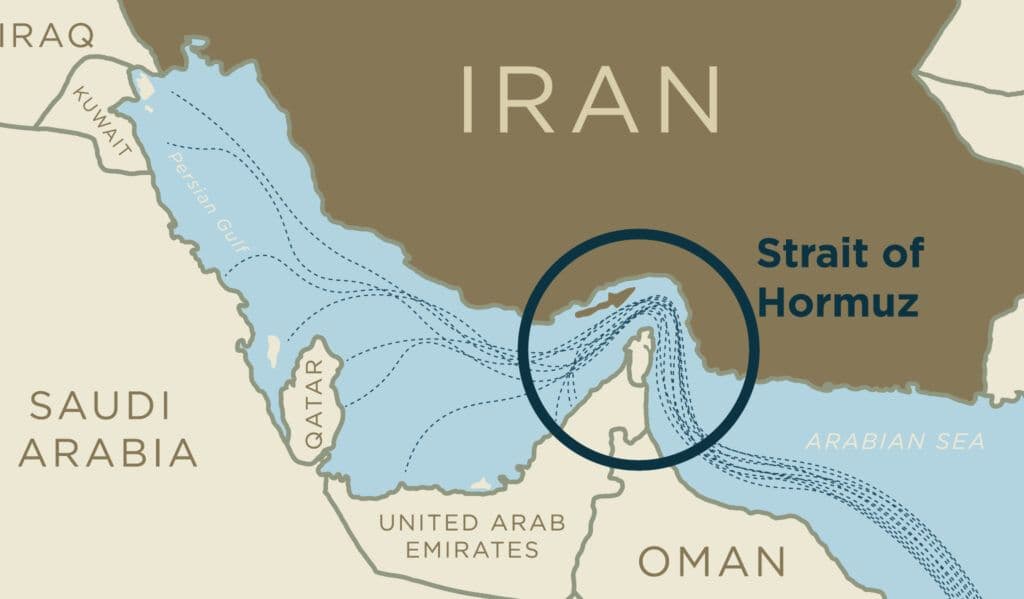
Under the tense skies of the Middle East, where warships glide across uneasy waters and every new escalation sends tremors through global markets, a narrow strip of sea quietly carries the weight of the modern world. The Strait of Hormuz—a thin corridor between Iran and Oman—has become the fragile artery of global energy, where tankers move like lifelines for distant economies and every ripple of conflict can echo across continents.
In a moment when tensions once again grip the region, this slender passage reminds us of how geography can shape the fate of nations—but what do we really know about this historic gateway of our world?
The Strait of Hormuz is a narrow stretch of water linking the Persian Gulf to the Gulf of Oman and the Arabian Sea. Measuring just 21 miles (33 kilometers) wide at its narrowest point, with shipping lanes a mere two miles wide in each direction, this waterway is arguably the most strategically important geographical feature on the planet. To understand the Strait of Hormuz is to understand the heartbeat of the modern global economy.
The History of the Strait
Long before the discovery of oil, the Strait of Hormuz was a vital artery for ancient maritime trade. For millennia, it served as a bustling crossroads connecting the Middle East, the Indian subcontinent, and East Africa.
In the 13th and 14th centuries, the Kingdom of Ormus emerged as a powerful trading empire in the region. Recognizing its strategic value, the Portuguese, led by Afonso de Albuquerque, captured the Kingdom in 1507 to monopolize the spice trade and control the route to India. The Portuguese maintained control for over a century until 1622, when a joint force of the British East India Company and Safavid Persia drove them out.
Throughout the 19th and 20th centuries, the British Empire exerted heavy influence over the waterway to protect its trade routes to India. However, the true historical pivot occurred in the mid-20th century with the discovery of massive oil reserves in the Persian Gulf. Almost overnight, the Strait transformed from a regional spice and silk route into the central valve of the industrialized world’s energy supply.
What the Strait Means to the World?
Today, the Strait of Hormuz is the world's most critical chokepoint for global energy flows. To the global community, it means survival, energy security, and industrial stability.
It serves as the global “Oil Artery” where approximately 20% to 30% of the world’s total global oil consumption passes through every single day. This amounts to roughly 21 million barrels of oil daily.
It is not just about oil, though. A massive portion of the world’s Liquefied Natural Gas (LNG)—particularly from Qatar, one of the world's leading LNG exporters—must traverse this narrow corridor to reach markets in Europe and Asia.
The strait’s importance is also its irreplaceability. Unlike the Suez Canal or the Red Sea, where ships can take a longer alternative route around Africa (the Cape of Good Hope) if necessary, there are very few viable alternatives for bypassing Hormuz. Only a fraction of the oil can be diverted through pipelines in Saudi Arabia and the UAE. If the Strait is blocked, the oil simply cannot reach the global market.
Current Impact on the Global Economy
Currently, the Strait of Hormuz casts a massive shadow over the global economy due to severe geopolitical tensions in the Middle East.
With the ongoing Israel-Hamas war, the Red Sea crisis involving Houthi militants, and the overarching shadow war between Iran and Western powers, the waters around the Middle East are highly militarized. Iran, which shares the strait with Oman, has frequently seized commercial shipping vessels in retaliation for Western sanctions. Because of this high risk, maritime insurance premiums have skyrocketed, increasing the cost of shipping goods globally.
Tensions along this strait has a direct bearing on oil price volatility. Whenever a military incident occurs near the Strait, global oil prices instantly spike. This volatility creates a direct economic burden on importing nations, contributing to global inflation. When oil prices rise, everything from manufacturing and transportation to food production becomes more expensive, straining consumers worldwide.
Confrontations also directly cause supply chain jitters. The constant threat of a disruption forces nations (especially heavy importers like China, Japan, India, and European countries) to maintain costly strategic petroleum reserves and engage in complex diplomatic balancing acts to ensure their energy security is not compromised.
The Hopes and Fears of Tomorrow
As we look to the future, the Strait of Hormuz represents both a profound vulnerability and a catalyst for change.
The ultimate nightmare scenario for the global economy is the total closure or mining of the Strait by Iran in the event of an open regional war. Military analysts estimate that a full blockade could temporarily push oil prices above $150 or even $200 a barrel. This would trigger a massive global recession, collapsing stock markets, causing massive job losses, and paralyzing international transportation. Furthermore, an attempt to reopen the strait would likely result in a devastating and costly multinational military conflict.
Despite these fears, there is hope on the horizon, driven by diplomacy and technology.
Gulf nations are heavily investing in bypass infrastructure. For example, the UAE’s Habshan-Fujairah pipeline currently allows a portion of oil to bypass the Strait entirely, and Saudi Arabia has expanded its East-West pipeline to the Red Sea.
Also in recent years, there have seen unprecedented diplomatic shifts such as the China-brokered normalization of ties between Saudi Arabia and Iran. If regional powers continue to prioritize economic development over conflict, the threat to the Strait will significantly diminish.
The greatest hope for neutralizing the risk of the Strait of Hormuz is the global transition toward renewable energy. As electric vehicles replace combustion engines and nations switch to wind, solar, and nuclear power, the world's reliance on Middle Eastern fossil fuels will naturally decline. Over the next few decades, this green transition could slowly strip the Strait of its ability to hold the global economy hostage.
In a nutshell, the Strait of Hormuz is much more than a narrow stretch of water; it is a barometer for global peace and economic health. While it currently holds the power to make or break the global economy, the shifting tides of geopolitics and the push for sustainable energy may eventually redefine its legacy from a terrifying geopolitical chokepoint back to a peaceful conduit of global trade.