Mar 19, 2026
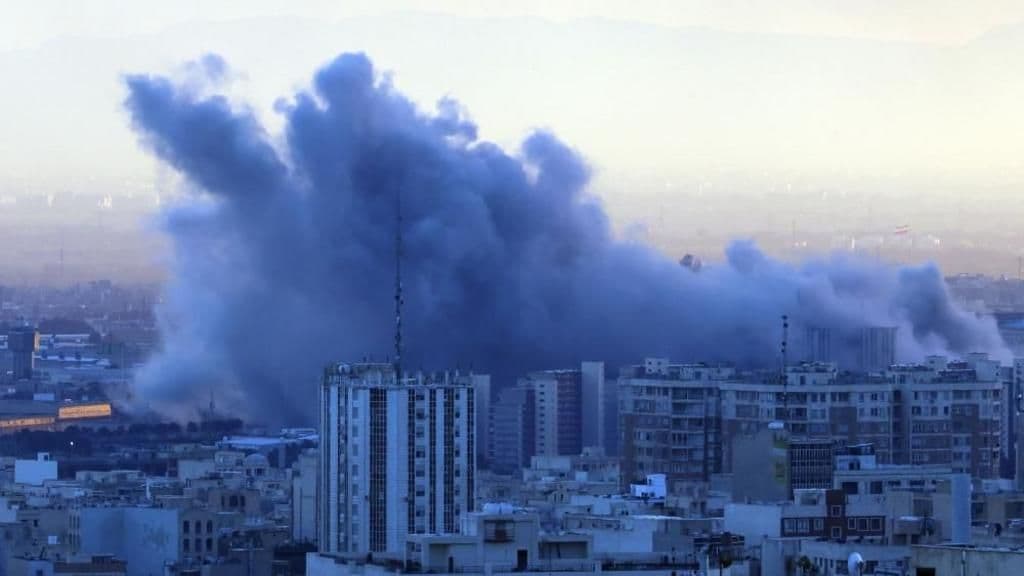
The war between the U.S. and Israel on one side and Iran on the other has taken on a more sinister turn as attacks begin to target gas fields directly. On Wednesday, Israel attacked the South Pars gas field in Iran.
Iran sends missiles and drones into U.S. assets in Qatar and other Gulf nations in retaliation. Qatar reportedly ordered Iranian security and military attaches to leave the country after Iranian missiles cause “extensive damage” to its main gas facility at Ras Laffan.
U.S. President Donald Trump threatened to “blow up” the world’s largest gas field, a key Iranian asset, if Tehran keeps up its attacks on Qatar. He denied knowledge of Israel’s plan to strike the South Pars field.
Oil prices surged again as energy facilities in the region came under attack.
According to reports, Saudi Arabia said it “reserved the right to take military action” against Tehran, while Qatar expelled Iran’s military and security attachés.
Meanwhile, unknown projectiles hit two vessels in separate incidents in and around the Persian Gulf early Thursday, said the UK’s maritime agency.
Reports suggest the USS Gerald R. Ford and USS Abraham Lincoln are experiencing severe operational strain, including prolonged deployments, sewage failures, and fire incidents, forcing them towards maintenance.
Iran's intelligence minister Esmail Khatib has been killed, Iranian president Masoud Pezeshkian has confirmed, in what he described as “cowardly assassination” on Wednesday.
It comes a day after Israel announced it had killed Iran's top security official, Ali Larijani, and head of the paramilitary Basij force, Gholamreza Soleimani, in strikes.
According to analysts, if the conflict continues to escalate, the consequences could extend far beyond the immediate battlefield. With major energy infrastructure already under attack, further strikes on gas fields, shipping lanes, or refineries could disrupt global energy supplies on an unprecedented scale.
The Persian Gulf—through which a significant share of the world’s oil and gas flows—could become increasingly unsafe for commercial shipping, sending energy prices even higher and triggering economic shocks across both developed and developing economies.
More dangerously, the war risks pulling additional regional and global powers directly into the confrontation. With tensions rising among Gulf states and military assets already stretched, a prolonged conflict could spiral into a wider regional war involving multiple actors and fronts. Without urgent diplomatic efforts to de-escalate, the crisis threatens not only regional stability but also the fragile balance of the global economy and international security.