Mar 20, 2026
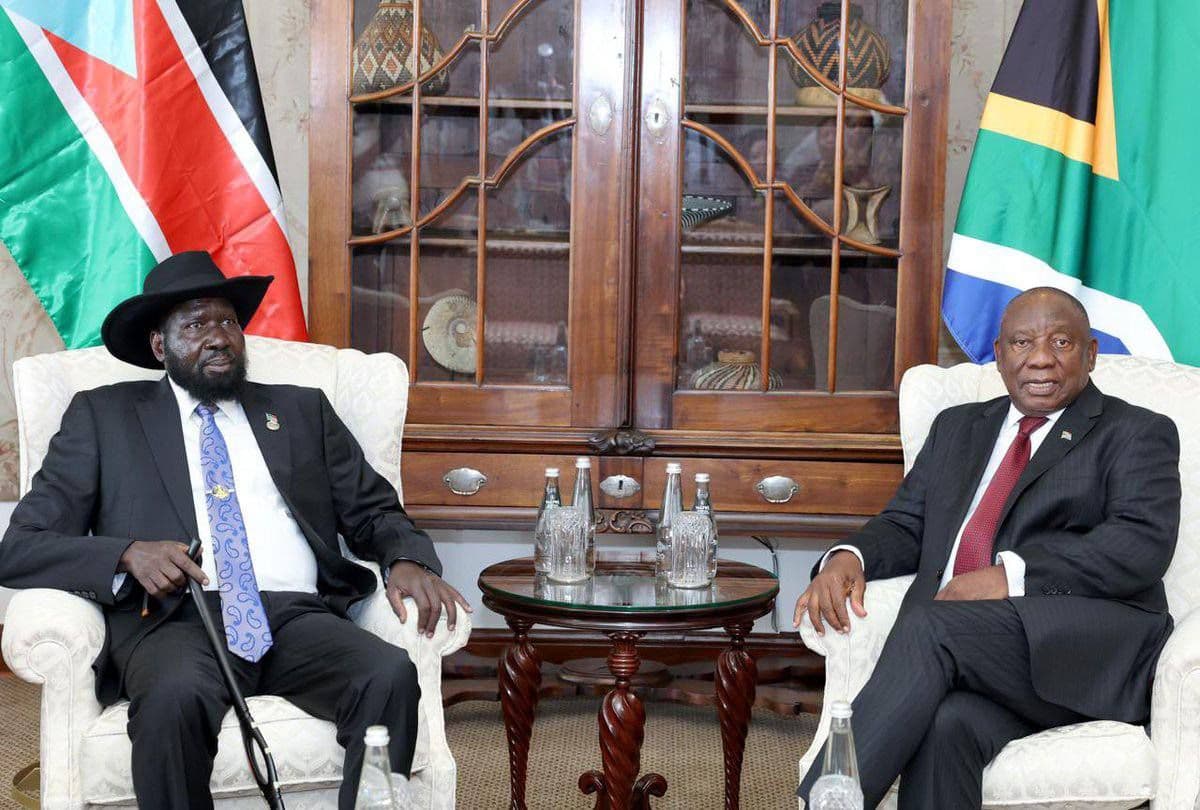
South Sudan President Salva Kiir Mayardit has said his country is steadfast on December 2026 schedule to hold the much-awaited elections as tensions simmer due to political rivalries in Africa’s nascent nation.
This came during a meeting between Kiir and South African President Cyril Ramaphosa on Thursday as part of the former’s three-day visit to the rainbow nation.
The two leaders focused their discussions on scheduled meeting in South Sudan, electoral support and avenues to improve economic cooperation between Juba and Pretoria, according to a statement issued by the Office of the South Sudan Presidency.
President Salva Kiir Mayardit on Thursday met with his South African counterpart, Cyril Ramaphosa. Discussions between the two Heads of State focused on the upcoming 2026 elections, electoral support, and avenues to improve economic cooperation between Juba and Pretoria.
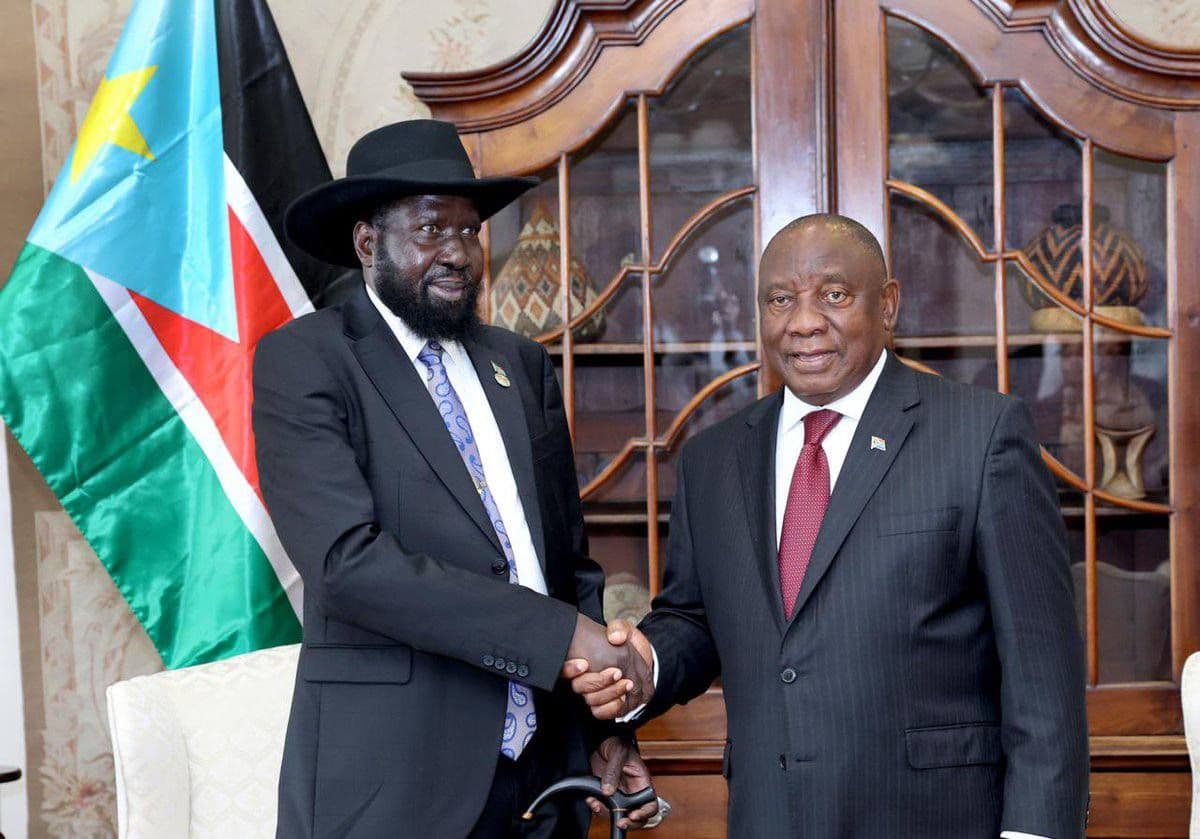
“President Kiir reaffirmed that South Sudan remains committed to holding elections in December 2026,” the statement said. “He emphasized that the Revitalized Peace Agreement continues to guide the country’s transition and preparations for elections are ongoing.”
The Revitalised Agreement on the Resolution of the Conflict in the Republic of South Sudan (R-ARCSS), signed in September 2018, is a peace deal intended to end the civil war that began in 2013, focusing on power-sharing between President Salva Kiir and Vice President Riek Machar.
Brokered by IGAD, it aimed to implement a ceasefire, reform security, and form a transitional government.
Tensions have severely escalated in South Sudan following the March 2025 house arrest of First Vice President Riek Machar, with reports in early 2026 indicating he remains in detention while facing treason and murder charges.
The detention of Machar, a main opposition leader and key rival to President Salva Kiir, has caused the 2018 peace agreement to unravel, raising intense fears of a return to full-scale civil war.
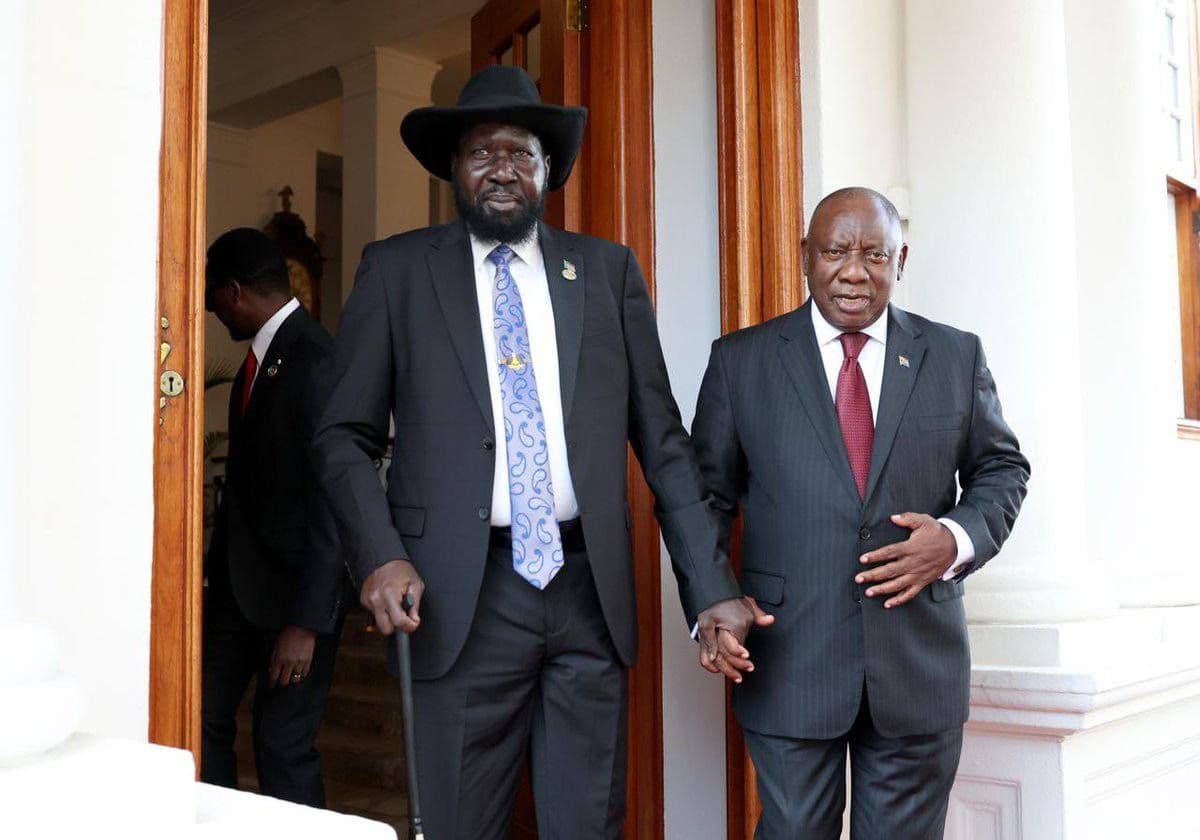
During his meeting with Ramaphosa, the South Sudanese president made it clear that his country will stick by the elections as scheduled. “Kiir highlighted that while South Sudan is dedicated to advancing its democratic processes, the country needs technical and logistical help to ensure credibility in the upcoming polls,” the statement said.
Meanwhile, Kiir expressed condolences to the people of South Africa on the passing of South African Nicholas Haysom, recognizing his important role in South Sudan’s peace process and his service to the country through the UN Mission in South Sudan (UNMISS).
Welcoming the commitment expressed by his South Sudanese counterpart, Ramaphosa emphasized the importance of having inclusive and credible elections.
In a statement, the Office of the South African Presidency said, the working visit provided an opportune moment for the two Heads of State to discuss bilateral relations and exchange views on the latest political developments in South Sudan, particularly the implementation of the Revitalized Agreement on the Resolution of the Conflict in the Republic of South Sudan (R-ARCSS).
It said the meeting follows recent engagements between the two leaders on the margins of the African Union (AU) Summit held in Addis Ababa in February 2026, where President Ramaphosa also chaired the Ad Hoc High-Level Committee on South Sudan (C5) Plus.
South Sudan officially gained independence from the Republic of the Sudan on July 9, 2011, becoming the world's youngest nation and a UN member state. This followed a January 2011 referendum where 98.83% of voters supported secession, culminating a 2005 peace agreement that ended decades of civil war.
But jubilation was short lived. After two years into independence, in December 2013, South Sudan plunged into a devastating civil war. The conflict began in the capital, Juba, on December 15, 2013, following a political power struggle within the ruling Sudan People's Liberation Movement (SPLM).
Years of peace efforts mediated by IGAD in Addis Ababa and other cities produced the R-ARCSS, but implementation lacks the desired momentum and mired by persistent conflict and structural challenges.