Apr 10, 2026
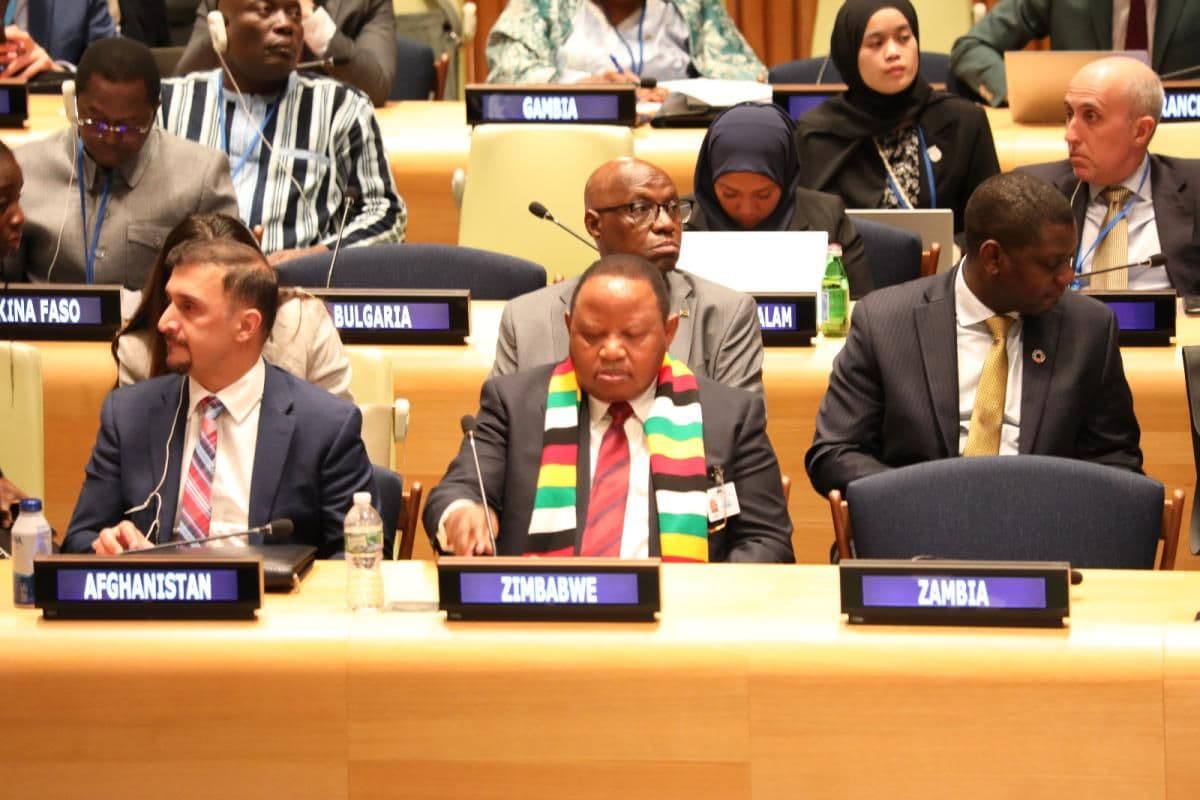
Zimbabwe has formally outlined its campaign for a non-permanent seat on the United Nations Security Council (UNSC) for the 2027–2028 term, positioning its bid around multilateral diplomacy, peaceful coexistence, and inclusive global governance.
The announcement was made during a diplomatic engagement in Harare with visiting United Nations Permanent Representatives, where Foreign Affairs and International Trade Minister Amon Murwira reaffirmed Zimbabwe’s foreign policy principle of being a “friend to all and enemy to none.”
The UNSC, a key organ of the United Nations responsible for maintaining international peace and security, consists of 15 members, including five permanent members and ten non-permanent members elected on a rotating regional basis. Africa typically holds three non-permanent seats.
The Minister said that if elected, it would prioritize dialogue-based conflict resolution, preventive diplomacy, and stronger representation of developing countries in global decision-making. The country also emphasized respect for international law and the UN Charter as central to its foreign policy approach.
Officials added that Zimbabwe’s priorities would include peacebuilding, climate-related security challenges, and inclusive development, reflecting the evolving nature of global security threats beyond traditional conflict.
Zimbabwe last served on the Security Council in 1991–1992, and officials say the renewed bid reflects a broader effort to strengthen the country’s engagement in multilateral diplomacy and global governance.
Analysts note that the campaign aligns with wider African efforts, supported by the African Union, to secure greater representation within global institutions and ensure African perspectives are better reflected in international peace and security decisions.
Zimbabwe’s bid is also seen as an important channel for advancing Africa’s broader agenda within the UNSC, particularly on issues of peace, security reform, equitable development, and stronger representation for developing nations. By advocating for these priorities, Zimbabwe positions itself as a voice contributing to Africa’s collective diplomatic efforts on the global stage.
Beyond its current bid, Africa has long called for a permanent seat on the UN Security Council, arguing that the continent—home to 54 countries and the world’s second-largest population—remains underrepresented in global decision-making. Many of the issues discussed at the Council, including conflict resolution, peacekeeping, climate security, and development, directly affect African nations more than any other region.
The African Union (AU), along with its member states, has consistently advocated for UN reforms to correct this imbalance, stressing that Africa deserves a permanent voice in shaping decisions that impact its future. Despite decades of advocacy, reform efforts have yet to deliver full representation, keeping Africa’s demand for a permanent seat at the center of global diplomatic debate.