Apr 27, 2026
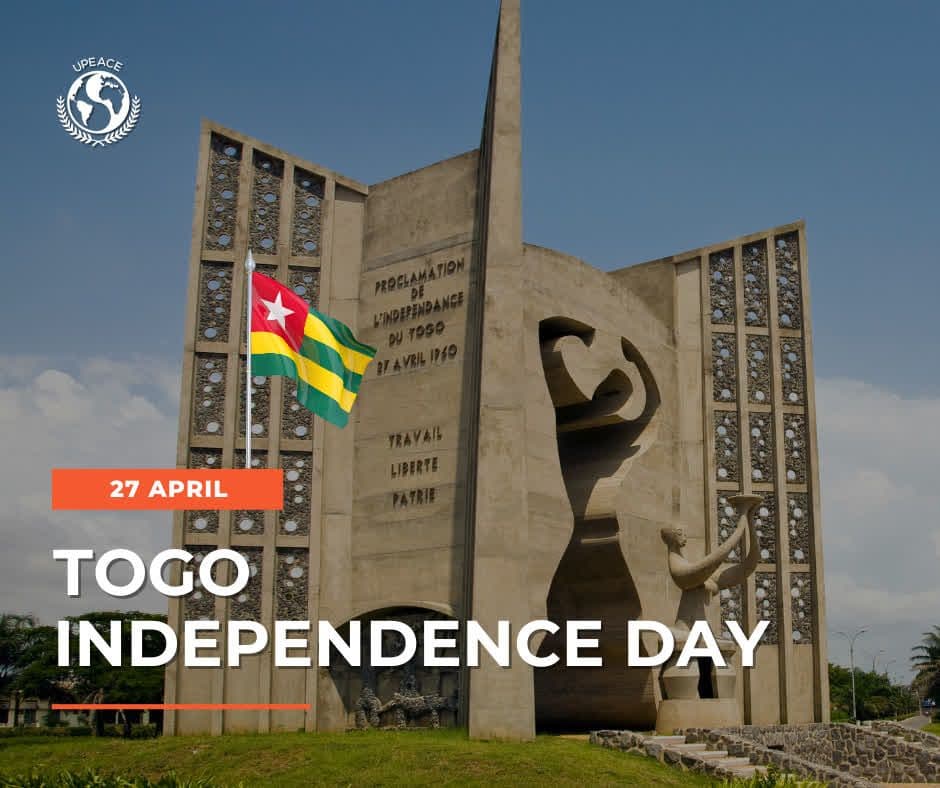
Togo is marking its Independence Day on Monday, commemorating its liberation from colonial rule and celebrating national unity under the enduring motto “Work – Liberty – Homeland.”
Formerly part of German Togoland, the territory came under French administration after World War I under a League of Nations mandate, later becoming a United Nations Trust Territory.
Over the following decades, growing nationalist movements and demands for self-determination reshaped the political landscape, paving the way toward independence.
A key regional shift preceded independence when the British-administered part of Togoland was integrated into the Gold Coast, which later became independent Ghana in 1957. Meanwhile, French Togoland moved toward autonomy, becoming a self-governing republic within French West Africa in 1959.
Sylvanus Olympio led the country to full sovereignty on April 27, 1960, becoming its first president.
The Independence Day observance continues to reflect both the historical journey toward statehood and the national ideals captured in the motto “Work – Liberty – Homeland.”
As Togo marks Independence Day, the celebrations come against a backdrop of both continuity and debate—highlighting a country that has maintained relative stability in a volatile region, while still grappling with questions of political reform, inclusive governance, and sustainable economic development.
Economically, Togo has recorded moderate growth in recent years, driven by infrastructure development, logistics (particularly the port of Lomé), and reforms aimed at improving the business environment. However, the economy remains structurally constrained, with a large informal sector accounting for most employment and limited industrial diversification.