May 1, 2026
By Mahder Nesibu
When war erupted between the United States and Israel on one side and Iran on the other in late February this year, fuel queues lengthened across East Africa within days. In Ethiopia, Prime Minister Abiy Ahmed urged citizens to ration fuel based on priorities. In Somalia, petrol prices nearly quadrupled. Tanzania's energy regulator raised its pump price ceiling by 33 percent within weeks. The Strait of Hormuz, through which approximately 20 percent of global oil consumption and 20 percent of global LNG trade transits, had effectively closed. The disruption was thousands of miles away. The consequences arrived immediately.
Four years earlier, the outbreak of a war between Russia and Ukraine had produced the same dynamic through a different commodity. Fifteen African countries sourced more than half their wheat from Russia and Ukraine before the war. Six of them, including Sudan and Tanzania, sourced more than 70 percent from that corridor. When it closed, bread prices rose, budgets strained, and governments scrambled. The African Development Bank estimated a grain shortage of approximately 30 million tons on the continent in the first year of the war alone. Each crisis reveals the same architecture: a geopolitical shock in a distant region translates, through supply chains and commodity markets, into a domestic crisis that African governments can neither control nor absorb in time.
The transmission mechanism is structural. Africa imports most of what it consumes and exports most of what it produces without processing it. The continent holds approximately 60 percent of the world's uncultivated arable land, yet spent $97 billion on food imports between 2021 and 2023, according to UNCTAD. African countries sit on significant oil and gas reserves but, lacking refining capacity, export crude and reimport the fuel that runs their factories and transport networks. Debt service obligations consume more than 31 percent of African government revenues, according to the AfDB, and FDI into the continent was already 42 percent lower in the first half of 2025 than the prior year, before the Iran war compounded the pressure. The vulnerability runs deeper than any single commodity shock.
Countries that have moved deliberately to alter this structure have results to show. Morocco spent decades converting its phosphate wealth into a processed fertilizer and phosphoric acid industry, then leveraged the Tanger Med port complex to insert itself into global automotive and aerospace supply chains. By 2023, automotive exports accounted for 34 percent of Morocco's total export revenues, up from 12 percent in 2010, generating $13.7 billion and surpassing phosphates as the country's leading earner. Rwanda launched its Domestic Market Recapturing Strategy targeting seven priority sectors, from cement to edible oils, and paired it with a "Made in Rwanda" campaign. Between 2010 and 2019, Rwanda's exports grew at roughly 14 percent annually, against a global average of 3percent and a sub-Saharan average of 2percent. Sustained industrial policy, pursued consistently over time, produced these outcomes.
Ethiopia's trajectory carries particular weight, because of both its scale and the speed of measurable change. In 2019, Abiy Ahmed, who came to power promising structural reform, designated wheat as a strategic commodity and reorganised production around it. The country had been spending over a billion dollars annually on wheat imports. The intervention deployed irrigated lowland cultivation, cluster farming, improved seed varieties, and mechanised harvesting. By the summer of 2022, Ethiopian farmers cultivated wheat across 405,000 hectares under irrigation, up from 50,000 in 2018. According to Ministry of Agriculture data, Ethiopia reached full wheat self-sufficiency that year and generated a surplus exceeding one million tons, including under a bilateral export agreement with Kenya. By 2024, Ethiopia exported 150,000 tons of wheat. The African Development Bank called the initiative "a game changer." Speaking to the Ethiopian Broadcasting Corporation in April, Prime Minister Abiy stated plainly that "Before, we spent one billion dollars on wheat every year. Now that has stopped."
The same logic governs what was inaugurated on October 2, 2025, in Calub, in Ethiopia's Somali Region. The Ogaden Liquefied Natural Gas Project, the country's first oil and gas production in its modern history, began its first phase with an annual capacity of 111 million liters of LNG, drawing on a basin certified to hold seven trillion cubic feet of reserves that had sat undeveloped for decades due to insecurity and absent infrastructure. A second phase, already under construction, will add 1.33 billion liters per year. The facility feeds 1,000 megawatts into the national grid. On the same visit, Abiy laid the foundation stone for a urea fertilizer plant, a joint venture between Ethiopian Investment Holdings and Nigeria's Dangote Group, projected to produce three million metric tons annually. Ethiopia currently spends more than $4 billion a year on fertilizer imports. When the Iran war drives fuel and fertilizer prices across East Africa, these investments represent the kind of insulation that most African governments cannot yet offer their populations.
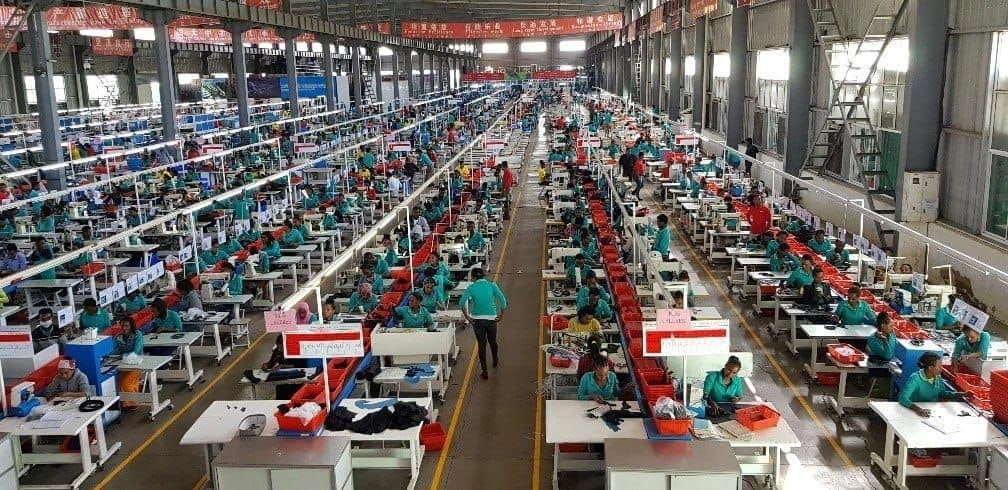
The broader architecture is the Ethiopia Tamrit, an initiative associated with the national Made-in-Ethiopia drive. When the current government took office, Prime Minister Abiy noted in the April 2026 that 90 percent of raw materials for Ethiopian factories were imported. The initiative targeted backward linkages, connecting industrial production to domestic sourcing. Currently, according to official figures, industrial capacity utilisation had risen from 47 percent to 67 percent, more than 800 factories that had been idle resumed production, locally sourced inputs accounted for 47 percent of industrial supply, and goods worth over $3.6 billion had been substituted with domestic production. Manufacturing's contribution to GDP rose from 4.8 percent to 10.1 percent since the initiative launched. Ninety-six product categories remain targeted for full local replacement.
The implementation record across all three countries carries constraints. The Made In Ethiopia faces persistent challenges around energy access, financing, and institutional coordination. Rwanda's small domestic market requires regional integration to achieve the scale that import substitution demands, a tension the government has managed through the East African Community rather than resolved. Morocco's automotive success depends substantially on European demand, a concentration that introduces its own exposure. These are real limits and they belong in any honest accounting.
What the combined record establishes, across Morocco's factories, Rwanda's export ledgers, and Ethiopia's irrigated lowlands and gas fields, is that the direction of travel produces measurable results when political will holds across election cycles and policy reversals. The global order is growing more volatile. Geopolitical shocks that once arrived as exceptional events now follow each other in shorter intervals, each one testing the same structural weakness. Economic sovereignty, the capacity to absorb external shocks without importing their consequences wholesale, is built through wheat on irrigated land, gas in a previously idle basin, and factories reopened with domestic inputs. The cost of dependence, when the next chokepoint closes, will be borne by the same populations.
Ultimately, the lesson across these experiences is clear: Africa’s resilience will not be secured by exporting raw materials and importing finished dependence. It will be secured by a deliberate strengthening of the “Made in Africa” agenda—turning local production into continental strength, expanding value addition, and reducing reliance on fragile external supply chains. From agriculture and energy to manufacturing and innovation, every step toward producing what Africa consumes is a step toward stability, dignity, and economic sovereignty. Strengthening “Made in Africa” is not only an industrial policy choice—it is the foundation for reversing import dependency, scaling African exports, and ensuring that the continent’s wealth circulates within its own economies to power sustained growth.