Kenya, Tanzania Ink New Agreements Expanding Cooperation
May 5, 2026
Save
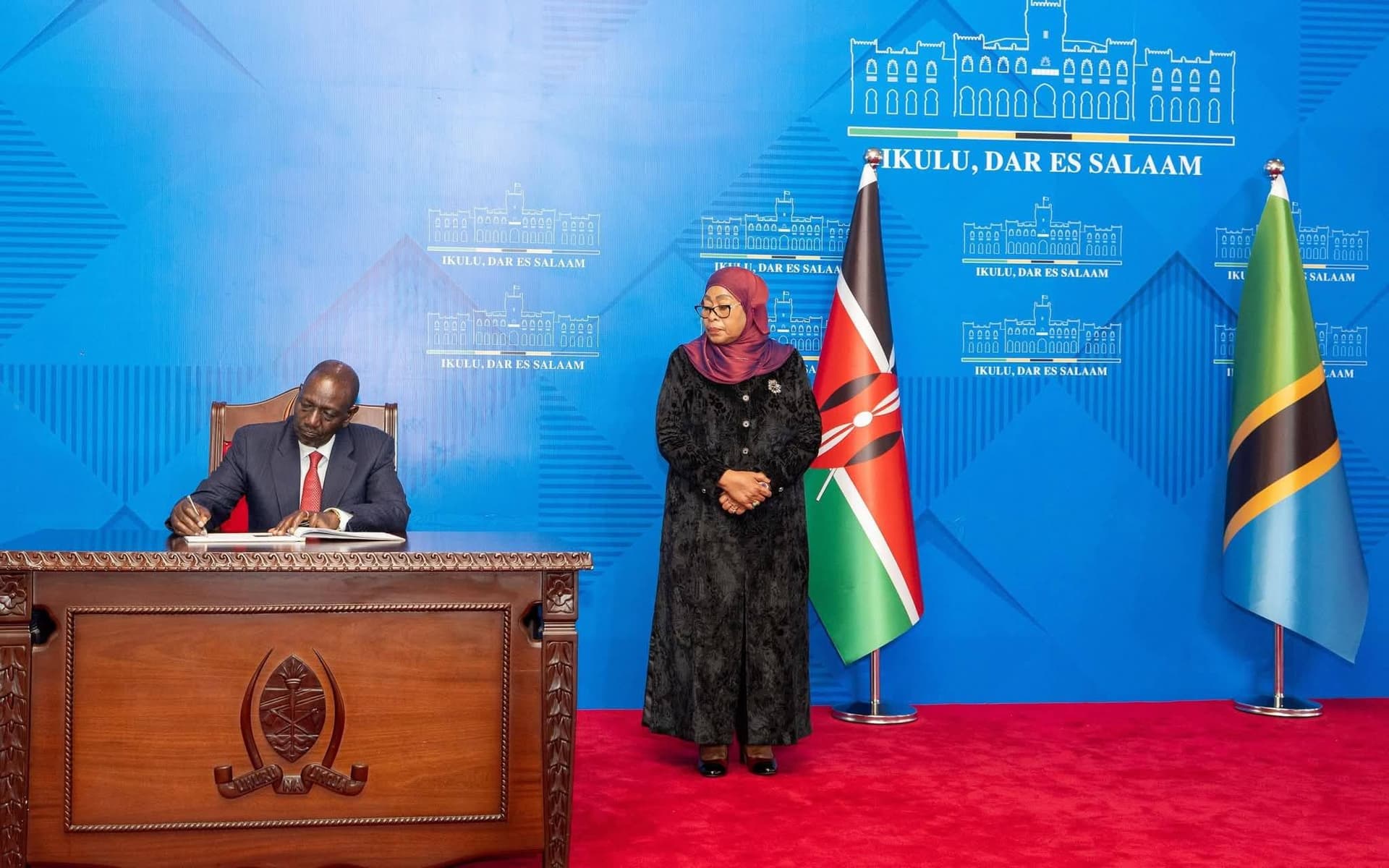
Kenya and Tanzania have signed eight new agreements aimed at boosting trade, strengthening infrastructure, and accelerating regional integration.
The deals were witnessed by William Ruto and Samia Suluhu Hassan following bilateral talks in Dar es Salaam, where the two leaders also set a June 30, 2026 deadline to eliminate all remaining non-tariff barriers affecting cross-border trade.
Recommended News
Tigray Region of Ethiopia Moves Toward New Interim Administration, Elections
Ethiopia’s Committee to Assess Obstructed Projects by Egypt Signals Stronger Push to Defend Dev't Rights
Ethiopia Reaffirms Sovereign Right to Irrigation and Development of Nile Waters, Rejects Egypt’s Consent Demand

The agreements cover critical sectors including energy, agriculture, legal cooperation, railway development, maritime affairs, and standards harmonization.
A key outcome is the creation of a joint mechanism to align product certification, meaning goods approved in one country will no longer face repeated checks at border points.
Infrastructure development featured prominently, with both countries committing to revive the Voi–Mwatate–Taveta railway line to link with regional networks and reduce freight costs.
Progress on the Isinya–Singida electricity transmission line was also highlighted, alongside plans for joint renewable energy projects.
Trade between the two nations reached $860.3 million in 2025, making them the leading trading partners within the East African Community.
However, both leaders stressed that there is still significant room for growth through value addition and increased investment.

To improve efficiency, Tanzania plans to digitalize customs systems and introduce a 30-day dispute resolution framework, while both countries pledged to remove long-standing trade barriers that have affected goods such as dairy, maize, steel, and manufactured products.
The leaders also reaffirmed cooperation in tourism, including joint promotion of the Serengeti-Mara ecosystem, as well as commitments to enhance border security through joint patrols and intelligence sharing.
They further pledged to fast-track completion of their shared border demarcation and strengthen the role of the Joint Commission for Cooperation in monitoring progress on agreements.
The renewed partnership underscores a broader ambition by Kenya and Tanzania to position East Africa as a competitive hub for trade, investment, and industrial growth in a shifting global economy.