May 15, 2026
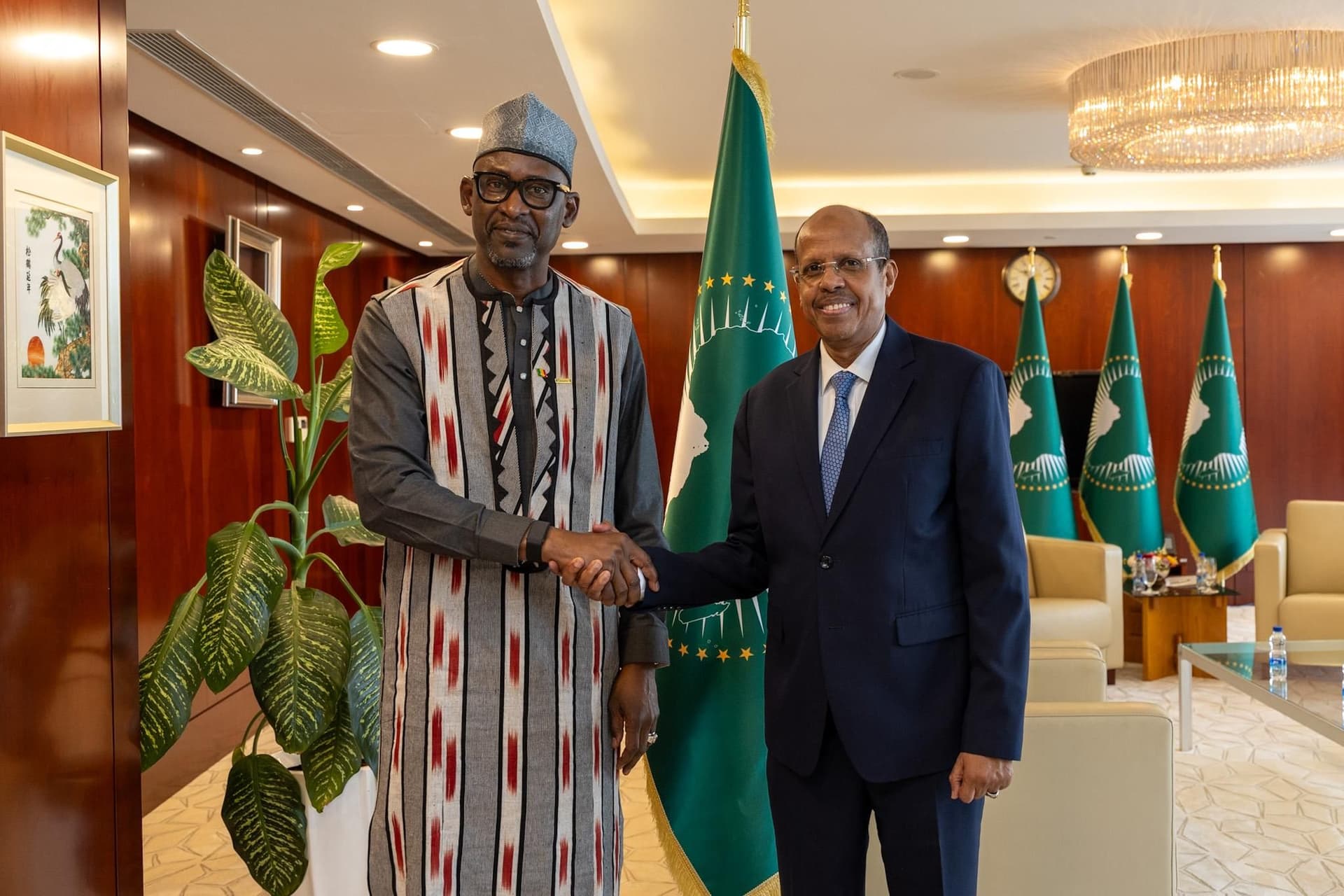
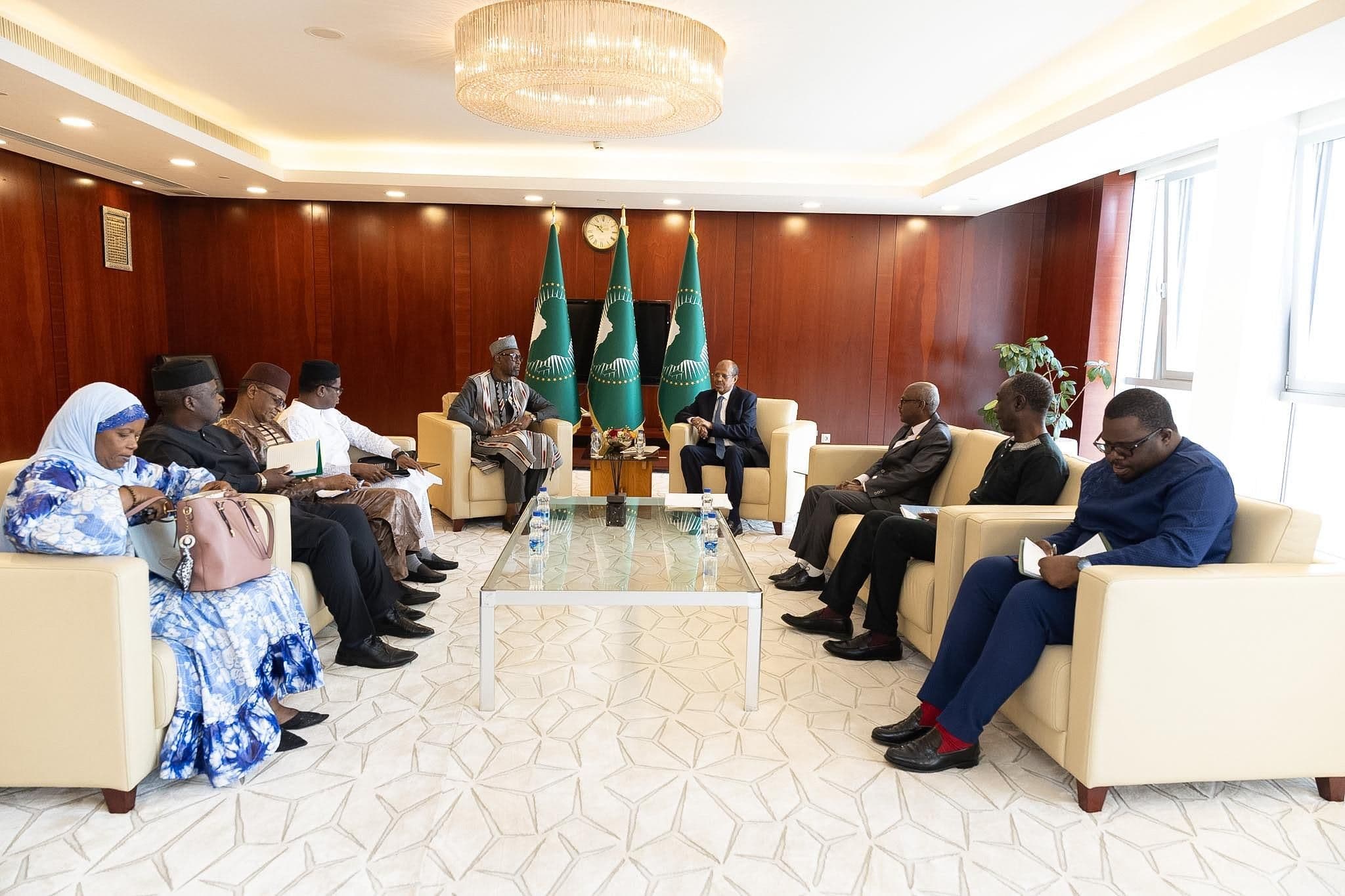
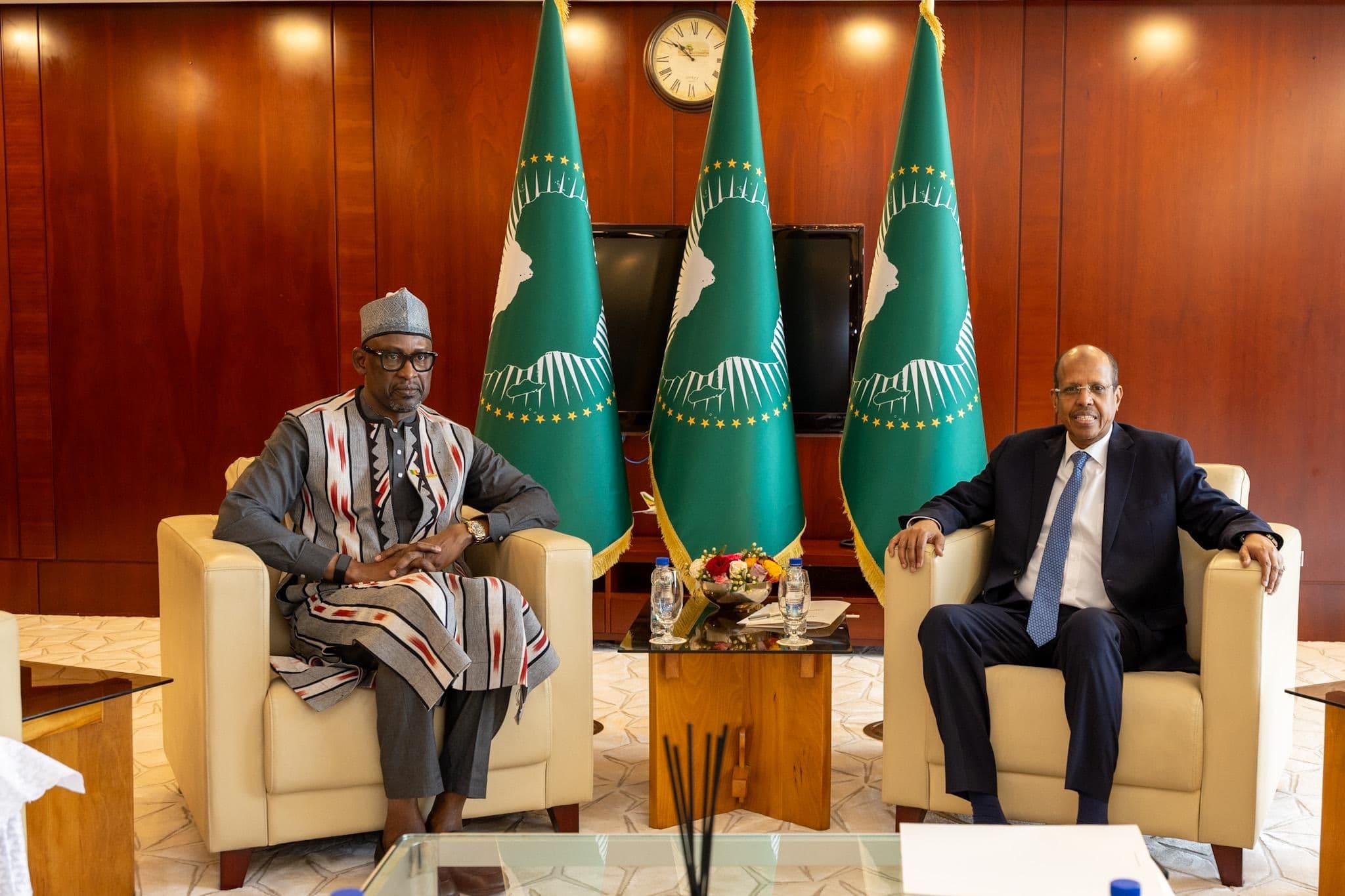
The Chairperson of the African Union (AU) Commission, Mahmoud Ali Youssouf has reaffirmed the Union’s solidarity with the Republic of Mali following recent developments in the country, during a high-level meeting with Mali’s Minister of Foreign Affairs, Abdoulaye Diop.
The discussions today centered on the evolving political and security situation in Mali and broader challenges facing the Sahel region, which continues to grapple with instability, extremist violence, governance transitions, and humanitarian pressures.
The meeting comes in the wake of the events of 25 April 2026 in Mali, which prompted renewed regional and continental attention to the country’s political trajectory and security environment. While details of the incident were not elaborated in the statement, it has been widely interpreted as part of the ongoing volatility that has marked Mali’s recent transition period.
Both sides underscored the need to strengthen cooperation in support of stability, good governance, and development efforts, in line with the goals of the African Union’s long-term strategic framework, Agenda 2063, which envisions a peaceful, integrated, and prosperous Africa driven by its own citizens.
Mali has experienced prolonged political and security turbulence in recent years, marked by military transitions, extremist insurgencies in the north and central regions, and recurring institutional challenges. Since 2020, the country has undergone a series of political changes that have reshaped its governance structure and relations with regional and international partners.
The wider Sahel region—including Burkina Faso, Niger, and parts of Chad and Mauritania—has also faced escalating security threats linked to armed groups, climate pressures, and weak state presence in remote areas. These challenges have contributed to displacement, economic disruption, and strained humanitarian conditions across the region.
In response, the African Union, together with regional bodies such as ECOWAS and international partners, has consistently called for African-led solutions emphasizing dialogue, political inclusivity, and institution-building rather than external military-driven approaches alone.
The African Union has positioned itself as a key continental actor in conflict prevention and resolution, often engaging member states undergoing political transitions. Through its Peace and Security Council and Commission leadership, the AU has supported mediation efforts, constitutional dialogue processes, and transitional roadmaps in several African countries.
The reaffirmation of solidarity with Mali signals the AU’s intent to remain engaged in the country’s evolving situation while encouraging inclusive dialogue among national stakeholders. It also reflects the Union’s broader approach of prioritizing stability through negotiation and African-led diplomatic engagement.
As Mali continues to navigate its political transition amid complex security dynamics, the emphasis on dialogue between the AU and Malian authorities highlights a shared recognition that durable peace will depend on inclusive governance and sustained regional cooperation.
The AU reiterated its commitment to accompany Mali on its path toward stability and development, aligned with the aspirations of Agenda 2063, which seeks to transform Africa into a global powerhouse of the future.