Oct 15, 2025
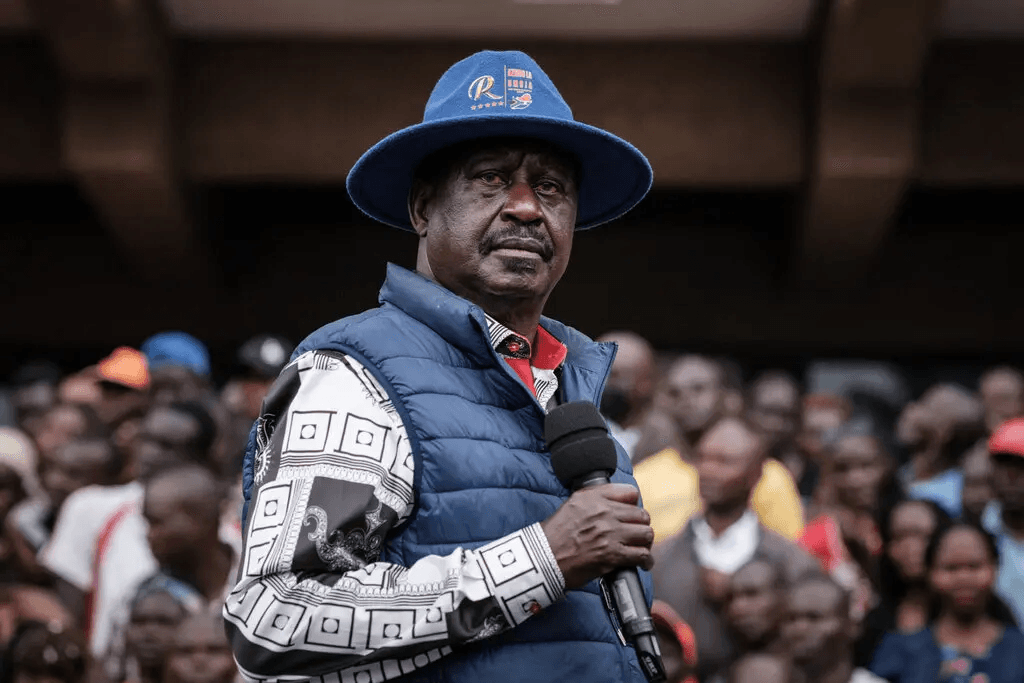
The African continent is mourning the loss of one of its most visionary and influential leaders, Raila Amolo Odinga, former Prime Minister of Kenya, who passed away on Wednesday morning in Koothattukulam, Kerala, India, while undergoing Ayurvedic treatment.
He died following a heart attack during his morning walk, despite efforts to revive him at Sreedhareeyam Ayurvedic Hospital. Odinga was 80.
In a heartfelt statement, the Chairperson of the African Union Commission (AUC), Mahmoud Ali Youssouf, paid tribute to Odinga as a "towering figure in Kenya’s political life and a steadfast champion of democracy, good governance, and people-centered development."
“His decades-long commitment to justice, pluralism, and democratic reform left an indelible mark not only on Kenya but across the African continent,” said the Chairperson. “Odinga’s contributions extended far beyond national borders.”
He inspired generations of leaders, including myself, and citizens alike through his courage, resilience, and unwavering belief in the power of dialogue and democratic institutions,” said the Chairperson.
Indeed, Odinga’s influence stretched well past Kenya’s frontiers. As the African Union High Representative for Infrastructure Development in Africa, he played a pivotal role in promoting continental connectivity and integration.
His leadership was instrumental in advancing projects that supported the vision of the African Continental Free Trade Area (AfCFTA), a cornerstone for Africa’s socio-economic transformation.
In this continental role, Odinga championed transboundary infrastructure initiatives — from transport corridors to energy networks — that aimed to unlock Africa’s growth potential and facilitate intra-African trade. His efforts were rooted in a deep belief that sustainable development must be both inclusive and pan-African.
Chairperson Youssouf lauded Odinga’s vision, describing him as “a leader who dedicated his life to the pursuit of justice, democracy, and unity. His legacy will continue to inspire our collective efforts to build a peaceful, prosperous, and democratic Africa.”
Throughout his political career, Odinga was synonymous with Kenya’s long struggle for democratic reform. He served as Prime Minister from 2008 to 2013 during a historic power-sharing agreement that ended post-election violence and ushered in a new era of national reconciliation. A key architect of Kenya’s 2010 Constitution, Odinga remained a tireless advocate for electoral justice, devolution, and human rights until his final days.
He led the Orange Democratic Movement (ODM) for more than two decades and contested five presidential elections, emerging as a unifying and resilient figure despite political setbacks. His unwavering commitment to non-violence, dialogue, and democratic institutions earned him widespread respect across Africa.
The African Union, its institutions, and leaders across the continent are now reflecting on the life of a statesman whose vision was never confined by borders. Odinga stood for an Africa that was not only united in political ideals but also practically interconnected through infrastructure, trade, and shared values.
As tributes pour in from across the globe, the African Union joins the Government and people of Kenya, and the entire African family, in celebrating the life and legacy of Raila Amolo Odinga — a man who gave his life in service of both his nation and the African continent.