Ethiopia National Dialogue Commission Unveils Key Public Agendas Ahead of Historic Nat’l Conference
Jun 24, 2026
Save
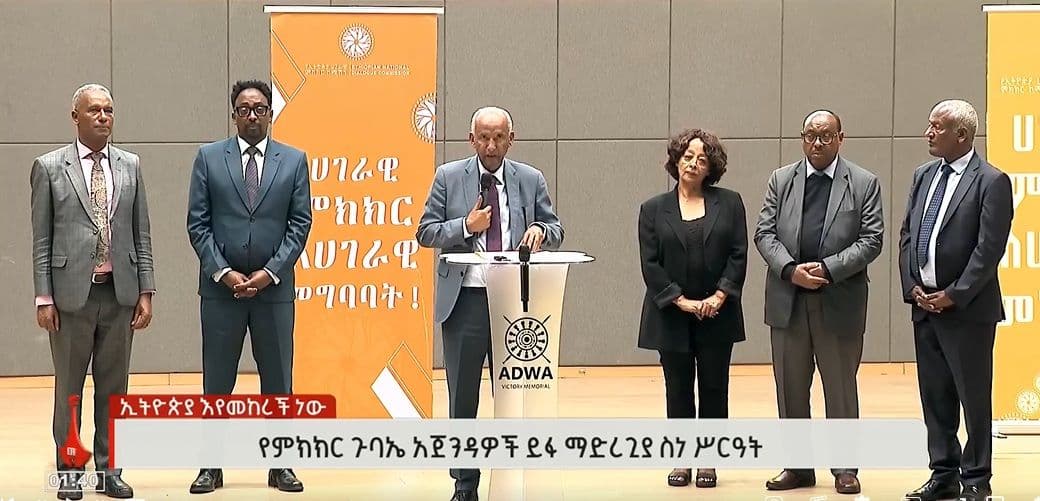
The Ethiopian National Dialogue Commission (ENDC) on Wednesday unveiled the key agenda items collected from citizens across the country and the diaspora, marking a major milestone as Ethiopia moves closer to its long-anticipated National Dialogue Conference.
Eight broad agenda categories of national significance were identified through an extensive consultation process involving citizens from all regions of the country and Ethiopian communities abroad.
Recommended News
Malaria Vaccine Price Cut to Protect More African Children
Among the key issues selected for deliberation are nation-building and national identity, the structure and organization of the state, federalism and governance, federal cities such as Addis Ababa and Dire Dawa, religious affairs, peace and security, economic issues, and matters related to justice and reconciliation.
The nation has finalized preparations to launch the main dialogue forum on July 15, 2026, in Addis Ababa, bringing together representatives from diverse sectors of society to deliberate on issues identified by citizens as central to the country's future.
The agenda items, gathered through an extensive nationwide consultation process, will form the basis of in-depth discussions during the three-week conference.
Their unveiling not only marks the culmination of years of preparatory work but also demonstrates the relevance and legitimacy of the issues selected, reflecting concerns and aspirations that citizens themselves have identified as requiring national attention.
The Ethiopian National Dialogue Commission was established by the House of Peoples' Representatives through Proclamation No. 1265/2021 as an independent institution mandated to facilitate inclusive dialogue on fundamental national issues and help build broad national consensus.
The initiative emerged from a recognition that Ethiopia's longstanding political, social, and historical disagreements required a peaceful and inclusive platform for discussion and resolution. At the same time, it reflects confidence in Ethiopia's enduring statehood, institutional resilience, and capacity to address challenges through dialogue and democratic engagement.
Despite facing various challenges over the years, Ethiopia remains a stable and sovereign nation with strong state institutions and a long history of overcoming difficulties through collective action. The national dialogue process is therefore not a response to state fragility, but an effort to further strengthen national cohesion, deepen mutual understanding, and build consensus on issues that matter to the country's future.
The Commission's mandate includes identifying major national differences and disagreements, collecting public views, organizing dialogue forums, facilitating deliberations, and ultimately presenting recommendations to relevant state institutions. Its overarching objective is to strengthen national unity, foster trust among citizens, and contribute to sustainable peace through dialogue rather than confrontation.
Since becoming operational, the Commission has undertaken one of the largest public consultation exercises in Ethiopia's recent history.
Agenda collection was conducted across federal institutions, all regional states, the two city administrations, and among Ethiopian diaspora communities abroad.
The process involved consultations at woreda, regional, federal, and international levels to ensure broad participation and ownership. The Commission reported that it successfully conducted agenda identification and collection activities in 1,234 woredas, covering approximately 93 percent of the country. More than twenty rounds of consultations were also held with key stakeholders to gather diverse perspectives on issues deemed crucial for national deliberation.
A defining feature of the process has been its commitment to inclusivity. Throughout the agenda-setting phase, the Commission sought to ensure that all voices and viewpoints were represented, regardless of political affiliation, profession, age, gender, religion, ethnicity, or social background.
According to the Commission, participants were drawn from political parties, government institutions, civic organizations, religious institutions, professional associations, youth groups, women, elders, business communities, farmers, merchants, academics, influential personalities, social associations, and representatives of various livelihood groups.
Diaspora communities were also incorporated into the process. In the United States, agenda-setting forums brought together scholars, athletes, media professionals, business leaders, women's associations, civic organizations, and religious institutions. Their proposals were subsequently submitted to the Council of Commissioners and integrated with agenda items gathered across Ethiopia.
Likewise, stakeholders from the Tigray region participated in dedicated agenda-collection sessions involving political parties, religious institutions, civic organizations, community leaders, and other local actors, ensuring that perspectives from conflict-affected areas were included in the national conversation.
The process so far carried out by the commission demonstrates the legitimacy of the agenda items, and underscores the inclusiveness and extensive reach of the process.
Observers note that the breadth of participation achieved thus far underscores the Commission's determination to make the dialogue as inclusive and representative as possible. While no process of this scale can claim absolute perfection, considerable efforts have been made to accommodate diverse voices and perspectives throughout the country.
Beyond organizing consultations, the Commission has carried out a series of nation-centered activities aimed at creating a credible foundation for dialogue. Through extensive outreach, confidence-building efforts, stakeholder engagement, and public awareness campaigns, it has sought to foster trust in the process and encourage citizens to take ownership of the national conversation.
The newly unveiled agenda items are expected to undergo detailed deliberation during the upcoming conference, where representatives selected from across the country will discuss issues identified as central to Ethiopia's future. The Commission has repeatedly emphasized that the objective is not merely to discuss differences but to identify common ground and forge national consensus on matters of broad significance.
Officials have described the dialogue as a historic opportunity for Ethiopians to address longstanding disagreements through peaceful engagement and collective problem-solving. According to the Commission, the process has now entered its final and most consequential phase, with agenda collection and participant selection largely completed.
As Ethiopia prepares for the main conference, expectations are high that the dialogue will provide a constructive platform for engagement among the country's diverse communities and contribute to shaping a shared vision for the future. Many observers see the process as an important step toward strengthening national unity and ensuring that Ethiopia's next chapter is built on dialogue, consensus, and the active participation of its citizens.