WHO Chief Urges African Leaders to Increase Domestic Health Investment
Jul 24, 2026
Save
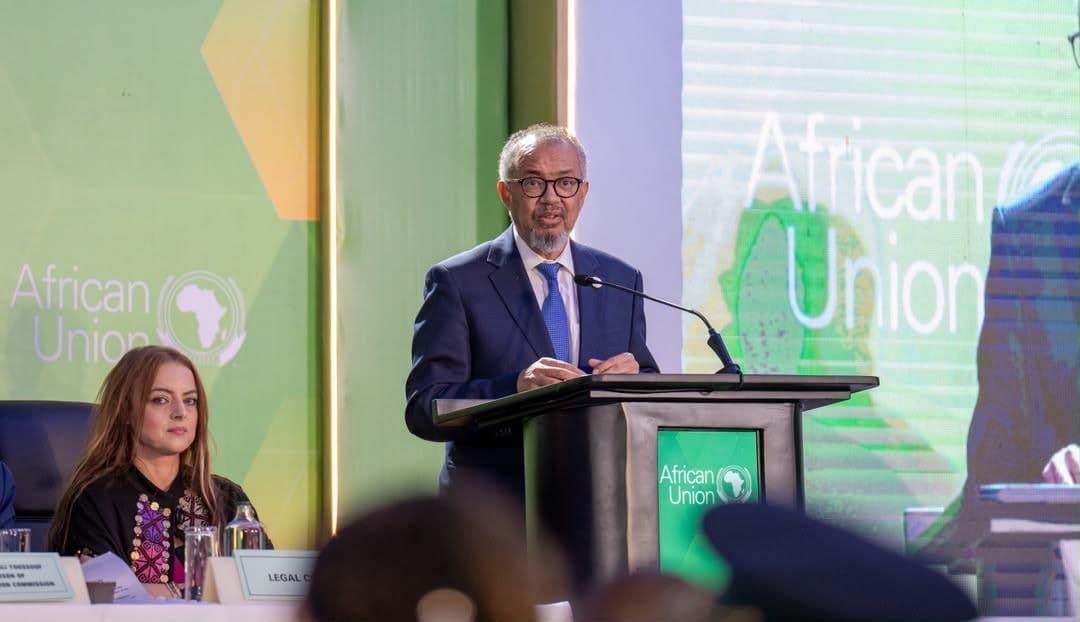
World Health Organization (WHO) Director-General Dr. Tedros Adhanom Ghebreyesus has called on African leaders to strengthen domestic investment in health, warning that declining external funding could undermine decades of progress in tackling HIV and other major health challenges across the continent.
In a post on X following the conclusion of the African Union's first Extraordinary Session of the Assembly dedicated to health in Accra, Ghana, Dr. Tedros said Africa has made "extraordinary progress" in the fight against HIV, with new infections declining by 40 percent since 2010. However, he warned that the continent continues to bear the world's highest HIV burden and risks losing those hard-won gains as external funding declines.
Recommended News
Nigeria Breaks Ground on $70M Passport Manufacturing Plant Ahead of 2027 Launch
He said the same funding challenge extends to maternal health, tuberculosis, malaria, neglected tropical diseases and the growing burden of noncommunicable diseases.
"These are not separate crises. They are one crisis: health systems not yet strong enough to protect every person on this continent," Dr. Tedros wrote, emphasizing that only African leaders can provide the political will and domestic investment needed to build resilient and sustainable health systems.
Dr. Tedros also thanked Ghanaian President John Dramani Mahama for hosting the first-ever Extraordinary Session of the African Union Assembly dedicated exclusively to health.
Held in Accra from 21–22 July 2026, the summit was convened under the theme "Advancing Justice, Equity and Universal Health Coverage: Ending AIDS, TB, Improving Maternal Health, and Addressing Endemic Non-Communicable and Neglected Tropical Diseases and Conditions in Africa." The landmark meeting brought together African Heads of State and Government, ministers, health experts and development partners to accelerate action on the continent's most pressing health priorities.
Over the two-day summit, African leaders deliberated on strategies to end AIDS and tuberculosis by 2030, reduce preventable maternal and child deaths, strengthen resilient health systems, expand sustainable domestic health financing, improve access to quality health services and essential medicines, promote local pharmaceutical manufacturing, and advance universal health coverage. Discussions also focused on tackling malaria, neglected tropical diseases and the growing burden of noncommunicable diseases, while strengthening Africa's preparedness and response to future public health emergencies.
The summit concluded with renewed calls for African countries to increase domestic financing for health and accelerate the implementation of continental commitments aimed at building stronger, more resilient health systems capable of delivering equitable healthcare for all Africans.