Oct 30, 2025
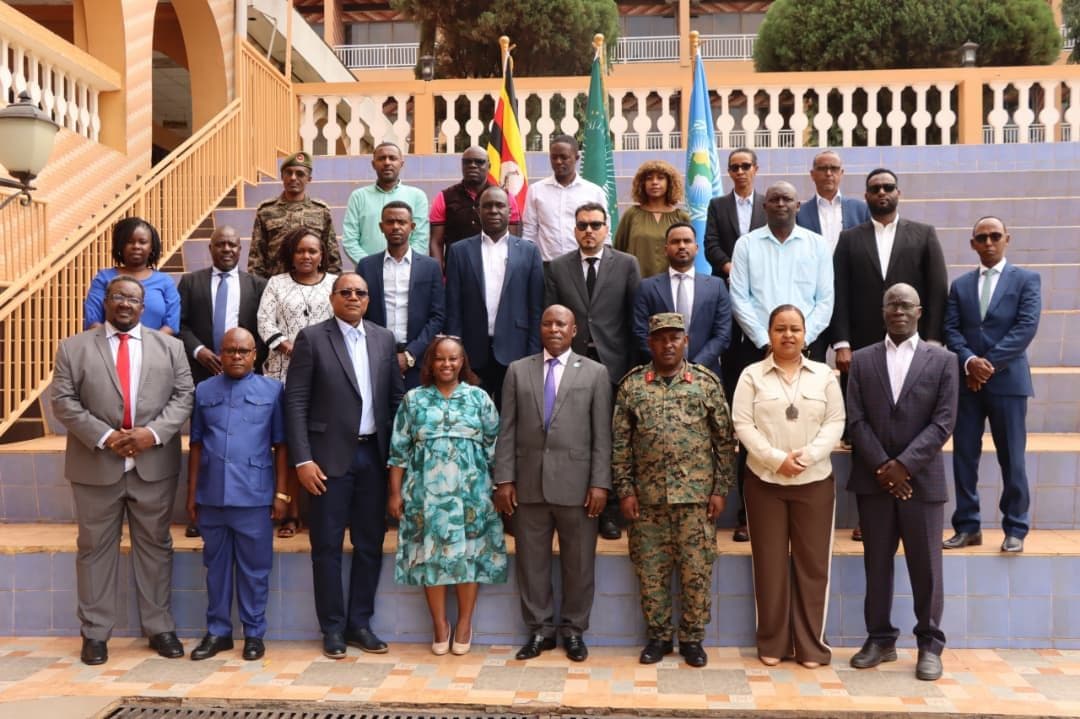
A five-day Open Source Intelligence (OSINT) and Conflict Analysis Training has begun in Kampala, Uganda, bringing together security and early warning experts from across Eastern Africa to enhance regional capacity in conflict prevention and analysis.
The training, organized by the Eastern Africa Standby Force (EASF) in collaboration with the African Union (AU) and hosted by the Government of Uganda, was officially opened by Brigadier General Abdul Rugumayo, Deputy Chief of Defense Intelligence and Security in the Uganda People’s Defense Forces (UPDF).
Brig. Gen. Rugumayo reaffirmed Uganda’s commitment to regional peace and security, stressing that intelligence coordination and information sharing are crucial for preventing conflicts.
“Our experience in regional operations has shown that intelligence gaps are costly, while shared information saves lives,” he noted, commending the AU and EASF for promoting collaborative approaches through open-source analysis.
The EASF, established in 2004 as part of the African Standby Force framework, plays a key role in enhancing peacekeeping readiness, conflict prevention, and crisis response among its ten member states.
This OSINT training aligns with EASF’s broader mandate to build analytical and operational capabilities within the region.
Participants include representatives from Burundi, Comoros, Ethiopia, Kenya, Somalia, Sudan, and Uganda, alongside officials from Regional Economic Communities such as COMESA, IGAD, and ECOWAS, reflecting growing inter-regional cooperation on peace and security.
Brigadier General Domitien Kabisa, EASF Head of Peace Operations, explained that the course aims to strengthen analysts’ practical skills in open-source verification, geolocation, and misinformation tracking—skills increasingly vital in addressing today’s complex security landscape.
Representing the AU Commission, Ms. Orit Ibrahim highlighted the growing importance of OSINT in countering cross-border insurgencies, disinformation, and climate-related security risks. “This course is about turning information into insight and insight into impact,” she said.
The Kampala training, which runs for five days, focuses on enhancing technical expertise, fostering collaboration, and improving the region’s readiness to anticipate and prevent conflicts through timely and evidence-based intelligence.