NAM Marks 65 Years as Leaders Reaffirm Principles of Sovereignty and Non-Alignment
Sep 2, 2026
Save
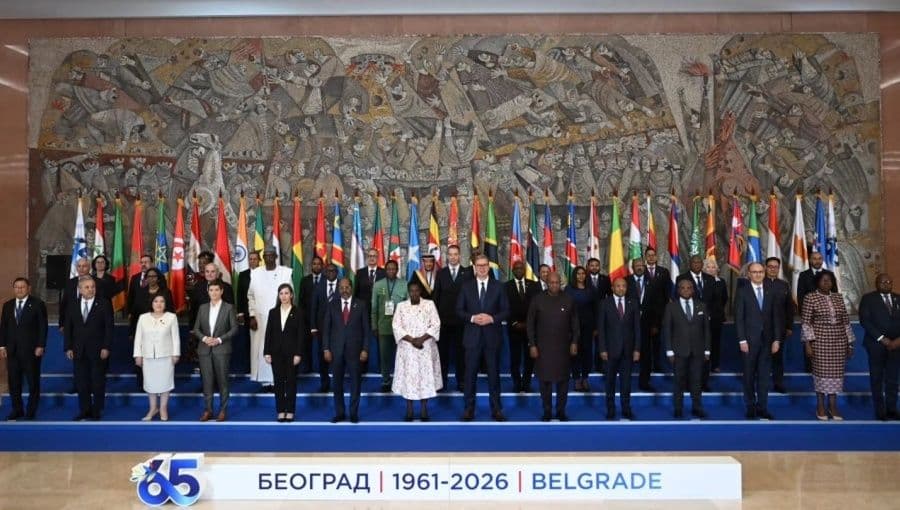
The Non-Aligned Movement (NAM) is marking its 65th anniversary with a summit in Serbia under the theme “The Legacy of Non-Alignment: Lessons for Today’s World,” bringing together high-level representatives from more than 30 countries across Africa, Asia, Europe and Latin America.
Hosted by Serbian President Aleksandar Vučić, the summit seeks to reaffirm NAM’s founding principles, including sovereign equality among nations, respect for territorial integrity, non-interference in internal affairs and stronger economic cooperation among developing countries.
Recommended News
The Cold Peace Between Cairo and Tel Aviv Is Meeting Its Horn of Africa Test
Ethiopia’s Defence Force at 119: From a Legacy of Sovereignty to a Modern Force for Regional Peace
With 120 member states, NAM remains the largest international grouping outside the United Nations. Established during the Cold War, the movement provided developing countries with an independent diplomatic path outside the rival Western and Soviet blocs.
For Africa, the NAM legacy is closely intertwined with the continent’s struggle against colonialism, apartheid and foreign domination.
African leaders were among the prominent voices that shaped the broader vision of political independence and solidarity among developing nations.
Six and a half decades later, the Movement is again emphasizing multilateralism, international law, sovereign equality and cooperation — principles that remain central to debates over Africa’s place in a rapidly changing global order.
The meeting opened with addresses by Serbian President Aleksandar Vučić, and Ugandan Vice President Jessica Alupo, who spoke on behalf of Ugandan President Yoweri Museveni, as Uganda currently chairs NAM.
Vučić described NAM as an important pillar of multilateralism and warned against what he described as selective approaches to international law.
Delivering Museveni's address, Alupo said the movement emerged in response to the rigid ideological divisions and polarization of the Cold War and stressed the continuing importance of independent and balanced international cooperation.
She described NAM as "the correct response by sections of the people of the world to the narrow-mindedness that had emerged."