Nov 3, 2025
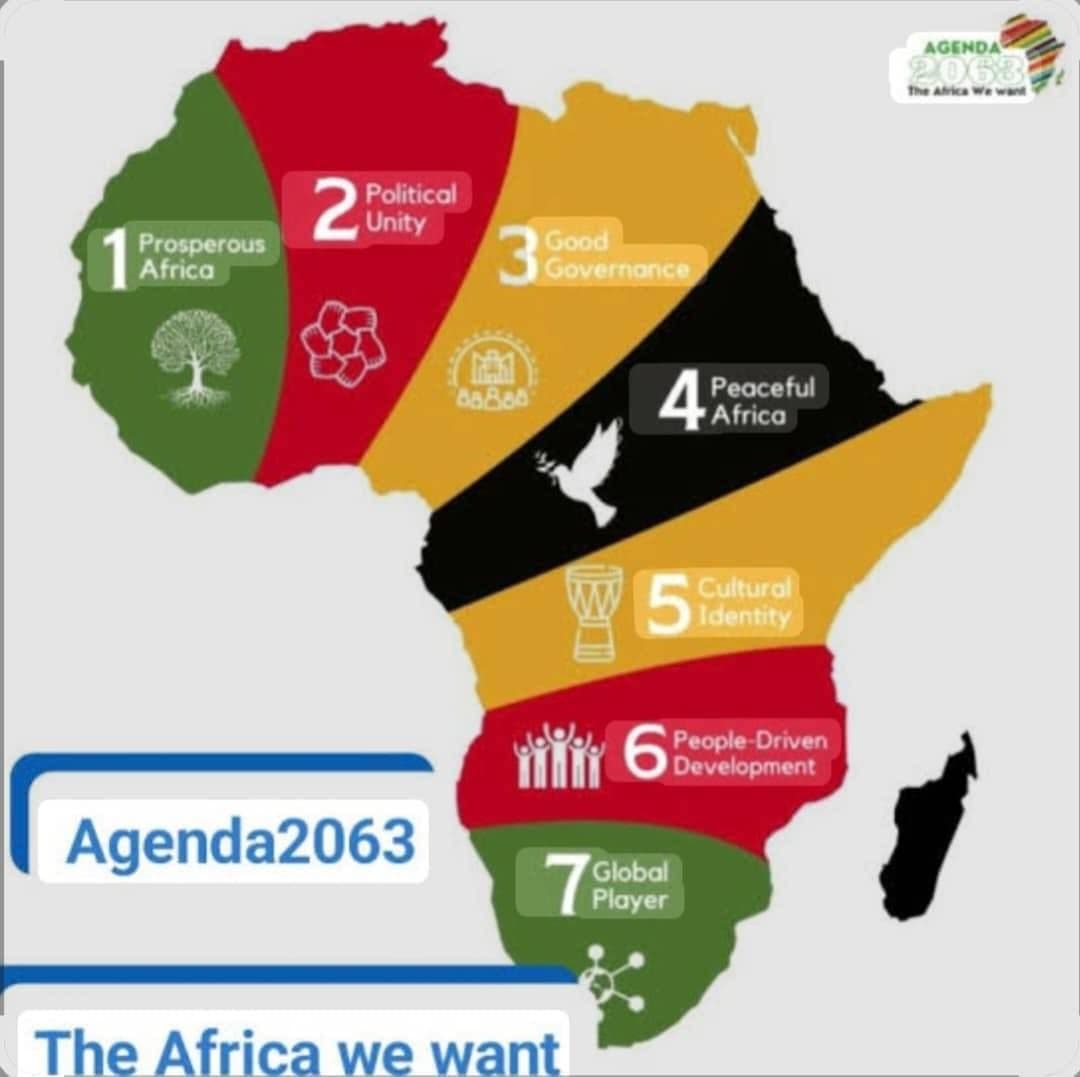
When the African Union (AU) unveiled Agenda 2063, it wasn’t just another policy document filled with lofty promises. It was a blueprint for Africa’s future— a vision crafted by Africans, for Africans. It dares to imagine a continent where young people lead innovation, borders encourage trade instead of division, and peace is the norm, not the exception.
But what exactly lies inside this 50-year roadmap known as “The Africa We Want”? The answer is woven into seven aspirations — each one a guiding star on Africa’s path toward unity, prosperity, and global influence.
Let’s break them down — not as distant dreams, but as living goals shaping Africa’s story right now.
1. A Prosperous Africa, Driven by Inclusive Growth
Imagine an Africa where every child, from Cairo to Cape Town, can dream without limits — because opportunity isn’t determined by geography. This first aspiration speaks to economic transformation through inclusive growth and sustainable development.
It’s about shifting from exporting raw materials to building industries, harnessing technology, and empowering entrepreneurs. Think of Lagos’ tech hubs, Kigali’s clean innovation drive, and renewable energy projects lighting up rural Ethiopia. This is the Africa that creates rather than merely consumes.
2. An Integrated Continent, Politically United
In 2019, the African Continental Free Trade Area (AfCFTA) was launched — one of the most ambitious trade agreements in the world. Its spirit comes straight from Agenda 2063’s second aspiration: integration.
The idea is simple yet revolutionary — break down trade barriers, connect railways and highways, and let goods, ideas, and people move freely. A united Africa could form the world’s largest single market, where “Made in Africa” becomes a global standard.
3. Good Governance, Democracy, and Human Rights
At the heart of development lies accountability. Agenda 2063 envisions an Africa where leaders serve their people, where institutions are strong, and where citizens’ voices echo through fair and transparent systems.
We’re seeing sparks of this already — from peaceful power transitions to growing civic movements demanding reform. The message is clear: for Africa to thrive, democracy and human rights must not just exist on paper — they must live in practice.
4. Peace and Security: Silencing the Guns
You can’t build prosperity amid conflict. That’s why the AU set a bold goal: “Silencing the Guns by 2030.” While challenges remain, this aspiration pushes for conflict prevention, inclusive peacebuilding, and stronger regional security partnerships.
From women peacekeepers in Sudan to grassroots mediation in Kenya, Africans are taking charge of their peace narrative — proving that peace isn’t imported; it’s homegrown.
5. Africa with a Strong Cultural Identity and Shared Heritage
Fashion, film, and Afrobeats — Africa’s culture is no longer waiting for validation. Agenda 2063 celebrates this cultural renaissance. It’s about valuing African languages, stories, and creativity as engines of development.
When The Woman King hits cinemas, or Burna Boy fills arenas worldwide, that’s more than entertainment — it’s cultural diplomacy in action. This aspiration says Africa’s heritage is not just its past; it’s a powerful resource for the future.
6. People-Driven Development: The Power of Youth and Women
By 2050, Africa’s population will be the youngest in the world. Agenda 2063 recognizes this not as a challenge, but as an advantage. It envisions a continent where youth and women are not bystanders, but architects of progress.
Across Africa, young innovators are designing solar drones, women are leading parliaments, and startups are rewriting the rules of business. It’s people — not policies — who will build the Africa we want.
7. Africa as a Global Player and Partner
Finally, Agenda 2063 positions Africa as a confident voice on the world stage — not as a recipient of aid, but as an equal partner in global governance.
From climate negotiations to digital trade, African nations are asserting themselves. The African Space Agency, launched in 2023, is a symbol of this bold step into the future — a reminder that Africa doesn’t just want a seat at the table; it’s ready to help design it.
The Journey Ahead
Agenda 2063 isn’t just a countdown to a date on the calendar — it’s a movement. Its seven aspirations remind us that Africa’s destiny isn’t written elsewhere; it’s being crafted every day in classrooms, farms, labs, and parliaments across the continent.
There will be setbacks, no doubt. But if the vision of a united, prosperous, and peaceful Africa holds firm, the year 2063 won’t just mark the African Union’s centenary — it will mark the coming of age of a continent that finally fulfilled its promise.
Because the Africa we want isn’t a dream — it’s a plan in motion.