BRICS Summit in New Delhi 2026: A Bold Step Towards a Fairer, Resilient, and Sustainable Global Order
Sep 13, 2026
Save
By Staff Writer
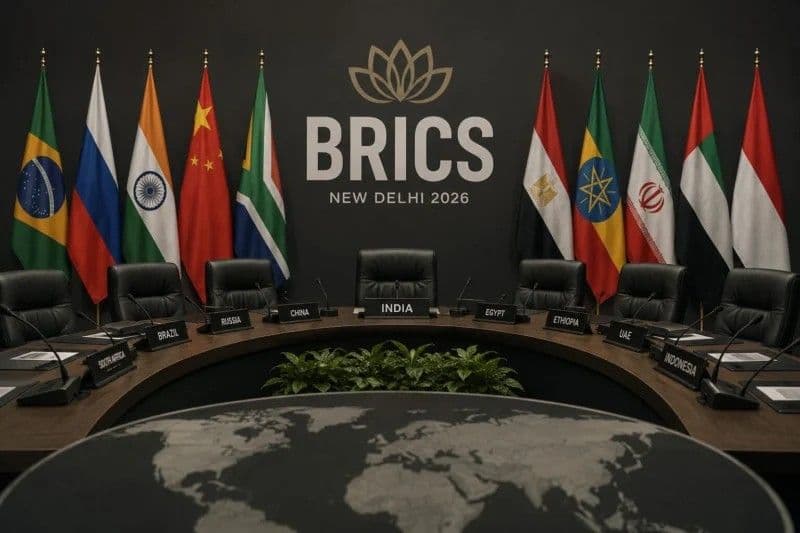
The 18th BRICS Summit held in New Delhi on September 12-13, 2026, marked a significant milestone in the evolution of this influential bloc of emerging economies.
Recommended News
Egyptian Analyst Calls for Strategic Ethiopia–Egypt Alliance, Urges Shift to Cooperation
President Taye Calls for Stronger African Data Systems
Under the theme “Building for Resilience, Innovation, Cooperation and Sustainability,” the summit brought together leaders from Ethiopia, Iran, Brazil, Russia, India, China, South Africa, the United Arab Emirates, Egypt, Saudi Arabia, and Indonesia, along with partner countries and international stakeholders, to chart a comprehensive roadmap for global transformation.
The declaration issued at the summit underscores BRICS’ unwavering commitment to reforming global governance, advancing economic resilience, promoting peace and security, and fostering sustainable development at a time of profound geopolitical shifts and interconnected challenges.
Major Decisions and Thematic Pillars
Building a Fairer and More Inclusive Global Governance System
One of the summit’s central themes was the urgent need to reform international institutions to better reflect the realities of the 21st century. BRICS reaffirmed its dedication to making global governance more democratic, representative, and accountable. Leaders emphasized that institutions like the United Nations (UN), International Monetary Fund (IMF), World Bank, and World Trade Organization (WTO) must be reformed to include greater representation of emerging markets and developing countries (EMDCs). Specifically, BRICS called for expanding the Security Council’s membership, increasing the share of votes for EMDCs, and ensuring equitable participation of women and marginalized groups in decision-making processes.
In the economic sphere, BRICS reaffirmed its commitment to reform the Bretton Woods institutions, advocating for a more transparent and credible governance structure that accurately reflects the shifting balance of global economic power. The bloc emphasized the importance of implementing the quota and governance reforms under the IMF’s 16th General Review of Quotas (GRQ) and aimed to accelerate progress on the 17th GRQ to ensure a more equitable voice for EMDCs.
Strengthening Multilateral Trade and Economic Cooperation
BRICS reiterated its unwavering support for the multilateral trading system centered around the WTO. Leaders expressed concern over the proliferation of unilateral trade restrictions, tariff hikes, and protectionist measures that threaten global economic stability. The bloc committed to working within WTO negotiations to reform the organization, restoring its dispute settlement mechanism, and advancing fair, transparent, and inclusive trade practices.
In addition, BRICS underscored the importance of creating resilient global value chains (GVCs) capable of withstanding shocks. The summit launched initiatives to promote intra-BRICS trade, including discussions on establishing a BRICS Grain Exchange to bolster food security and facilitate trade in agricultural commodities. Leaders also reaffirmed support for the Kimberley Process Certification Scheme to prevent conflict diamonds from entering markets, emphasizing responsible resource management.
Financial System Reforms and Digital Innovation
A key pillar of the summit was the push for reforming global financial governance through innovative mechanisms. BRICS reaffirmed its support for the BRICS New Development Bank (NDB) and the Contingent Reserve Arrangement (CRA) as vital tools for providing financial stability and crisis response among member countries.
The summit approved concrete steps to enhance the operational responsiveness of the CRA, including amendments to its treaty for greater flexibility. Leaders discussed advancing the development of cross-border payment systems that facilitate faster, low-cost transactions in local currencies, reducing dependence on the US dollar and promoting currency sovereignty. The BRICS Payment Task Force (BPTF) was tasked with exploring pragmatic solutions for operationalizing these mechanisms.
In the digital realm, leaders emphasized the importance of building resilient, secure, and inclusive digital ecosystems. They endorsed initiatives to develop common standards and norms for responsible use of Artificial Intelligence (AI), cyber security, and data protection. The declaration highlighted ongoing work on space technology, including the BRICS Satellite Constellation and efforts to ensure peaceful exploration of outer space, emphasizing the need to prevent an arms race in space.
Promoting Peace, Security, and Conflict Resolution
The summit reaffirmed BRICS’ commitment to a peaceful, stable international order. Leaders condemned terrorism in all its forms and manifestations, emphasizing zero-tolerance and the importance of collective action. They called for international cooperation to combat cross-border terrorism, illicit financing, and organized crime, including drug trafficking, human trafficking, and cybercrime.
The summit addressed regional conflicts, including the situation in the Middle East, Gaza, Lebanon, and Syria. Leaders expressed concern over escalation, emphasizing the need for diplomatic dialogue, respect for sovereignty, and the protection of civilians. They condemned attacks on civilian infrastructure and called for urgent humanitarian access to conflict zones.
In particular, BRICS reaffirmed support for a two-state solution to the Israeli-Palestinian conflict, based on international law, with East Jerusalem as the capital of Palestine. They called for ending unilateral measures that threaten peace and for respecting the inalienable rights of Palestinians.
Addressing Climate Change and Building Resilience
The declaration highlighted climate change as a pressing challenge, especially affecting the Global South. BRICS committed to strengthening cooperation on climate adaptation, disaster risk reduction, and green energy transitions. Leaders reaffirmed their support for the Coalition for Disaster Resilient Infrastructure (CDRI), emphasizing the importance of investing in climate-resilient infrastructure, early warning systems, and community-based adaptation strategies.
BRICS endorsed initiatives to promote sustainable energy, including renewable energy, hydrogen, bioenergy, and low-carbon technologies. Recognizing the importance of diversifying energy sources, the bloc supported cooperation on zero/low-emission hydrogen production, energy storage, and smart-grid technologies. They also stressed the need for just energy transitions that balance economic growth with environmental sustainability, respecting national circumstances.
Strengthening Health Systems and Pandemic Preparedness
The summit underscored the importance of resilient healthcare systems, universal health coverage, and global health security. Leaders committed to deepening cooperation in health research, disease surveillance, and vaccine development, emphasizing the vital role of the World Health Organization (WHO). They reaffirmed their commitment to ending infectious diseases such as tuberculosis and combating antimicrobial resistance.
BRICS announced the establishment of a BRICS Integrated Early Warning System for infectious diseases, aiming to enhance rapid response capacities. The bloc also emphasized the importance of digital health, traditional medicine, and capacity-building to improve health outcomes. The declaration reaffirmed support for equitable access to medicines and health services, especially in vulnerable populations.
Promoting Sustainable Development and Reducing Inequality*
BRICS reiterated its commitment to the 2030 Agenda for Sustainable Development, emphasizing the eradication of poverty, inequality reduction, and social inclusion. Leaders called for innovative financing solutions for sustainable development, including mobilizing climate finance, strengthening the BRICS Contingent Reserve Arrangement, and exploring new mechanisms such as a proposed international panel on inequality.
The summit recognized disparities within and among countries and emphasized the importance of inclusive growth. Leaders reaffirmed their support for the reform of the UN Development System to better serve the needs of the Global South and vulnerable populations, including women and youth.
Space and ICT Cooperation
BRICS leaders reaffirmed their commitment to peaceful exploration and use of outer space. They discussed efforts to reduce space debris, promote space science, and ensure the responsible use of space technology. The development of BRICS’ space capabilities, including the BRICS Satellite Constellation, was recognized as vital for global communication, climate monitoring, and disaster management.
In the ICT sector, the summit emphasized building resilient, secure, and inclusive digital ecosystems. Leaders endorsed cooperation on 5G, AI, cyber security, and digital infrastructure, encouraging the development of responsible norms and standards in cyberspace. They welcomed ongoing efforts to establish a BRICS Digital Centre of Excellence for Smart Grids and Energy Storage.
Fostering Innovation, Industry, and Economic Growth
The summit prioritized technological innovation and industrial cooperation, supporting initiatives that promote Industry 4.0, digital agriculture, smart manufacturing, and green technologies. Leaders agreed to deepen collaboration in critical sectors such as chemicals, pharmaceuticals, and renewable energy.
The development of a BRICS Incubator Network and a potential BRICS Startup Innovation Fund was announced to catalyze startups and foster entrepreneurship. The summit also supported strengthening regional supply chains, digital trade facilitation, and infrastructure development through public-private partnerships (PPPs).
Peaceful Resolution of Regional Conflicts and International Crises
BRICS leaders called for collective action to address conflicts in Sudan, Syria, and Lebanon, advocating for African-led solutions and regional cooperation. They reiterated support for peacekeeping efforts and called on all parties to respect international law and cease hostilities. The summit reaffirmed support for a two-state solution in Palestine, respecting the rights of Palestinians and ending occupation policies.
As such, the 2026 BRICS summit demonstrated a clear and ambitious vision for transforming the global order into a more equitable, resilient, and sustainable system. By emphasizing reforms in international institutions, economic cooperation, peace and security, climate action, health, and technological innovation, BRICS leaders showcased their commitment to shaping a multipolar world that respects sovereignty, promotes inclusiveness, and ensures sustainable development for all.
This summit not only reaffirmed BRICS’ role as a key player in global affairs but also set the stage for deeper collaboration among emerging economies, fostering a more balanced and just international landscape.
BRICS serves as a prominent driver of South-South cooperation (SSC), offering an alternative, multipolar framework for developing countries to collaborate without relying exclusively on traditional Western centers of economic power.
Rather than operating as a strict substitute for North-South relations, BRICS positions itself as a complementary force aimed at building a more representative global financial and political system.
The expanded BRICS bloc represents a monumental shift in global demographics and consumer power, capturing 49.5% of the world's population across its 11 full member states: Brazil, Russia, India, China, South Africa, Egypt, Ethiopia, Iran, the United Arab Emirates (UAE), and Indonesia.
By bringing together nearly half of humanity, the bloc controls a consumer base of approximately 3.6 billion people, making it the ultimate destination for future market growth.