Three Decades of Tyranny: The Brutal Cost of Shaebia’s Autocracy in Eritrea
Sep 30, 2026
Save
By Mahder Nesibu
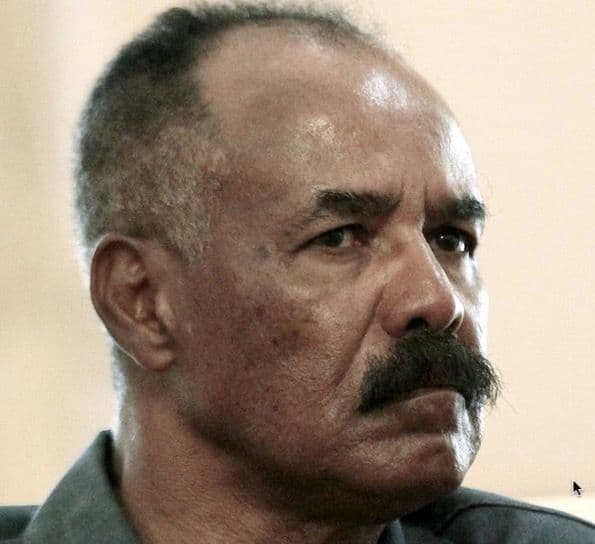
Eritrea, the Horn of Africa country, is peculiar in many ways. It is the second youngest state on the continent, having come into being in 1991 and gained recognition as a sovereign state in 1993, following decades of a war of secession from Ethiopia. It is also opaque and secretive, having earned the nickname, primarily in the West, of the "North Korea of Africa." Its president, Isaias Afwerki, is synonymous with the Eritrean state, having ruled with an iron grip for more than three decades, since the country emerged as a state. His leadership does not begin there, however. It can be traced back to the 1970s, when Isaias emerged as the figure leading the Eritrean People's Liberation Front (EPLF), the insurgent group behind Eritrea's secession, and the current apparatus takes the form of a party, the People's Front for Democracy and Justice (PFDJ), which was formed in 1994 as the successor to the EPLF and has since functioned as the vehicle of his rule.
Recommended News
CPHIA 2026 Set to Open Today in Addis Ababa, Focusing on Africa’s Health Sovereignty and Self-Reliance
How Addis Ababa Became the Heartbeat of Africa’s Health Awakening
Ethiopian Airlines Wins APEX 2027 Five-Star Global and Best Overall Airline in Africa Honors
The PFDJ, which is also known as ‘Shaebia’ and Isaias have firmly held power over Eritrea, to the detriment of the Eritrean people. The state is totalitarian and exercises draconian control over the lives of Eritreans. It holds a monopoly on politics, with no parties or movements operating inside the country, and independent media is non-existent. There is also no constitution and no clear legal boundary separating the branches of government. Instead, the president rules by decree and proclamation, both of which are subordinate to the will of his regime.
Isaias is, by any measure, the embodiment of autocracy. The Shaebia and its apparatus rule according to his will, and he is considered to hold ultimate sway over the country. Although he has been at the helm since the days of the insurgency, directing the EPLF in its fight against the Ethiopian army, he had been surrounded by dynamic figures who occupied and held various positions of power and influence. Isaias' current rule was arguably established in the years following 1993, when he successfully resisted Eritrea's potential turn towards a democratic state, as shown by his shelving of a proposed constitution in 1997, and sealed it in September 2001, when, in the days the world was focused on the 9/11 attacks on the United States, he orchestrated the arrest of prominent figures within the Shaebia and shut down the independent media.
One apparatus of control under Isaias Afwerki's regime, and one that led, among other things, the United Nations to conclude that it was committing crimes against humanity against the Eritrean people, is the national service programme. It was first instituted in 1991 with a universal scope, with almost the entire population deemed fit for conscription. Initially, service was capped at four years. That later evolved into an indefinite obligation, under which conscripts ended up serving for decades. Eritrean youth are now hauled off each year to the infamous Sawa military training centre, where they complete their final year of schooling in the form of military training and ideological indoctrination before moving into service. This has been the case since 2003, which also coincided with the closure of Eritrea's only university, the University of Asmara, three years later.
The national service programme is considered a backbone of the country's clandestine economy. Eritrea does not share the status and nature of its economy with the international community, and what little information is available paints a bleak picture. The Shaebia, alongside the Eritrean Defence Forces, dominates economic activity. Hagos Gebrehiwet, Isaias Afwerki's economic adviser, administers much of this activity through the Hidri Trust, the entity that evolved from the EPLF's wartime financial organ, and produces the regime's revenue. These enterprises, through the Eritrean Defence Forces, draw their labour from the national service programme, with the revenue pocketed by the regime and its military officers.
One way to make sense of the behaviour of the Eritrean state is through its description as a "siege state" by the International Crisis Group and a "garrison state" by the academics Kjetil Tronvoll and Daniel R. Mekonnen. The hyper-militarisation and rigid totalitarianism are, to a large degree, a legacy of the three-decade insurgency that produced Eritrea's creation. During that time, the EPLF, in order to succeed against a formidable Ethiopian army, had to maintain strict organisation, as a clandestine party with little appetite for dissent directed it. The long war has also entrenched what has been called the "Nakfa syndrome," named after what had been the EPLF's stronghold for decades, a worldview built around a permanent state of war among its leadership.
This is visible in Eritrea's foreign relations, particularly with Ethiopia. Eritrea indeed emerged as a state, as one prominent Ethiopian diplomat put it, "firing on all sides." It went into dispute with Sudan and Yemen separately in 1995, with Djibouti in 1996, and finally into all-out war with Ethiopia in 1998. The motivations behind these conflicts, some rooted in border issues, were arguably insufficient to justify military measures and could have been managed diplomatically. Instead, the nature of the EPLF and its leadership, which resorted too readily to confrontation, shaped its approach to engagement.
This eventually fed into a long-held status as a spoiler in the Horn of Africa. Although the disastrous invasion of Ethiopia was the trigger for Isaias to seclude Eritrea from the world, the international system grew to refrain from engaging with the regime and solidified its isolation in the years that followed. Its domestic rule, which worsened with each year, evolved from direct confrontation into a strategy of proxy warfare and indirect destabilisation. Eritrea became home to various insurgent groups from across the region, including from Ethiopia, Djibouti, Somalia and Sudan, groups seeking to overthrow governments found in Eritrea a safe haven and a source of support. Asmara went so far as to back al-Shabaab in the late 2000s, with the rationale being to undermine the fight against the terrorist organisation being waged by Ethiopia and the broader international community.
The primary consequences of the regime's behaviour have been the hollowing out of Eritrean society in various forms. The militarisation of Eritrea has led to a mass exodus, with Eritreans leaving their country in their hundreds of thousands every year and millions now scattered across the globe. Although census data is not available for Eritrea, many speculate that the diaspora now forms a large portion of Eritreans, with the country itself severely depopulated. Isaias Afwerki, in maintaining his authoritarian grip, has also sacrificed Eritrea's development, leaving the country without viable institutions and lagging behind most other states on the continent.
President Isaias' rule is also increasingly a subject of speculation. He marked his eightieth year in February, which has sparked debate about what Eritrea will look like after the ageing president who has built the state around himself. The question of a post-Isaias Eritrea could ultimately bring an end to the PFDJ and its system, with positive consequences not only for Eritrea but for the wider region. It could equally mean that Eritrea enters an age of instability and fracture, a legacy of the regime that remains a likely scenario.
Eritrea's vast exiled diaspora could also shape the country's future for the better. In recent years, several countries have witnessed the rise of a diaspora movement standing up against the regime. Brigade N'Hamedu, more formally known as the Eritrean Blue Revolution Front (EBRF), emerged recently as a social movement in Europe and elsewhere to resist the repressive practices of the Eritrean regime, practices long exported through its embassies and representatives within exiled communities. Its members are now organising politically, and its leaders have vowed to bring about regime change in Asmara, raising the possibility of Eritrea's emergence from decades of secluded authoritarianism, and opening the possibility of seismic change for Eritreans and for Eritrea's neighbours.