UN, Regional Leaders Appeal for Peaceful Settlement of Sudan War
Oct 24, 2026
Save
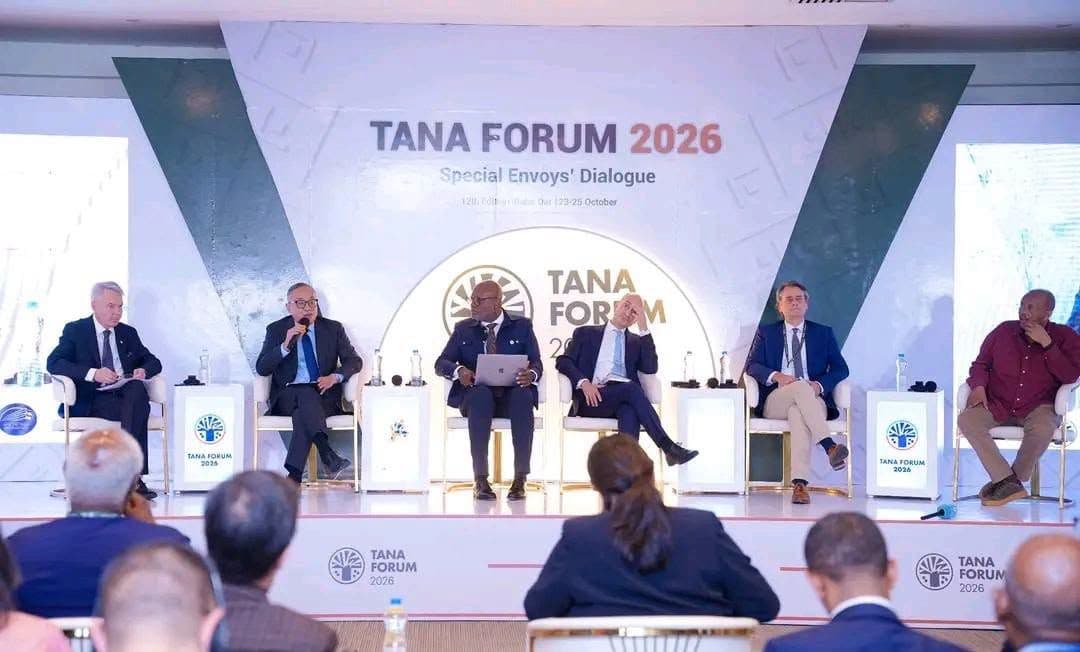
The United Nations and regional leaders have called for stronger international coordination and an inclusive political settlement to end Sudan's devastating conflict, warning that continued military confrontation threatens regional stability and undermines prospects for lasting peace.
The appeals came during the Special Envoys' Dialogue on Regional Security in the Horn of Africa and the Red Sea, held as part of the 12th Tana High-Level Forum on Security in Africa in Ethiopia’s lakeside city of Bahir Dar.
Recommended News
13th ANAPRI Stakeholders Conference to Open Monday in Addis Ababa
Discussions focused on the challenges of bringing Sudan's warring parties to the negotiating table, the involvement of regional and international actors, and the need to ensure that diplomatic initiatives produce a credible transition towards civilian-led governance.
Pekka Haavisto, the UN Secretary-General's Personal Envoy for Sudan, said international mediators are pursuing shuttle diplomacy and confidence-building measures because direct negotiations between warring parties remain difficult.
He explained that diplomatic efforts are seeking to connect proposals for a humanitarian truce with broader political negotiations, while addressing the economic interests that continue to sustain the conflict.
Haavisto also emphasized the importance of Sudanese civilian participation in peace negotiations, particularly women and youth groups that have continued providing humanitarian assistance throughout the conflict.
He said the United Nations is working with regional organizations, including the African Union and IGAD, to strengthen coordination, support a humanitarian ceasefire and establish credible mechanisms for monitoring the implementation of future agreements.
UN Secretary-General's Special Envoy for the Horn of Africa, Guang Cong, stressed the importance of coordinating international diplomatic initiatives and supporting African-led efforts to resolve conflicts affecting the region.
He said the United Nations recognizes the leading role of the African Union and IGAD in addressing regional security challenges, an approach considered essential to ensuring that international engagement supports rather than duplicates existing peace initiatives.
Adviser to Ethiopia’s Prime Minister on East African Affairs, Getachew Reda, warned that international diplomatic efforts have concentrated too heavily on Sudan's two principal military leaders while overlooking smaller armed groups whose continued involvement helps prolong the war.
He also called for greater international support for the existing multilateral peace framework rather than the proliferation of competing diplomatic initiatives.
The discussions also addressed the humanitarian and economic consequences of the war, including displacement, pressure on neighboring countries and the difficulty of establishing civilian institutions while armed groups retain control over territory and resources.
Participants stressed that a sustainable settlement must combine humanitarian access, an end to hostilities, inclusive political negotiations and a transition from a war-driven economy towards recovery and reconstruction.
The dialogue reinforced calls for the international community to coordinate its efforts through existing multilateral mechanisms while ensuring that Sudanese civilians, regional organizations and neighboring countries play meaningful roles in shaping the country's political future.
The civil war in Sudan broke out on April 15, 2023, due to a violent power struggle between two rival military factions: the Sudanese Armed Forces (SAF), led by General Abdel Fattah al-Burhan, and the paramilitary Rapid Support Forces (RSF), commanded by General Mohamed Hamdan "Hemedti" Dagalo.
Over 150,000 people have been killed since the conflict began.
The war has triggered the world's largest humanitarian and displacement crisis, with reports indicating that more than 14 million people have been displaced, including over 8.8 million people internally displaced within Sudan and over 4.5 million refugees fleeing to neighboring countries like Ethiopia, Chad and South Sudan.
According to the World Health Organization, roughly 33.7 million to 34 million people—about two-thirds of Sudan's total population—require urgent humanitarian assistance.