Ethiopia’s Defence Force at 119: From a Legacy of Sovereignty to a Modern Force for Regional Peace
Oct 25, 2026
Save
By Staff Writer
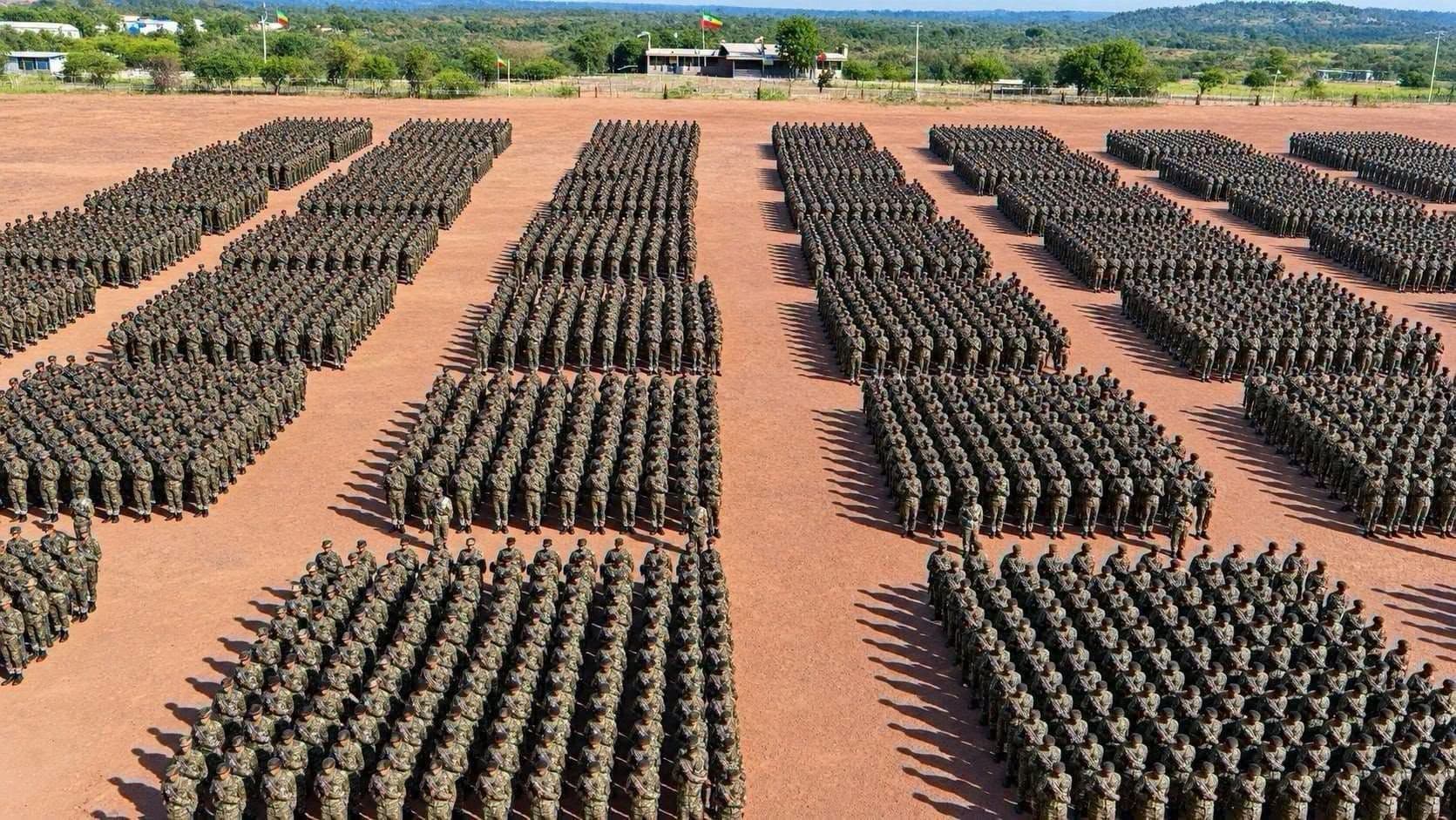
The Ethiopian National Defence Force’s (ENDF) identity rests on Ethiopia's long record of defending its independence. The 1896 victory at the Battle of Adwa remains a landmark in African and global history, and a lasting symbol of resistance, dignity and self-determination across the continent. The modern force has gone through several institutional transformations, but the principle it inherits is constant: independence and territorial integrity depend on the preparedness and sacrifice of those who defend them.
Recommended News
UN Mission in Somalia Ends Operations
PM Abiy Calls for African AI in Local Languages, Greater Data Sovereignty
Today that mandate reaches well beyond the battlefield. It covers critical infrastructure, communication networks, institutional resilience and the ability to answer new threats. Ethiopia sits at the crossroads of the Horn of Africa, a region marked by armed conflict, terrorism, political tension, competition over resources and contested maritime routes. A strong defence institution therefore needs more than equipment. It needs capable personnel, strong institutions, professional standards and the trust of the public it protects.
Reform and achievements: modernizing across every domain
Warfare is being reshaped by artificial intelligence, drones, cyber tools, satellite communications, electronic warfare and data-driven intelligence. Military strength now depends on how well equipment, information, trained people and decision-making are joined into one operational system. ENDF reform aims at exactly that: a force that is more ready, more effective and more technologically competent.
In the air, the Ethiopian Air Force is increasingly equipped with modern combat aircraft, drones, radar, surveillance platforms and advanced communications, which improve airspace monitoring, intelligence gathering and coordination. Drones support surveillance, reconnaissance and border monitoring, and their use calls for responsible deployment and appropriate oversight.
On the ground, forces have progressed through better training, logistics, communications and mobility, along with the acquisition and maintenance of modern equipment. The result is higher readiness and a more flexible response to varied threats.
In cyberspace, military networks carry information, logistics and secure communications, and are exposed to cyberattack, data theft and electronic interference. The ENDF has been building cyber capacity as part of wider institutional reform, focusing on cybersecurity, protection of sensitive information, secure networks and digital readiness.
Behind all of this are people. Technology delivers only when engineers, technicians, cybersecurity specialists, intelligence professionals and military leaders are trained to use it, so modernization also includes professional education, specialized technical training, research and continuous development of personnel.
Together, these efforts are meant to produce a capable, adaptable and resilient institution that can meet emerging security challenges.
Ethiopia's role in African peace and security
Ethiopia’s military engagement has never been confined to defending its own borders. Over the decades, Ethiopian military personnel have participated in regional and international peacekeeping missions, including in the Democratic Republic of the Congo and Somalia, contributing to efforts to protect civilians, support political transitions, and stabilize conflict-affected areas. These engagements have given the Ethiopian National Defence Force (ENDF) valuable experience in diverse operational environments while strengthening its capacity for coordination, discipline, and cooperation with international partners.
Today, Ethiopia’s defence modernization process extends beyond safeguarding national sovereignty and territorial integrity. By strengthening its operational readiness, technological capabilities, professional training, and institutional capacity, the ENDF is positioning itself to respond more effectively to evolving security challenges and contribute to broader international peacebuilding efforts. In an increasingly interconnected world, where conflicts, terrorism, cyber threats, and maritime insecurity transcend national borders, a modern and capable defence institution can play an important role in supporting collective security.
This is particularly significant in the Horn of Africa and the Red Sea region, where political tensions, armed conflicts, and threats to vital maritime trade routes have far-reaching regional and global implications. Ethiopia’s strategic location, economic weight, and military capabilities give it a significant stake in promoting stability across this wider geopolitical space. Its readiness to engage in peacekeeping, regional security cooperation, and international initiatives can help reinforce efforts to address shared threats and prevent conflicts from escalating.
The modernization of the ENDF should therefore be understood within a broader security framework: building the capacity to defend Ethiopia while also enabling the country to contribute constructively to African and global peace. Military preparedness, however, must go hand in hand with diplomacy, respect for international law, and cooperation with neighbouring states and international partners.
In the Horn of Africa and the Red Sea corridor, sustainable peace cannot be secured by any single country acting alone. It requires collective responsibility, mutual trust, and coordinated action among all relevant stakeholders.
Ethiopia has been landlocked since Eritrea's separation in 1993 and depends on neighbouring countries for access to international maritime trade. The article argues that this gives the Red Sea both economic and strategic weight for Ethiopia: reliable sea access supports trade diversification, development and resilient supply chains, and the country lies roughly 60 kilometres from the coast at its nearest point.
The Red Sea and Gulf of Aden, linked through the Bab el-Mandeb Strait and the Suez Canal, connect the Indian Ocean to the Mediterranean and carry shipping and energy supplies that matter to Africa, the Middle East, Europe and Asia. Attacks on commercial vessels and wider geopolitical rivalry have shown how quickly disruption raises costs and delays deliveries.
Through a combination of defence modernization, professional military development, and constructive international engagement, Ethiopia can strengthen its ability to protect its national interests while contributing to the wider pursuit of regional stability, secure maritime trade, and lasting global peace.
The underlying logic is that instability spreads. Conflict disrupts trade, displaces people, deepens humanitarian crises and creates room for criminal networks and extremist groups. This links Ethiopian service to the African Union's vision of a peaceful continent and to the African Peace and Security Architecture, which calls for African-led responses backed by capable national institutions.
As the Ethiopian National Defence Force marks its 119th anniversary, its journey reflects the connection between a proud legacy of sovereignty and the demands of modern security. Through continued reform, technological advancement, and professional development, the ENDF is strengthening its capacity not only to defend Ethiopia but also to contribute to African and global peace. In the Horn of Africa and the Red Sea region, where security and economic prosperity are deeply interconnected, Ethiopia’s defence preparedness, combined with diplomacy and regional cooperation, can help advance a shared vision of peace, secure maritime trade, and lasting stability.