Egypt’s Delusions
Aug 20, 2026
Save
By Michias Serlemo
The ongoing struggle over the Nile waters reveals a troubling and persistent pattern of greed, entitlement, and neglect for justice that continues to threaten regional stability and sustainable development across Africa. At the heart of this crisis lies Egypt’s unwavering insistence on maintaining colonial-era rights that grant it an outsized share of the Nile’s waters, a stance rooted in historical privilege rather than contemporary legality or moral legitimacy. This stance is not only unjust but also dangerously outdated, reflecting a colonial mindset that refuses to recognize the sovereignty and developmental rights of upstream nations, particularly Ethiopia, which is the source of the Blue Nile, contributing approximately 85% of the river’s water.
Recommended News
Her Name on the Ballot: Isatou Touray and the Long March of Gambian Women Toward the Presidency
From Adwa’s Legacy to Africa’s Future: Why African Political Parties Must Shape Their Own Destiny
Brazil’s Ballot, BRICS and the Future of a Multipolar World
A Shared Spirit of Service: Leadership Camps Draw on a Long Tradition
Eritrea’s Lost Generation: Broken Promises Threaten Horn of Africa
Egypt’s argument is often framed around the notion that the Nile is a divine gift to Egypt, a “gift of God” that must be preserved for its existing downstream population. While this rhetoric appeals to national pride and religious sentiment, it fundamentally ignores the fact that the Nile is a shared resource, vital to the survival and development of eleven riparian countries. Egypt and Sudan’s reliance on the Nile for nearly all their freshwater needs has come to be questioned in view of the immense underground water reserves Egypt can tap into (Nubian Sandstone Aquifers), but even if that was regarded as true, their claim to exclusive rights based on colonial treaties from 1929 and 1959 is both legally dubious and morally questionable. These agreements, crafted in a colonial context that marginalized upstream nations, do not reflect the modern principles of international law, equity, or the reality of contemporary needs and population growth. Ethiopia is not signatory to those colonial era treaties —it had not even been invited.
Ethiopia, with a population exceeding 130 million and a landmass that provides the majority of the water flowing into the Nile, has a rightful claim to harness its natural resources for economic growth and poverty alleviation. The construction of the Grand Ethiopian Renaissance Dam (GERD) is a testament to Ethiopia’s sovereign right to develop its hydropower potential, which is critical for lifting millions out of energy poverty, fostering industrialization, and providing a basis for sustainable development. Ethiopia’s argument is rooted in both legal and moral principles: the country is the natural origin of the Blue Nile, and international water law recognizes the right of nations to equitable and reasonable use of shared watercourses. No single country has the right to veto or monopolize this shared resource based on outdated colonial agreements or historical precedence alone.
Egypt’s claims to water security are driven more by political and economic hegemony than by legitimate rights. Egyptian officials, such as Minister of Irrigation Hani Sewilam, have declared that Egypt possesses “multiple and wide-ranging tools” to defend its water security and has vowed to block any moves that threaten its perceived “fait accompli.” These provocative statements ignore the scientific consensus and the legal principles governing transboundary water management. They reflect a desire to preserve Egypt’s dominant position over the Nile, even at the expense of regional peace and the rights of upstream nations to develop and utilize their water resources.
Contrary to Egyptian claims that Ethiopia’s dam projects threaten downstream countries, experts and regional stakeholders such as the former Sudanese Minister of Water, Prof. Seif al-Din Hamad, have emphasized that Ethiopia’s dams will not threaten downstream water flow. Instead, they can help regulate the highly seasonal flows of the Nile, providing benefits such as flood control, water storage, and hydroelectric power — benefits that are critical for the entire basin. The assertion that Ethiopia’s projects are a threat is a political narrative designed to justify maintaining the status quo of unequal water distribution. It is devoid of scientific basis and is driven by a desire to retain control over the Nile’s waters.
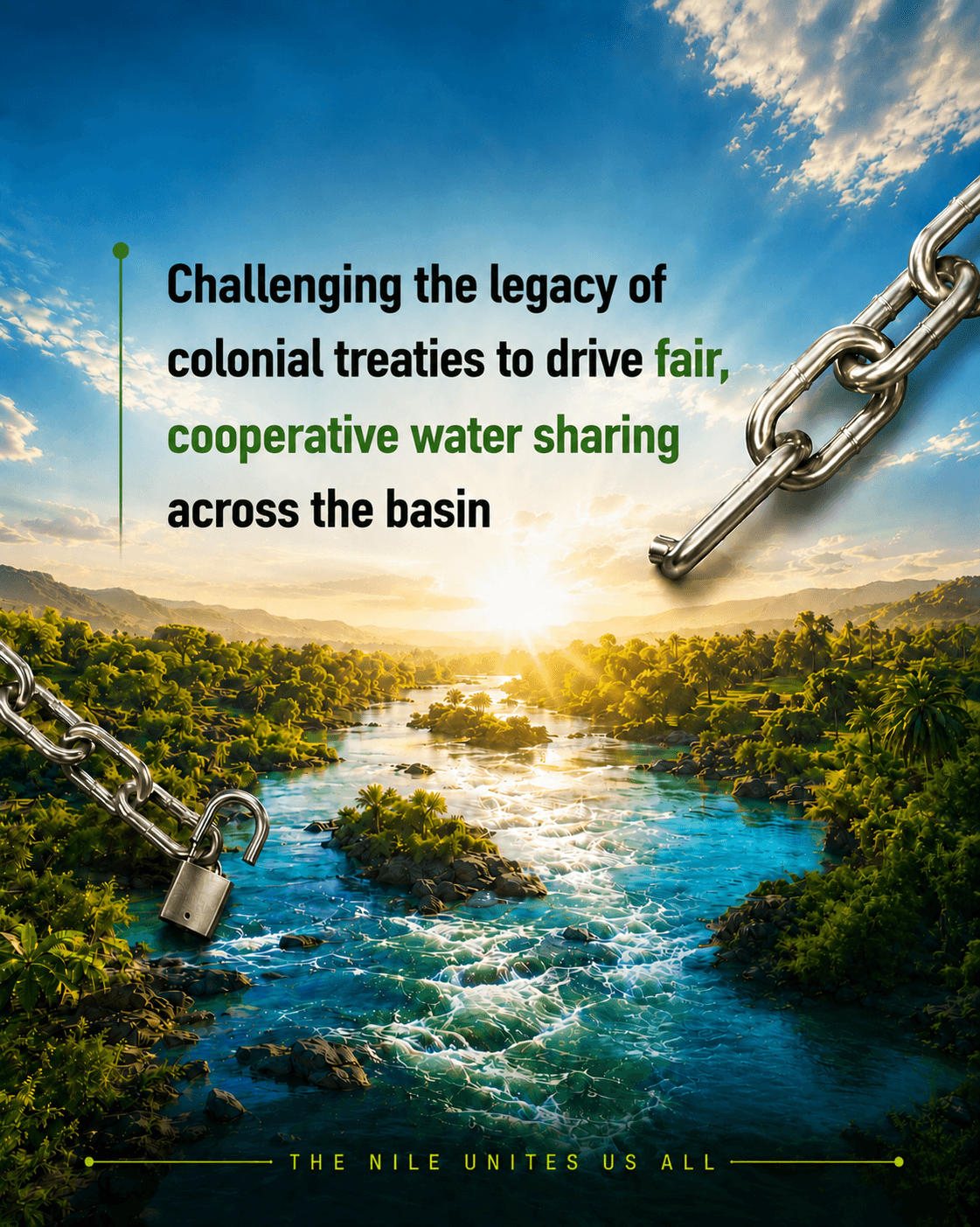
The time has come for a fundamental shift in how the Nile is managed. The operationalization of the Nile River Basin Commission (NRBC) is an urgent priority. This institution was designed to replace the colonial-era treaties that have historically favored downstream countries like Egypt and Sudan, and to establish a fair, transparent, and cooperative framework for shared water management. The Cooperative Framework Agreement (CFA), which entered into force on October 13, 2024, provides a legal basis for this new approach, but it requires active enforcement and institutional support through the NRBC. Without a functioning commission, the basin remains vulnerable to political disputes, and conflicts that threaten regional stability.
The establishment and operationalization of the NRBC will serve multiple vital functions. First, it will promote equitable water sharing among the eleven Nile Basin countries, respecting the rights and needs of all stakeholders. This is essential for fostering regional cooperation, peace, and stability. Second, it will facilitate conflict prevention by transforming unilateral decisions and regional tensions into transparent, institutionalized dialogue and joint management. Third, it will oversee the transition of assets and responsibilities from older colonial agreements, ensuring a legal and modern basis for basin-wide water governance. Finally, an official intergovernmental body will be essential for attracting international financing and technical assistance for sustainable infrastructure projects, including hydropower, irrigation, and water conservation initiatives.
The Nile’s waters are a shared resource that belongs to all riparian nations, not a colonial spoil or a prize for the strongest. Justice and equity demand that all countries—the upstream nations like Ethiopia and Uganda, and the downstream countries like Egypt and Sudan—work together to develop a shared understanding and a framework for fair water governance. The current situation, driven by Egypt’s hegemonic stance and refusal to adapt to modern principles of international law, is unsustainable and risks plunging the entire basin into conflict.
The time has come for Egypt to abandon its outdated, colonial mindset and recognize the sovereignty and development needs of all Nile Basin countries. Ethiopia’s rights to utilize its natural resources must be respected, and the basin’s management must be reformed through effective institutions like the NRBC. Only through genuine cooperation, legal reform, and mutual respect can we secure a peaceful, prosperous future for over 300 million people living across the basin who depend on the Nile. The future of the Nile is not one of domination and exclusion but of justice, and sustainable development for all riparian nations.